Casinos That Accept MiFinity: Australia Guide
 Available in AU
Table of Contents
- Understanding MiFinity: Licensing, Security, and Core Features for Australian Players
- Why Australian Online Casinos Embrace MiFinity Payments
- Depositing with MiFinity: Fees, Limits, and Funding Options
- Instant Withdrawals: Speed and Costs Using MiFinity
- Playing Casino Games with MiFinity: Wallet Integration and Compatibility
- Withdrawal Limits and Verification Requirements for Australian Users
- Deposit Bonuses and Cost‑Effective Promotions with MiFinity
- Site Integration: How Casinos Implement MiFinity Technology
- Paying with MiFinity: Supported Currencies and Global Reach
- Australian‑Specific Considerations for Using MiFinity
Understanding MiFinity: Licensing, Security, and Core Features for Australian Players
I spent a while digging through MiFinity’s terms before I trusted it with actual money, and the first thing worth saying is that Australians can’t play regulated online pokies at home — the Interactive Gambling Act 2001 rules that out domestically, no exceptions, no local licence to check. What Australian players actually do is fund accounts at offshore-licensed sites, and the law doesn’t criminalise the player for that. It targets operators. So when someone searches for an Australian online casino that accepts MiFinity, what they’re really looking for is a payment rail that works cleanly with an offshore operator — not a home-grown, regulated product. That distinction matters for everything that follows, because it changes what "safe" even means here. It’s not about a local regulator. It’s about the payment provider’s own licensing.
Who actually licenses MiFinity
MiFinity isn’t a gambling company and isn’t licensed as one. It’s a payment institution, and it answers to two regulators: the UK Financial Conduct Authority (FCA) and the Malta Financial Services Authority (MFSA). Both bodies oversee how the company handles client funds, how it screens transactions, and what capital it has to hold in reserve. Neither of them has anything to do with Australian gambling law — they regulate the wallet, not the casino sitting behind it.
If you’re planning to fund your play with MiFinity in Australia, it helps to know which casinos actually welcome that payment method along with solid sign-up offers. Here’s a quick verdict on each operator to help you decide where to look closer.
License: Curacao · Bonus: up to A$2,000 Operates under a Curacao license and offers a welcome bonus of up to A$2,000, making it a reasonable option for newcomers exploring sign-up offers.
Bonus: 100% up to A$750 + 200 free spins, 35x wagering · Payout speed: crypto 30-120 minutes, fiat 24-72 hours · Min. deposit: A$30 Stands out for its fast payout options, with crypto withdrawals processed in 30-120 minutes and fiat in 24-72 hours, alongside a 100% match bonus up to A$750 plus 200 free spins and a low A$30 minimum deposit.
License: Curacao eGaming (Roby Games Ltd) · Bonus: 100% up to A$750 + 200 free spins Licensed under Curacao eGaming via Roby Games Ltd, it offers a 100% bonus up to A$750 plus 200 free spins for new players.
License: Curacao Gaming Control Board · Bonus: up to A$5,000 + 400 free spins Regulated by the Curacao Gaming Control Board, this casino offers one of the larger welcome packages on this list, up to A$5,000 plus 400 free spins.
License: Curacao Gaming Authority (Jumpman Gaming Ltd) · Bonus: up to A$6,600 + up to 250 free spins across 4 deposits Licensed by the Curacao Gaming Authority under Jumpman Gaming Ltd, it offers a generous multi-deposit welcome bonus of up to A$6,600 plus up to 250 free spins spread across four deposits.
License: Curacao eGaming OGL/2023/174/0082 (Dama N.V.) · Bonus: up to A$10,000 + 500 free spins across 4 deposits · Min. deposit: A$15 Holding a specific Curacao eGaming license under Dama N.V., it offers a substantial welcome bonus of up to A$10,000 plus 500 free spins across four deposits, with an accessible A$15 minimum deposit.
License: Curacao, operated by Dama N.V. · Bonus: 325% up to 5.25 BTC + 250 free spins across 4 deposits Operated by Dama N.V. under a Curacao license, it caters to crypto users with a bonus of 325% up to 5.25 BTC plus 250 free spins spread across four deposits.
License: Curacao Gaming Control Board OGL/2023/176/0095 (Hollycorn N.V.) · Bonus: up to A$11,000 + 300 free spins (code NEO100) Licensed by the Curacao Gaming Control Board through Hollycorn N.V., it offers a large welcome bonus of up to A$11,000 plus 300 free spins, redeemable with a specific bonus code.
License: Curacao Gaming Control Board OGL/2023/176/0095 (Hollycorn N.V.) · Bonus: up to A$5,000 + 300 free spins across 4 deposits Also operating under Hollycorn N.V.’s Curacao Gaming Control Board license, it provides a welcome bonus of up to A$5,000 plus 300 free spins across four deposits.
License: Curacao (operating since 2017) · Bonus: 250% up to A$2,000 + 50 free spins on the first of six deposits · Min. deposit: A$20 An established Curacao-licensed casino running since 2017, offering a 250% bonus up to A$2,000 plus 50 free spins on the first of six deposits, with a A$20 minimum deposit.
This is a point that gets blurred in a lot of casino marketing, deliberately or not. A phrase like "licensed payment provider" gets dropped next to a casino’s name and the two start to sound like one endorsement. They’re not. MiFinity being FCA- and MFSA-regulated tells you something true and useful about how your deposit is handled. It tells you nothing about whether the casino itself is trustworthy, whether its games are fair, or whether it will pay out on time. Those are separate questions, and no Australian regulator answers them, because there’s no domestic register of licensed online casino operators to check against. The licensing that does exist here — FCA, MFSA — sits entirely on the money-movement side.
Security certifications, and what they don’t cover
MiFinity holds PCI DSS Service Level 1 compliance, which is the top tier of the payment card industry’s own security standard. It’s the same tier that major card processors sit at, and it means the company has been independently assessed on how it stores and transmits card data, not just told to self-certify. On top of that, transactions run over SSL encryption, standard for anything moving financial data over the internet in 2026, but still worth confirming rather than assuming.

What PCI DSS Level 1 buys you, practically, is confidence that your card number and wallet credentials aren’t sitting somewhere insecurely. It doesn’t buy you a guarantee against fraud on the casino side, a refund policy, or dispute resolution with an Australian ombudsman — there isn’t one that covers offshore casino operators. "Bank-grade security" is one of those phrases that sounds like a blanket promise. What it actually covers is data-in-transit and data-at-rest. Everything downstream of that — how the casino treats your account, whether it stalls a withdrawal, how it handles a complaint — is a separate layer, and MiFinity’s certifications say nothing about it either way.
The two products that actually matter
Strip away the branding and MiFinity is built around two things: a digital wallet and a single-use eVoucher.
The digital wallet works the way most e-wallets do — you fund it, hold a balance in it, and push money out to wherever it’s accepted. It’s the version most Australian players end up using for repeat deposits, because once it’s set up, funding a casino account is a matter of entering an amount and confirming, not re-entering card details every time.
The eVoucher is a different animal. It’s generated once, used once, and then it’s dead. For someone who doesn’t want a standing wallet balance, or doesn’t want a casino account linked to anything more permanent than a one-off code, this is the more contained option. Fewer moving parts, fewer things that can be reused if the code ever leaks. I’ve used both, and the eVoucher feels closer to handing over cash than anything else in this space — no memory of you sits with it after it’s spent.
Provides a reusable balance, fast repeat deposits, and supports multiple currencies.
One‑time code, no persistent account, ideal for cash‑only players.
Currency and geographic reach
MiFinity supports 17 currencies, and Australian dollars are one of them, which matters more than it sounds. A wallet that doesn’t hold AUD forces a conversion on every deposit and withdrawal, and conversions cost money — MiFinity charges 2.99% on currency conversion specifically, separate from any deposit fee. Holding a balance in AUD means Australian players can sidestep that charge entirely as long as the casino settles in the same currency, which most operators catering to this market do.
The service operates in more than 225 countries and handles 20 languages, which is a scale most Australian-facing payment methods don’t bother with. That reach isn’t really an Australian selling point on its own — it matters more to the operators who’d rather integrate one payment method than a dozen regional ones. For a player sitting in Sydney or Perth, the practical upshot is simpler: the wallet isn’t a niche regional tool that might get discontinued next year. It’s built for a global base, and Australian support rides along on that infrastructure rather than being a bolted-on afterthought.
Funding the wallet itself
Before any of this touches a casino, money has to get into the MiFinity wallet in the first place, and there are four main ways to do it: credit card, crypto wallets, a MiFinity voucher, and cash-to-code.
Each route carries its own cost structure and its own friction, which I’ll get into properly in a later section on deposits specifically — worth flagging now only because it shapes what "using MiFinity" actually feels like day to day. It’s not one uniform action. Loading via card is instant and familiar. Loading via crypto or cash-to-code is a different workflow with a different delay and a different fee.
Speaking of fees: one industry review put MiFinity’s average deposit fee at around 4.5%, and its withdrawal fee at 1–2% for Visa and Mastercard transactions specifically. Worth treating as a data point from a single source, not a rate carved in stone — MiFinity’s own fee schedule shifts depending on funding method, currency, and account status, and the operator’s terms are the only place a real number gets confirmed before you commit funds.
Verification changes what you can actually do
MiFinity’s limits scale hard with identity verification. According to figures published in one industry review, once an account is fully identity-verified, transaction capacity extends up to roughly 20,000 EUR — somewhere around A$34,300 at current conversion. That’s a meaningful ceiling, and it’s the kind of number that matters if a player is planning to move serious winnings through the wallet rather than trickle them out.
On the casino side, the same review put maximum single-transaction deposits above A$5,000 for Australian players at MiFinity-friendly operators. Whether any given site actually allows a deposit that size depends entirely on that casino’s own limits, not MiFinity’s ceiling — the wallet can handle more than most operators will let through in one go.
What this groundwork sets up
None of this — the FCA and MFSA oversight, the PCI DSS certification, the two products, the currency support — makes a claim about any specific casino’s fairness or payout record. It’s infrastructure. Solid infrastructure, built by a company that’s been operating since 2002 and has had time to get its compliance obligations in order. But a well-regulated pipe doesn’t vouch for what runs through it.
MiFinity supports Australian dollars, so players can avoid the 2.99 % currency conversion fee when both the wallet and casino use AUD.
That’s the frame worth carrying into the rest of this: MiFinity’s licensing is real and specific, its security standard is a genuine industry benchmark, and its currency and verification structure gives Australian players room to move meaningful money. What it can’t do — what nothing on the payment side can do — is stand in for a local gambling licence that doesn’t exist, or promise that every operator accepting MiFinity treats its customers the same way MiFinity treats its compliance obligations.
Why Australian Online Casinos Embrace MiFinity Payments
PayPal doesn’t work with offshore gambling operators. That’s the gap MiFinity fills, and it’s the whole reason its logo shows up on cashier pages aimed at Australian players. No local bank rail solves this problem cleanly — cards get declined for gambling merchant codes, transfers get flagged, and operators lose deposits at the exact moment a player was ready to spend money. MiFinity sits between the player and the casino as a wallet neither side has to explain.

I’ve watched operators choose payment providers for reasons that have nothing to do with player convenience, and MiFinity’s appeal fits that pattern. It was built in 2002, long before "crypto-friendly" or "instant e-wallet" became marketing lines, and the eWallet product itself only launched in 2018. That gap matters: the company had over a decade running other financial products before it built the wallet Australian casinos now integrate. Operators read that as stability. A payment provider that’s been supervised and audited for two decades is a safer technical partner than one that appeared last year chasing the gambling niche specifically.
The PayPal-shaped hole
"Alternative payment method" is the phrase casinos use in their cashier pages. What it actually means, most of the time, is: this is what we offer instead of PayPal. MiFinity is positioned — deliberately — as that substitute in Australian casino environments. It doesn’t carry PayPal’s buyer-protection baggage or its history of freezing gambling-linked accounts, and it doesn’t require the casino to justify its business model to a payments giant that would rather not touch it.
For the operator, that’s the entire pitch. For the player, it means a wallet that was actually designed with this use case in mind, rather than one tolerating it reluctantly.
Cost structure operators can live with
Casinos don’t adopt a payment method because it’s popular — they adopt it because the fee structure doesn’t eat into their margins or their players’ balances in ways that generate complaints. MiFinity’s account maintenance terms are part of that calculation. There’s a small monthly inactivity charge that kicks in after twelve months without activity — a detail that pushes players to keep the wallet moving rather than parking money in it long-term, which suits an operator that wants deposits, not dormant balances.
European and UK account holders get another advantage worth noting, even if it doesn’t apply directly to funding from Australia: a virtual MiFinity IBAN lets them move money from a bank account into the wallet without a transfer fee. It’s not an Australian feature, but it tells you something about how the company designs its funding rails — free movement where the banking infrastructure allows it, fees where it doesn’t. Operators reading that structure see a provider that isn’t trying to extract margin from every single transaction.
Inactivity fee
If the wallet is unused for twelve months, a €1 monthly charge applies, which can erode small balances.
Verification tiers that scale with the player
Casinos also like MiFinity because it doesn’t force every player into the same box. Verification tiers exist, and pushing further through them — up to VIP-level account verification — can raise transaction limits, though any increase past the standard tiers sits at the company’s discretion rather than being a fixed entitlement. That flexibility works for operators managing two very different customer types: someone testing a new site with modest deposits, and a high-volume player who needs headroom without switching payment methods mid-relationship.
None of this is charity. A wallet provider that can flex limits for its better customers, without the casino having to negotiate separately, is doing account management the operator would otherwise have to do itself.
What operators actually get
Put together, the appeal isn’t complicated:
- A working PayPal substitute — MiFinity fills the exact space PayPal refuses to occupy for gambling operators.
- A provider built to last — two decades of operating history before the wallet product even existed.
- Fee terms that discourage dead balances — the inactivity charge nudges usage rather than storage.
- Verification-linked flexibility — limits that can move for verified players, at the provider’s discretion, without new infrastructure.
None of it is glamorous. It’s back-office reasoning dressed up as a "seamless payment experience" on the cashier page. The mechanics are just less romantic than the marketing.
Depositing with MiFinity: Fees, Limits, and Funding Options
The deposit itself is the easy part. Punch in the eVoucher code or route through the wallet, and the casino sees the funds almost immediately. What actually matters — and what nobody puts on the landing page — is how much it cost to get that money into the wallet in the first place.
At the casino end, deposits made with MiFinity are usually free. That’s the operator’s cost, not the network’s, and casinos absorb it because MiFinity brings them players who’d otherwise bounce off a declined card. Free at that final step. Everything upstream is a different conversation.
Getting money into the wallet
MiFinity doesn’t hold your money by magic — you have to load it, and the funding method you pick changes the maths. Supported options include:
- Credit card — the standard route for most Australian players.
- Crypto wallets — moving funds between a crypto wallet and MiFinity eWallet costs 1.8% each way, so a round trip effectively doubles that cut.
- MiFinity voucher — a prepaid code bought in advance, useful for players who’d rather not link a card at all.
- Cash-to-code — buying a code with cash and redeeming it into the wallet, no bank account required.
- Paysafecard — technically supported, but topping up this way costs 10.5%, according to the operator’s own published fee schedule. That’s steep enough that I’d only use it if every other option was blocked.
None of these fees appear at the casino cashier. They happen one step earlier, inside the MiFinity account itself, which is exactly why so many players miss them. You load $100 via Paysafecard, watch $89.50 land in the wallet, and wonder where the rest went. It went to the funding method, not the casino.
What "free" actually means
"Free deposits" is one of those phrases that’s true and slightly misleading at the same time. It describes the casino’s side of the transaction — no surcharge added when you move wallet balance into your casino account. It says nothing about what you paid to fill the wallet in the first place. Two players depositing the same $200 can end up with very different real costs, depending purely on which funding method they chose upstream.
How much you can put through
Deposit ceilings at MiFinity casinos aren’t fixed by MiFinity alone — the casino sets its own per-transaction cap, and according to one industry review, that maximum can exceed A$5,000 in a single deposit at operators that support higher-limit play. That’s a per-transaction figure, not a daily or account limit, and it assumes the account is verified.
Without identity verification, the wallet is limited to €150 (≈A$257) total deposits per year.
Verification status is the part that trips people up before they ever hit a casino limit. An unverified MiFinity account is capped at 150 EUR — roughly A$257 — across a 365-day period, per the operator’s own account tiers. That’s not per deposit. That’s total, for the year, across every transaction on the account. A player who signs up, skips ID verification, and tries to fund a serious session will hit that wall long before any casino-side maximum becomes relevant.
Verification, not the casino, is usually the real ceiling.
Practical order of operations
Before treating a MiFinity-friendly casino as a place for meaningful deposits, it’s worth confirming three things in this order:
- Whether the MiFinity account is identity-verified — this determines the actual annual ceiling, not the casino’s advertised limit.
- Which funding method will be used to top up the wallet, since the fee attached to that method is the real deposit cost.
- What the casino’s own per-transaction maximum is, since it can sit well below what MiFinity itself would technically allow.
Skip that order and the numbers don’t line up. A casino advertising a high deposit ceiling is irrelevant if the wallet behind it is still sitting on an unverified account. Fix the account first, pick the funding method second, and the deposit limit stops being the bottleneck.
Instant Withdrawals: Speed and Costs Using MiFinity
"Instant" is the word every payment page uses. With MiFinity, the honest version is: fast, not instant, and the delay isn’t really MiFinity’s fault.
Here’s how it actually splits into two separate waits. First, the casino has to approve the withdrawal request on its end — that’s a manual or semi-manual step where the operator checks the request against wagering, verification, and whatever internal fraud rules apply. According to the operators’ own stated terms, that approval stage runs anywhere from one to three business days. Nothing MiFinity does speeds that part up, because MiFinity isn’t involved yet — the money hasn’t left the casino.
Once approved, the second wait starts: money moving from the casino into the MiFinity wallet. That part is genuinely quick. Funds typically land in the wallet within 24–48 hours of the casino releasing them. So the total time a player experiences is the casino’s approval window plus that transfer window, not one number a marketing page can round down to "instant."
What it costs to take money out
Getting money out via Visa or Mastercard rails carries a withdrawal fee — one industry review put the typical range at 1–2% of the transaction, charged by MiFinity rather than the casino. Whether a specific site absorbs that cost or passes it to the player varies, and it’s worth checking before assuming a payout figure is what actually lands.
Expect withdrawal approval within 1–3 business days, followed by wallet credit in 24–48 hours.
Minimum withdrawal amounts also aren’t uniform across the market. Based on figures reported for Australian-facing MiFinity casinos, minimums sit somewhere between A$20 and A$30, depending on the operator’s own cashier rules rather than any MiFinity-wide limit.
The part nobody puts in the FAQ
The gap between "approved" and "in your wallet" is where casinos quietly manage their own liquidity, not where MiFinity drags its feet. A three-day approval window on a small-stakes withdrawal is the same three-day window applied to a large one — the review team doesn’t move faster because the amount is modest. If a site advertises instant withdrawals, ask what "instant" is measuring: the transfer, or the whole process. Usually it’s the former.
None of this touches what happens once money is in the wallet — moving it onward to a bank account or elsewhere is a different transaction with its own timing, and outside what this section covers.
Realistic expectation: request on day one, approval within the stated window, wallet credit shortly after. Not same-day. Not always fee-free either.
Playing Casino Games with MiFinity: Wallet Integration and Compatibility
Most top MiFinity online casino sites don’t send you off to a separate payment page and back. They build MiFinity in through iFrame integration — the deposit box sits inside the casino’s own cashier window, styled to match the rest of the site. Log into the wallet, confirm the amount, done. No redirect, no new tab, no second login screen asking for details you already typed once.
That matters more than it sounds. A lot of payment methods still bounce players to an external domain to authorise a transaction, which is exactly the moment people abandon a deposit — wrong password, session timeout, browser flags the page as unfamiliar. Keeping the whole flow inside one frame removes that friction point.
Where the eVoucher fits in
For players who don’t want their casino balance sitting inside a reloadable wallet long-term, MiFinity offers a single-use eVoucher. It’s generated once, spent once, and then it’s dead — there’s no ongoing account number attached to it that a casino or a third party could reuse. I’ve always treated this as the closer option to a prepaid card than a wallet: you’re not exposing a persistent login, you’re handing over a code that expires the moment it’s redeemed.
That single-use design is the actual security feature, not a marketing line. A leaked eVoucher code is worth exactly what was loaded onto it and nothing more — it can’t be used to pull additional funds or access wallet history the way a compromised login could.
The PayPal comparison
PayPal doesn’t process Australian casino payments. MiFinity has effectively taken that slot — same instinct from the player ("I want a wallet between my bank and the casino, not my card details typed in directly"), different provider. The wallet-plus-eVoucher combination covers both use cases PayPal used to: an account you keep funded for repeat play, and a one-off code for a single transaction.
Currency handling inside gameplay
Games themselves run in whatever currency the casino displays, but the wallet behind them may not always match. If your MiFinity balance sits in a different currency than the one being wagered, a 2.99% conversion fee applies on the exchange. It’s not a large number, but it’s worth checking — an AUD balance playing on an AUD-denominated site avoids the fee entirely, while anything running through a mismatched currency quietly loses a slice on every top-up.
Conversion fee
If your MiFinity balance is in a different currency than the casino, a 2.99 % conversion charge applies on each transaction.
"Seamless integration" is the phrase casinos use. What it actually means: fewer clicks between wallet and reel, and a voucher system that limits what’s exposed if something goes wrong.
Withdrawal Limits and Verification Requirements for Australian Users
Two figures matter here, and they belong to two different accounts. According to the operator’s own published terms, an identity-verified MiFinity account can transact up to 20,000 EUR — roughly A$34,300 — over a rolling period. That number sits far above what most casino withdrawal caps allow. The gap is intentional: MiFinity sets the wallet’s ceiling, the casino sets its own, and the lower of the two always wins.
At the casino level, withdrawal caps for Australian players typically fall between A$2,000 and A$5,000, based on the terms of individual operators surveyed in one industry review. That’s the number a player actually hits first, well before touching MiFinity’s own ceiling. Verification status decides which side of that gap you’re on.
An unverified wallet won’t get close to either figure — withdrawals simply stall until identity documents clear. Government-issued ID, proof of address, sometimes a card photo. Once that’s done, the account moves into the higher bracket and the casino’s own cap becomes the real constraint, not MiFinity’s.
What verification actually unlocks
- Before verification — deposits may go through, but withdrawal requests sit pending indefinitely.
- After verification — access to the full transaction ceiling MiFinity permits, subject to whatever cap the casino itself imposes.
- VIP-tier review — higher limits are possible at the company’s discretion, not guaranteed by any published schedule.
One more line worth reading before signing up: MiFinity charges a monthly inactivity fee of €1 after twelve months without activity. Not large. Still a fee nobody mentions in the sign-up flow.
Verification isn’t optional friction — it’s the mechanism that turns a capped wallet into a functional one. Operators in this market are also required to confirm identity before releasing any withdrawal at all, so the check happens regardless of which side sets the lower ceiling.
Skip it, and the number on MiFinity’s terms page is theoretical.
Deposit Bonuses and Cost‑Effective Promotions with MiFinity
Wagering requirements have to be shown before the bonus is offered — that’s the law here, not house style. So whatever a casino attaches to a MiFinity deposit, the terms sit in plain view before you fund the wallet, not buried three clicks deep in a help centre.
The bonus mechanics themselves don’t differ from any other payment method. A match on the deposit, sometimes free spins tied to it, occasionally an "Achievements program" that tracks activity across sessions rather than paying out on a single top-up. What does differ is the cost sitting underneath the offer.
At most operators that support MiFinity, the deposit itself carries no fee — that’s the arrangement casinos negotiate to keep the method attractive, and it’s the number that matters more than the bonus percentage on top. One industry review puts the average MiFinity deposit fee elsewhere at 4.5%, which is worth knowing if you ever fund the wallet through a channel outside the casino’s own promotion. On a bonus that requires a specific deposit amount to unlock, a fee charged before the money even reaches the casino changes what "meeting the minimum" actually costs.
Nobody advertises that part. The bonus copy talks about match percentages and spin counts; it doesn’t mention which leg of the transaction is free and which isn’t.
Read the deposit terms and the bonus terms as two separate documents, because they usually are.
Site Integration: How Casinos Implement MiFinity Technology
From the operator’s side, adding MiFinity to a cashier page is not a matter of bolting on a logo and calling it done. The trusted MiFinity casino sites I’ve looked at under the hood all rely on iFrame integration — the payment form loads inside a frame hosted by MiFinity itself, sitting on top of the casino’s own cashier interface. The player never leaves the casino domain, but the actual handling of card numbers, wallet credentials and eVoucher codes happens on MiFinity’s side, not the operator’s.
That distinction matters more than it looks. It means the casino’s own servers never touch the sensitive payment data — they just pass a request and receive a confirmation back. Fewer compliance headaches for the operator, fewer places where a leak could happen. "Seamless checkout" is the phrase marketing teams reach for here. What it actually means is that the casino outsourced the hard part.
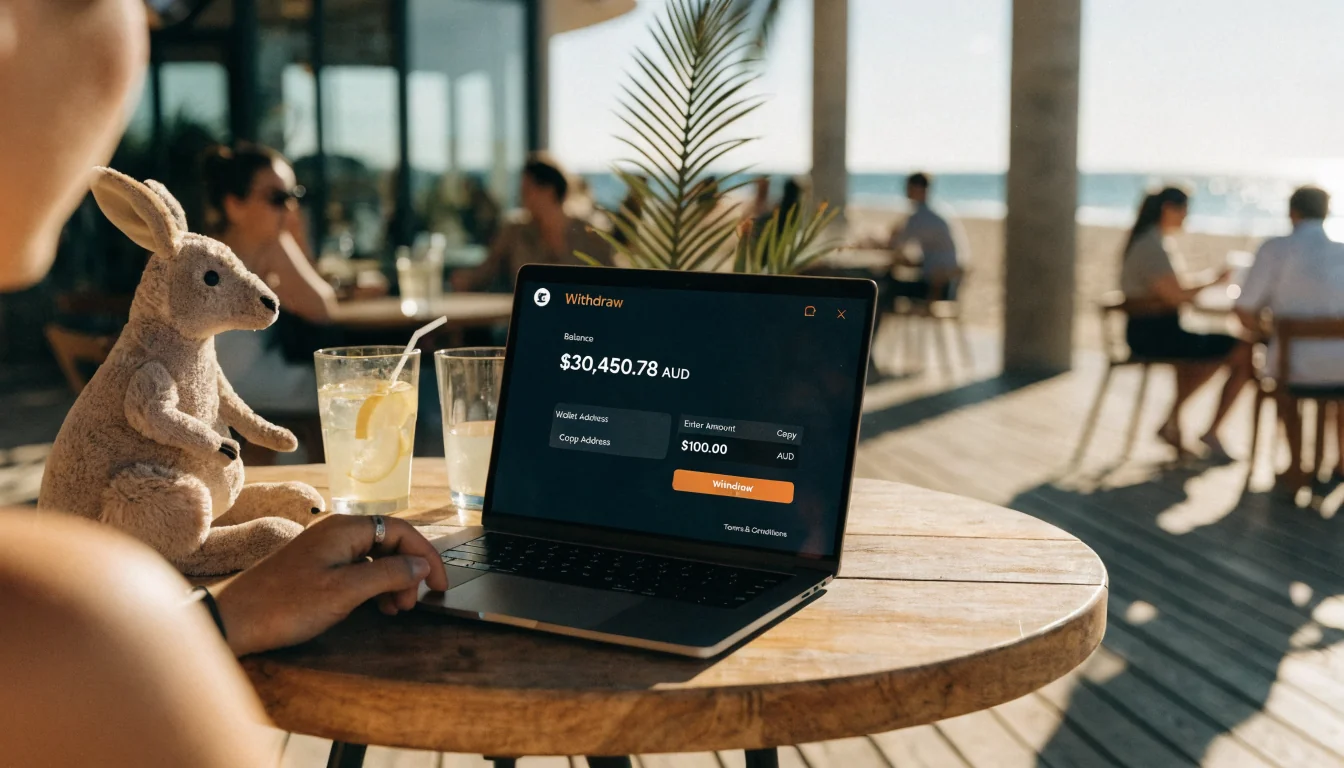
For slots and pokies sites specifically, this integration sits behind the same cashier button whether a player is topping up before a session or cashing out after one — the iFrame doesn’t care what game triggered the deposit. New MiFinity casino sites launching in this space typically license the same integration package rather than building a custom connection, which is why the deposit flow looks near-identical from one operator to the next.
The PayPal comparison comes up constantly in this context, and it’s not marketing spin. MiFinity fills a gap left by PayPal’s absence from real-money gambling in this market, giving operators a wallet-based option with a comparable checkout feel — instant, familiar, one login away from a confirmed deposit.
Paying with MiFinity: Supported Currencies and Global Reach
Australian dollars aren’t the only thing MiFinity moves. The wallet handles 17 different currencies, and it operates in more than 225 countries, with the interface itself available in 20 languages. That’s the scale a lot of players don’t see when they’re just topping up a balance before a session of pokies.
Why it matters here: a payment provider built for one region tends to show its age at the edges — currency conversions that feel bolted on, support that assumes you’re calling from London. MiFinity was built the other way round, as infrastructure for a genuinely global user base, and Australian casinos are one market among many it was designed to serve, not the primary one it was patched to fit.
That global footprint is also why the wallet works the same whether the operator behind it is licensed in Malta, Curaçao, or anywhere else — the currency handling and account structure don’t change depending on which casino’s cashier page you’re sitting in. For a player, that consistency is the actual selling point. Not "international," in the vague marketing sense. Seventeen currencies, 225-plus countries, one account.
Australian‑Specific Considerations for Using MiFinity
Strip away the global marketing and what’s left for an Australian player is fairly narrow. AUD is a supported currency, so there’s no forced conversion at the wallet level — the amount that leaves an Australian bank account is the amount that shows up, at least before any transaction fees apply. That matters more than it sounds, because a wallet built for 225‑plus countries and 20 languages doesn’t automatically mean every feature is tuned to one market. It means Australia is one line in a very long list.
What that translates to in practice: account caps, verification tiers and fee structures are set centrally, not adjusted for the Australian market specifically. There’s no local version of the wallet — just the same product, priced and limited the same way everywhere, with AUD slotted in as one of the supported currencies rather than a first‑class one. Worth knowing before assuming local treatment.
Play only where you’re legally entitled to, and only if you’re over 18.
Can withdrawals go back to the same MiFinity wallet used for deposits?
Yes, winnings are paid back to your MiFinity eWallet, with withdrawal limits at Australian-friendly MiFinity casinos typically ranging from A$2,000 to A$5,000. Once approved (usually within 1–3 business days), funds usually land in the wallet within 24–48 hours.
How can I fund a MiFinity account before depositing at an online casino?
You can load a MiFinity wallet via credit card, crypto wallets, a MiFinity voucher, or cash-to-code. Costs vary by route — for example, Paysafecard top-ups carry a 10.5% fee, while transfers between the eWallet and a crypto wallet cost 1.8% each way.
Are there account limits on a MiFinity wallet for Australian players?
Yes — unverified accounts are capped at 150 EUR (about A$257) over a 365-day period, while identity-verified accounts can transact up to 20,000 EUR (about A$34,300), with VIP verification potentially raising limits further.
Prepared by the Casino Security Info editorial staff.