
Best Live Casino Online Australia: What to Expect in 2026

Table of Contents
- Live Casino Experience in Australia – What Players Can Expect
- Live Casino Software Providers and Free Options
- Live Casino Poker – Games and Platforms
- Live Casino Game Selection: Slots, Table Games and RTP
- Live Roulette Options and Top Australian Sites
- Live Dealers and How They Operate in Australian Casinos
- Live Casino Regulations for Players in the USA
- Playing Live Casino from Different Countries – Australia, Malaysia, Canada
- Best Live Casino Apps and Top Platforms for Mobile Play
- Live Casino Australia Overview – Local Features and Compliance
Live Casino Experience in Australia – What Players Can Expect
No Australian company can legally run an online casino for Australian residents. That’s the starting fact, and everything about the "live casino experience" here sits on top of it. The Interactive Gambling Act targets operators, not players, so accessing an offshore-licensed live dealer table from a lounge room in Brisbane isn’t illegal. It just means the whole industry Australians actually use lives outside the country, under licences that were never designed with Canberra in mind.
That offshore structure shapes the experience more than most players realise. There’s no local regulator to complain to, no Australian consumer protection layer sitting between the player and the operator. What replaces it is a patchwork of practical checks: age verification, currency handling, and how fast a site actually pays out when a session ends well. Those three things tell a player more about a live casino than any marketing page does.
Age Verification – The One Non-Negotiable
The minimum age to play is 18, full stop. Every legitimate live casino site enforces this at signup and again at withdrawal, when identity documents come into play. I’ve seen operators treat this as a box-ticking formality and others treat it as the first real test of whether a site takes compliance seriously. It’s worth watching how a casino handles this moment — a site that waves through registration without asking for proof of age isn’t being "player-friendly." It’s cutting a corner it shouldn’t cut.
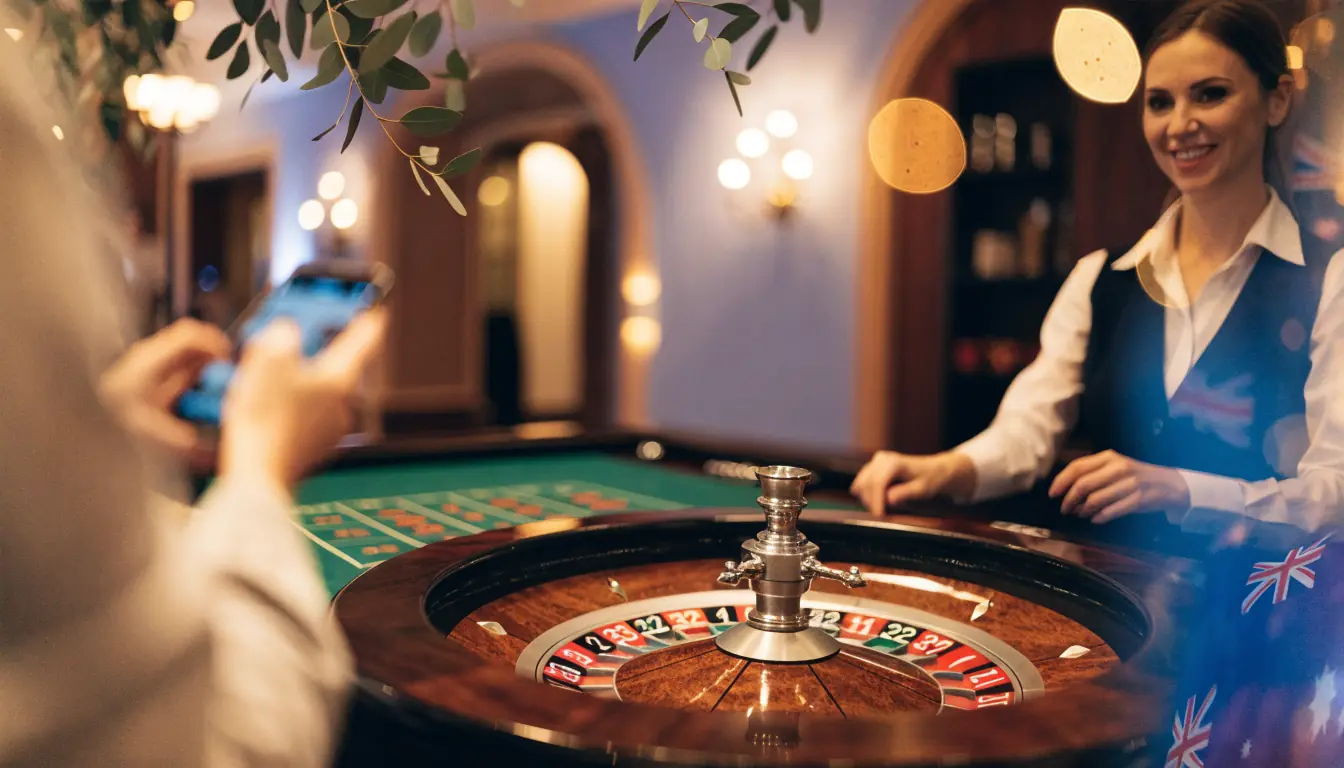
Currency – Why AUD Matters More Than It Looks
By 2026, Australian online casinos accept AUD deposits as standard. That sounds unremarkable until you’ve played on a site quoting everything in USD, watched a conversion fee eat into a deposit, and then watched it happen again on the way out. AUD support isn’t a bonus feature. It’s the difference between knowing exactly what’s in an account and doing mental arithmetic every time a balance updates.
A site built for Australians runs in AUD from the deposit screen to the cashier. Anything less is a sign the operator built for someone else’s market first and bolted Australia on afterward.
Withdrawal Speed – Where the Real Differences Show
This is where live casino sites separate themselves, and it’s also where the numbers get slippery. According to one industry review, PayID withdrawals at top-rated Australian sites average somewhere between two and four hours. Other figures from the same kind of source put the average closer to under 24 hours, with some operators clearing verified withdrawals in under 30 minutes, and PayID transactions in general processing in minutes — including on weekends and public holidays, when older payment rails would just sit idle.
Those numbers don’t agree with each other, and that’s worth sitting with rather than smoothing over. "Average" withdrawal times depend heavily on which casino, which verification tier, and which day of the week — a Friday night cashout queue looks nothing like a quiet Tuesday morning. Anyone quoting a single average for "the market" is usually quoting their own operator’s best day.
What’s consistent, though, is the mechanism. PayID has changed what Australians expect from a payout. It settles fast because it’s built on the same instant-payments rail as everyday banking, not because any casino invented something clever. A site advertising "same-day PayID payouts" is describing the payment system as much as its own processing.
Age verification required
Australian live casinos must enforce the 18+ age rule at signup and again at withdrawal; sites that skip this pose a legal and financial risk.
What This Sets Up
Age limits, AUD support and payout speed aren’t the interesting part of a live casino by themselves — nobody signs up to admire a currency dropdown. But they’re the filter that decides whether the actual product, the dealers, the tables, the software behind them, is even worth evaluating. A platform that gets these fundamentals wrong rarely gets the rest right either.
A Quick Gut-Check List
Before looking at game variety or dealer quality, these are the basics worth confirming on any live casino site:
- Age verification at signup — asked for, not skipped.
- AUD as the default currency — not a converted display over a USD backend.
- PayID or another local instant-payment option — present, not buried in a secondary menu.
- Clear withdrawal information — stated up front, not discovered after a request is stuck in review.
- A visible licence in the footer — from wherever the operator is actually regulated, since no Australian licence exists to display.
None of this guarantees a good live dealer experience. It just means the foundation is solid enough to bother checking what’s built on it — which is exactly where the next parts of this picture start: the software running those tables, and who’s actually dealing the cards.
If gambling stops feeling like entertainment, Gambling Help Online and Lifeline are there before it becomes a bigger problem. That’s not a disclaimer tacked on for form. It’s the other half of what "player experience" should mean.
Live Casino Software Providers and Free Options
Behind every live blackjack table or roulette wheel streamed to Australian screens sits a software company that most players never think about. That’s by design. The operator’s brand is what gets remembered — the studio running the cameras, the shuffling engine, the random number generator behind the roulette wheel’s electronic sensor, stays invisible unless something breaks. When it does, you notice fast: frozen video, a dealer who can’t hear the chat, a bet that registers ten seconds late.
The providers building this infrastructure are a small club. Pragmatic Play runs some of the largest live-dealer studios supplying operators active in Australia, alongside slot titles under the same corporate umbrella. NetEnt and Microgaming built much of their reputation on RNG slots before expanding into live formats, and their live tables still carry that engineering pedigree — table limits and interface design borrowed from decades of regulated markets elsewhere. Play’n GO and BGaming are smaller by comparison but supply niche titles that some operators use to differentiate from competitors running identical Pragmatic tables.


What none of these providers do is hold an Australian licence, because none exists to hold. They’re certified elsewhere — Malta, the UK, Curaçao — and Australian-facing operators access their platforms through licences issued in those jurisdictions. This is worth sitting with for a second: when a site’s footer shows a Curaçao Gaming Control Board certificate, that’s the software chain’s licence, not permission to operate in Australia. The two things get blurred constantly, sometimes by accident, sometimes not.
Security standards worth checking
Provider-level security is one of the few areas where the fine print actually tells you something useful. The best Australian-facing platforms run on 256-bit SSL encryption across account pages, deposit forms and the live video feed itself — the same standard used in online banking. It’s not a marketing flourish; it’s the padlock icon in the browser bar, and it’s checkable in about three seconds before you type in any card or PayID details.
Beyond encryption, look at who audits the random number generators feeding the electronic side of live tables — the shuffler behind live blackjack, the ball-tracking sensor on roulette. Independent testing bodies exist for exactly this reason, and a provider that publishes its audit certificates is telling you something different from one that just says "certified" without naming who did the certifying. I’ve seen both versions of that footer. Only one of them means anything.
Look for 256‑bit SSL encryption on all account and payment pages and verify that the provider lists the independent testing body that audited its RNG and shuffler.
Free-to-play: where it exists and where it doesn’t
Here’s where live casino software runs into a structural limit. Free-to-play works fine for RNG pokies — the game runs a demo credit balance, no dealer, no stream, no cost to the provider. Live tables can’t do that in the same way. A real dealer, a real studio, real overhead running per minute regardless of who’s watching — there’s no free version of that without someone paying for the feed.
What passes for "free live casino" online usually falls into one of two categories:
- Demo clips or recorded rounds — some provider sites show a looped stream so operators can preview the studio before integrating it. Not something a player logs into and plays.
- Free-play RNG table games — electronic blackjack or roulette with no live dealer, badged as “live-style” but running on the same demo-credit model as pokies.
Neither is the same product as a funded live table with a real dealer and other players in the room. If a site advertises free live casino play with real dealers, read the terms before assuming it means what it sounds like — often it’s a short trial tied to a deposit, not an ongoing no-cost option.
What a genuinely solid live software setup looks like
Putting the provider list and the security checklist together, an Australian-facing site worth spending time on tends to show a few things at once: named studio partners rather than vague "world-class live dealers" copy, visible encryption on every page that touches money, and audit information that names the testing body rather than just claiming compliance. The RTP figures published for the RNG side of a platform’s library — real money pokies in the 95–97% range on the better-known titles — are a reasonable proxy for whether an operator is running licensed, properly configured software rather than a rebadged generic build.


None of this determines whether the operator itself is trustworthy — that’s a separate question about payment handling, verification and support, covered elsewhere. But the software layer is where a lot of quality differences actually originate. Two operators can look nearly identical on the surface and be running completely different infrastructure underneath, one certified and audited, one not saying much at all.
Worth remembering when checking any of this: PayID and crypto transactions route independently of standard bank transfers, which matters because Australian banks do sometimes block card payments to gambling platforms regardless of how solid the software behind them is. The software audit and the payment rail are unrelated problems, but they show up in the same account the moment something goes wrong.
Live Casino Poker – Games and Platforms
Live poker sits in a different corner of the casino from the pokies floor. There’s no reel, no RTP printed on a paytable — just a dealer, a shoe, and a set of side bets that decide whether the table is worth sitting at. Casino Hold’em, Three Card Poker, Ultimate Texas Hold’em and various Bet Behind formats make up most of what’s streamed to Australian players, usually built on the same live studio infrastructure that runs the roulette and blackjack tables.
Standard live poker with a dealer, suited for beginners.
Fast‑paced three‑card version, higher house edge.
Combines Texas Hold’em with bonus bets for higher variance.
The mechanics matter more here than in slot play. A live poker table has a fixed house edge baked into the rules of the game itself — ante, call, fold, side bet — and no amount of "hot" or "cold" streaks changes the math sitting under it. Where slots are opaque about their algorithm, poker’s rules are printed right there on the table felt. That transparency is real, but it doesn’t extend to the bonus terms wrapped around it.
Wagering conditions attached to poker play
Most welcome offers exclude live poker outright or count it at a fraction of its stake toward wagering — a pattern common enough across the industry that it’s worth checking before assuming a deposit bonus applies to the poker room at all. Bigger picture: wagering requirements themselves vary widely between operators, and the advice holds regardless of game type — steer clear of anything sitting at 60x or higher. That’s not a poker-specific number, it’s a ceiling. Above it, the "bonus" stops being a bonus and starts being a condition you’re unlikely to clear before the funds expire.
I’ve seen operators list a generous-looking match offer on the homepage, then bury a poker exclusion three menus deep in the terms page. Not illegal. Just inconvenient, and clearly intentional.
High wagering requirements
Beware of welcome bonuses that attach 60x or higher wagering to live poker stakes – they can make the bonus impossible to clear.
Withdrawals after a poker session
Cashing out after a poker win doesn’t behave differently from cashing out after a pokies session at the same casino — the withdrawal engine doesn’t care which game paid you. What does matter is which casino you’re playing at. Some process payouts quickly; others sit on requests for days under the guise of "security review." As a baseline: a payout process stretching past five days is a red flag, not a quirk of admin. And a site that doesn’t support PayID or another Australian-native payment method is telling you something about who its actual audience is — and it isn’t players in Australia.
What to check before sitting at a table
- The live poker variant’s rules and payout table, published clearly, not just referenced.
- Whether the welcome bonus excludes poker stakes from wagering contribution.
- Table limits — live poker minimums can sit higher than blackjack or roulette on the same platform.
- Whether PayID or a comparable local method is listed for withdrawals, not just deposits.
- The stated withdrawal timeframe in the terms, not the marketing page.
Platform quality
The studio behind the stream matters less than what happens after you win. A polished HD feed with a professional dealer means nothing if the cashier takes a week to respond. I’ve sat at tables with excellent production value run by operators that made withdrawal near-impossible in practice — long "pending" queues, repeated verification requests, no clear timeline. The table looked better than the business behind it.
Poker rooms are a small slice of most live casino lobbies compared to roulette and blackjack, but the checklist for evaluating them is the same one that applies everywhere else on the platform: clear terms, sane wagering, and a withdrawal process that doesn’t test your patience.
Live Casino Game Selection: Slots, Table Games and RTP
A live casino lobby is only half live in the strict sense. The dealer streams are the headline act, but sit next to them and you’ll find a full pokies library and a handful of table variants that don’t need a human dealer at all — RNG blackjack, RNG roulette, instant-win games. Providers blend all of it into one lobby because that’s what keeps sessions going once someone’s had enough of waiting for a seat at a live table.
Pokies still carry the volume. The better-rated Australian sites keep real money pokies sitting in a 95–97% RTP band, which is the range worth checking before you commit a session’s bankroll to one title over another. That number alone doesn’t tell the whole story, though — volatility decides how the RTP actually gets paid out to you.
Volatility, not just RTP
Two pokies can share a similar return rate and still feel completely different to play.
- High-volatility pokies — titles like Lightning Link fall here. Wins come less often, but when they land, they land bigger. Bankroll needs to stretch further to survive the dry spells.
- Low-volatility pokies — more frequent, smaller payouts. Steadier session, less dramatic, easier on a modest deposit.
Neither is "better." It’s a bankroll and patience question, not a value judgment. I’ve watched players chase a high-volatility title with a low-volatility budget and wonder why the session ended in twenty minutes.
Named RTPs worth knowing
Most lobbies won’t show you the RTP on the game tile — you have to dig into the info panel, and even then not every title discloses it clearly.
- Book of Dead — RTP of 96.21%, a fixed figure worth using as a benchmark when comparing other titles in the same lobby.
- Sweet Bonanza — widely available, though its RTP isn’t published with the same clarity, so treat any number quoted for it elsewhere with caution.
- Lightning Link — high-volatility, built for players chasing bigger, rarer hits rather than steady turnover.
- Buffalo Slots — a familiar reel-based title in most AUD-friendly lobbies.
- Dragon Link — sits in the same family as Lightning Link, feature-heavy, volatility-driven design.
- Mega Moolah — known primarily for its jackpot mechanic rather than a flat RTP figure.
Table games sit differently
Blackjack, baccarat, roulette — these run on fixed mathematical edges rather than the wide RTP ranges you see in pokies, and that’s the split worth remembering. Pokies are a spectrum. Table games are closer to a constant. Comparing an RTP-labelled pokie against a table game’s house edge is comparing two different systems, not two points on the same scale.
What ties the whole lobby together — live dealer tables, RNG tables, and pokies — is that the games are hosted, not custom-built by the casino itself. The operator picks the catalogue; it doesn’t set the math. Worth remembering next time a site brands a "featured" pokie as if it’s doing you a favour by placing it top of the lobby.
Fine print on the game’s own info screen. That’s where the real number lives.
Live Roulette Options and Top Australian Sites
Roulette is the one live table game where the stream itself does most of the talking — a wheel spinning in real time, no random number generator standing in for the moment of truth. That’s the appeal, and it’s also why the format hasn’t changed much: European wheel, a dealer calling the spin, a betting window that closes with a countdown. Variations exist — speed tables, multi-camera angles, side bets layered on top — but the core mechanic stays the same because there’s no reason to fix it.
Table types overview
- Speed tables: shortened betting windows for high‑volume play.
- Standard tables: longer betting windows, better for newcomers.
- VIP tables: higher limits and exclusive dealers.
These choices affect how quickly you need to act and the stake levels you’ll encounter.
None of this is hosted from Australia. No operator is licensed here to run it, and no roulette stream — however polished — changes that. What matters for an Australian player isn’t the studio dressing but what happens around the table: whether the site takes AUD without friction, whether a bank transfer to top up the account gets flagged or blocked, whether a withdrawal after a good session actually clears.
What "Australian-friendly" means in practice
There’s no local licence to point to, so the phrase gets used loosely. Stripped of marketing, it comes down to a short list:
- AUD as the native currency — no conversion sitting between a bet and its payout.
- PayID support — because Australia’s major banks can and do block card payments to gambling platforms, and PayID (along with crypto) is one of the few routes that reliably gets through.
- An offshore licence, disclosed rather than buried — legal for a player to use, since the law here targets operators, not individuals placing bets.
- Table limits and stakes that suit a punter playing from a phone, not just high rollers.
Sites that tick these boxes tend to be the ones actually built with the Australian player in mind, rather than a global platform with an AUD toggle bolted on.
Reading a roulette lobby before you sit down
A live roulette lobby usually sorts by table type rather than by "brand," and that sorting tells you something. Speed roulette tables run shorter betting windows — fine for someone who wants volume, less forgiving if the connection lags. Standard tables give more time to think and are the better starting point for anyone still working out how a live stream differs from a digital wheel. VIP or high-stakes tables carry higher minimums and usually a separate dealer rotation.
None of that is complicated. What’s worth checking before depositing is further down the page: withdrawal methods listed, and whether PayID is actually among them rather than just "bank transfer" dressed up in local language. A site that supports PayID cleanly is signalling it’s built its payment rails for this market — not retrofitted them.
The bonus question
"Live casino bonus" is a phrase that gets attached to roulette more than most games, usually because roulette’s betting patterns make wagering requirements easier to grind through slowly. That’s not a reason to chase the offer first and check the terms later. The terms decide whether the bonus is worth anything at all — and that’s a conversation better had before money moves, not after a spin goes well.
PayID advantage
Choosing a casino with native PayID support usually results in same‑day payouts and fewer banking blocks.
Live Dealers and How They Operate in Australian Casinos
A dealer show is a studio, not a floor. Somewhere behind the camera there’s a pit boss watching several tables at once, a shuffle machine doing the one job it can’t get wrong, and a chat moderator typing replies to five tables’ worth of players asking about the rules. None of that is visible from the player side, and that’s the point — the whole setup is built to make a rented studio in a data centre feel like a casino floor.
The dealer’s job is narrower than it looks. They deal, they call the game, they read chat messages aloud when asked, and they follow a script for pacing — how long the betting window stays open, when the wheel spins, when cards flip. What they don’t control is the outcome. That’s handled by the same random-number and shuffle systems covered under software providers elsewhere in this guide; the dealer is the interface, not the mechanism.

What to actually check before sitting at a table
Most players judge a dealer table by production value — camera angles, studio lighting, how polished the presenter sounds. None of that tells you whether the table is worth playing at. What matters:
- Table limits in AUD. If a site quotes limits in USD and applies a conversion fee at deposit, that’s one of the clearer signs to walk away — a casino with no proper AUD support usually has other shortcuts elsewhere too.
- Bet spread. A single blackjack or Dragon Tiger table with one $5–$500 spread is fine for casual play; a serious site will have several tables at different limits so a $20 player and a $2,000 player aren’t fighting for the same seat.
- Chat response and dealer rotation. Watch a table for a few minutes before betting. Dealers rotate on a schedule, and a table that’s rude, slow, or ignores chat consistently is a staffing problem, not a one-off.
Dragon Tiger tables are worth a specific mention because they’re simple enough that the dealer’s pace is the whole experience — one card each, one bet, no side decisions. Blackjack tables carry more variation: rule sets (dealer stands or hits on soft 17), number of decks, side bets — none of which are dealer choices, all of which are worth reading before the first hand.
The broader signal is one I’d apply beyond dealer tables entirely: a casino that’s cut corners on its table variety has usually cut corners on its slot catalogue too. Sites offering real depth tend to run well past the low few hundred titles some operators stop at — a shallow pokies list and a thin dealer floor tend to come from the same place.
None of this shows up in the studio lighting. It shows up in the fine print and in five minutes of watching before you bet.
Withdrawal delays
If a site’s cashier takes more than five days to process a payout, it’s a red flag indicating weak operational standards.
Live Casino Regulations for Players in the USA
US regulation runs on a state-by-state model, which makes it a different animal from the Australian setup described above. Some states license and regulate online casino play directly, including live-dealer tables, through their own gaming commissions. Others prohibit it outright. There’s no single federal answer to whether a live blackjack table is legal for a given player — it depends entirely on which state that player is sitting in.
That’s the opposite structure to Australia, where the Interactive Gambling Act 2001 draws a single national line: companies can’t offer online casino services to Australian residents, full stop, regardless of state. The US instead delegates that call downward. A game legal in New Jersey can be off-limits in a neighbouring state with no casino compact at all.
What both markets share is where the law actually points. Australian legislation targets operators, not the people placing bets — an individual playing at an offshore-licensed casino isn’t committing an offence. US state laws work on a similar operator-first logic in most jurisdictions, though the practical effect for a player still depends on local rules rather than any nationwide protection.

Payments expose the gap between "not illegal" and "frictionless" on both sides. Australian banks can and do block transfers heading to gambling sites, even when the player isn’t breaking any law by sending them. US players in restricted states run into the same kind of friction — banks flag the transaction category, not the individual’s legal standing.
None of this is a case for treating US and Australian frameworks as interchangeable. A player moving between the two needs to check the specific state or the specific national law, not assume one explains the other. The structures rhyme. They don’t match.
Playing Live Casino from Different Countries – Australia, Malaysia, Canada
Same live table, three different sets of habits sitting at it. I’ve watched dealer chat windows fill with players logging in from Kuala Lumpur, Toronto and the Gold Coast at the same time, all playing the same stream, all treating the platform completely differently.
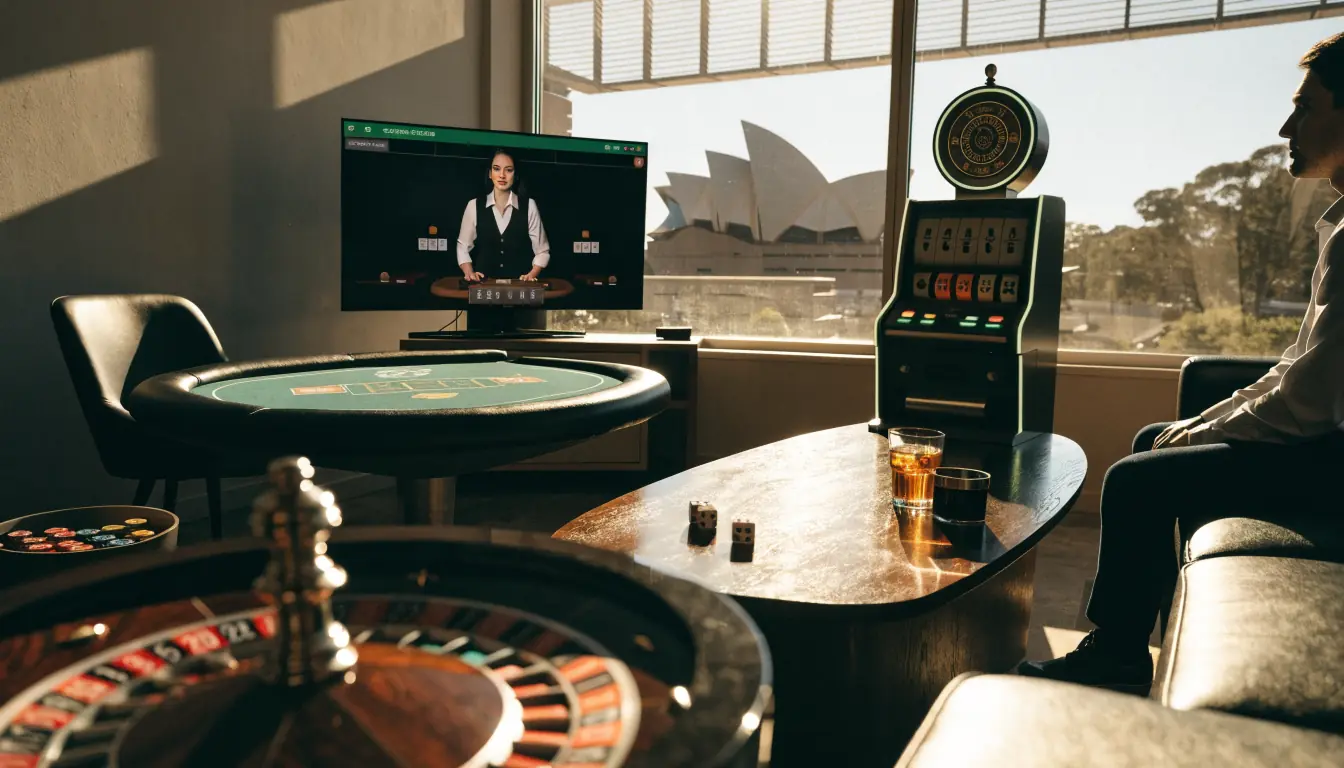
Australian players lean heavily on mobile. By one industry review’s account, mobile sessions make up over 70% of all online gambling activity in the country — which tracks with what I’ve seen operationally, since desktop traffic on live tables tends to spike only on weekends. Regular players, per that same review, spend around 2.3 hours a week on pokies, and the average active depositor puts through roughly $127 a month. None of that is a regulatory figure, just what one operator-facing dataset showed — spending patterns shift by the season and by whatever promotion is running.
Malaysian access to live casino works differently at the infrastructure level. There’s no domestic licensing framework there either, so players connect to the same offshore platforms Australians use, but currency handling is usually done in USD or through e-wallets rather than a local instant-payment rail. That’s the practical difference — not the games, which are identical builds from the same studios, just the plumbing underneath.
Canadian players sit somewhere in between. Provincial rules vary, deposit methods lean toward cards and e-wallets, and mobile use is high but not dominant the way it is in Australia. What’s consistent across all three markets is the underlying software — the same live dealer studios stream to Sydney, Vancouver and Kuala Lumpur simultaneously, so a "Malaysia-friendly" site and an "Australia-friendly" site often means nothing more than which payment rails and currencies are switched on for that region.
"Localised experience" is the marketing phrase. In practice it’s a currency toggle and a support email in a different time zone.
What doesn’t change from country to country: age verification, KYC before withdrawal, and the fact that none of these platforms hold a licence issued in the player’s home jurisdiction — because for online casino products, none exists.
Best Live Casino Apps and Top Platforms for Mobile Play
Live casino fans in Australia have plenty of platforms to choose from, so it helps to know the licensing, bonus terms, and payout basics before picking where to play in 2026.
License: Curacao · Bonus: up to A$2,000 Operates under a Curacao license and offers a welcome bonus reaching up to A$2,000, giving new players a solid starting bankroll.
Bonus: 100% up to A$750 + 200 free spins, 35x wagering · Payout speed: crypto 30-120 minutes, fiat 24-72 hours · Min. deposit: A$30 Pairs a 100% match bonus up to A$750 with 200 free spins under 35x wagering, and stands out for fast crypto payouts alongside more standard fiat processing times, with a low A$30 minimum deposit.
License: Curacao eGaming (Roby Games Ltd) · Bonus: 100% up to A$750 + 200 free spins Licensed under Curacao eGaming through Roby Games Ltd, and welcomes newcomers with a 100% bonus up to A$750 plus 200 free spins.
License: Curacao Gaming Control Board · Bonus: up to A$5,000 + 400 free spins Regulated by the Curacao Gaming Control Board and backs its offering with a generous welcome package of up to A$5,000 plus 400 free spins.
License: Curacao Gaming Authority (Jumpman Gaming Ltd) · Bonus: up to A$6,600 + up to 250 free spins across 4 deposits Holds a Curacao Gaming Authority license via Jumpman Gaming Ltd and spreads a substantial bonus of up to A$6,600 with up to 250 free spins across four deposits.
License: Curacao eGaming OGL/2023/174/0082 (Dama N.V.) · Bonus: up to A$10,000 + 500 free spins across 4 deposits · Min. deposit: A$15 Licensed under Curacao eGaming (Dama N.V.) with a specific OGL registration, offering a large multi-deposit bonus up to A$10,000 plus 500 free spins and a low A$15 minimum deposit.
License: Curacao, operated by Dama N.V. · Bonus: 325% up to 5.25 BTC + 250 free spins across 4 deposits Operated by Dama N.V. under a Curacao license, this crypto-friendly casino offers a striking 325% bonus up to 5.25 BTC plus 250 free spins spread over four deposits.
License: Curacao Gaming Control Board OGL/2023/176/0095 (Hollycorn N.V.) · Bonus: up to A$11,000 + 300 free spins (code NEO100) Licensed by the Curacao Gaming Control Board under Hollycorn N.V. with a specific OGL registration, and offers a sizeable bonus up to A$11,000 plus 300 free spins via a dedicated bonus code.
License: Curacao Gaming Control Board OGL/2023/176/0095 (Hollycorn N.V.) · Bonus: up to A$5,000 + 300 free spins across 4 deposits Also operated by Hollycorn N.V. under the same Curacao Gaming Control Board registration, providing a multi-deposit bonus up to A$5,000 with 300 free spins.
License: Curacao (operating since 2017) · Bonus: 250% up to A$2,000 + 50 free spins on the first of six deposits · Min. deposit: A$20 Licensed in Curacao and active since 2017, it offers a 250% bonus up to A$2,000 with 50 free spins on the first of six deposits, with a A$20 minimum deposit.
Most operators stopped building standalone apps years ago and moved to browser-based platforms instead. There’s a reason: app stores don’t allow real-money casino apps in most jurisdictions, so Australian-facing sites either run a lightweight wrapper hosted outside the official stores or, more commonly, just optimise the mobile site itself. If something is offered as a "download" for Android, check where the file actually comes from before installing it. A proper HTML5 platform running in a mobile browser does the same job without that step.
What actually separates a good mobile platform from a mediocre one isn’t the app icon — it’s what’s happening underneath.
What to check before playing on a phone
- Encryption on the connection. The better Australian platforms run 256-bit SSL across the whole session, not just at login. On mobile this matters more, since public wifi and mobile data both pass through more intermediate points than a home connection.
- Payment access from the app itself. PayID and crypto both work from mobile without needing a separate banking app open, and either can route around a bank block that stops a transaction outright rather than just delaying it. If a platform buries its payment options three menus deep on mobile, that’s worth noticing.
- Stream quality on a mobile connection. Live dealer video is the heaviest thing a casino platform pushes to a phone. A platform built properly for mobile drops resolution gracefully on a weak signal instead of freezing the feed mid-hand.
- Game load without a native client. Titles like Lightning Link and other high-volatility pokies should load and run identically to desktop — same reels, same bonus triggers, no stripped-down “mobile version” with fewer features.
None of this shows up in a screenshot on a review site. It shows up after a few sessions on actual mobile data, in a hotel, on a train, wherever the connection isn’t perfect.
The safest approach: treat any site that pushes you toward a sideloaded APK with suspicion, and favour platforms that just work well in a browser.
No app required.
Live Casino Australia Overview – Local Features and Compliance
Strip away the software comparisons and game catalogues, and live casino in Australia comes down to two checks that never change. First: age. Eighteen is the line, checked once at signup and again at withdrawal, when a copy of ID stops being a formality and starts being the thing standing between the player and the money. No casino worth using skips this — the ones that do aren’t cutting red tape, they’re cutting corners that matter to you later.
Second: currency. By 2026, AUD deposits are standard across the operators built for this market — no conversion guesswork, no checking an exchange rate before deciding whether a deposit makes sense. That sounds minor until you’ve used a site without it.
Everything else in this guide — dealers, RTP, apps, payment speed — sits on top of these two facts. Get them wrong and nothing above matters.
Before depositing anywhere, confirm:
- AUD is accepted natively, not converted from USD.
- Age verification is enforced, not just mentioned in the terms.
Those two lines separate a site built for Australian players from one that merely lets them in.
Can I play on an Australian online casino on mobile?
Yes — mobile play dominates the market, with over 70% of all Australian online gambling sessions now happening on mobile devices.
Is online gambling legal in Australia?
Australian companies cannot legally offer online casino services to residents under the Interactive Gambling Act 2001, but it is not illegal for individual players to gamble at offshore-licensed casinos — the law targets operators, not players.
What security features must licensed casinos have?
The best Australian online casino platforms use 256-bit SSL encryption to protect player data and transactions.
What are the best online casinos in Australia for 2026?
Look for sites with AUD as the default currency, PayID or other Australian payment methods, fast verified withdrawals (PayID payouts average 2–4 hours, sometimes under 30 minutes), over 500 pokies, and a visible licence in the footer — no Australian licence exists, so the offshore regulator shown matters.
What is the minimum deposit at an Australian crypto casino?
Crypto and PayID options let Australian players bypass bank blocks on gambling transactions, but the minimum deposit amount isn’t specified — the average monthly deposit among active Australian players is $127.