Pokies Open Near Me in Australia: Where to Find Them Now
 Available in AU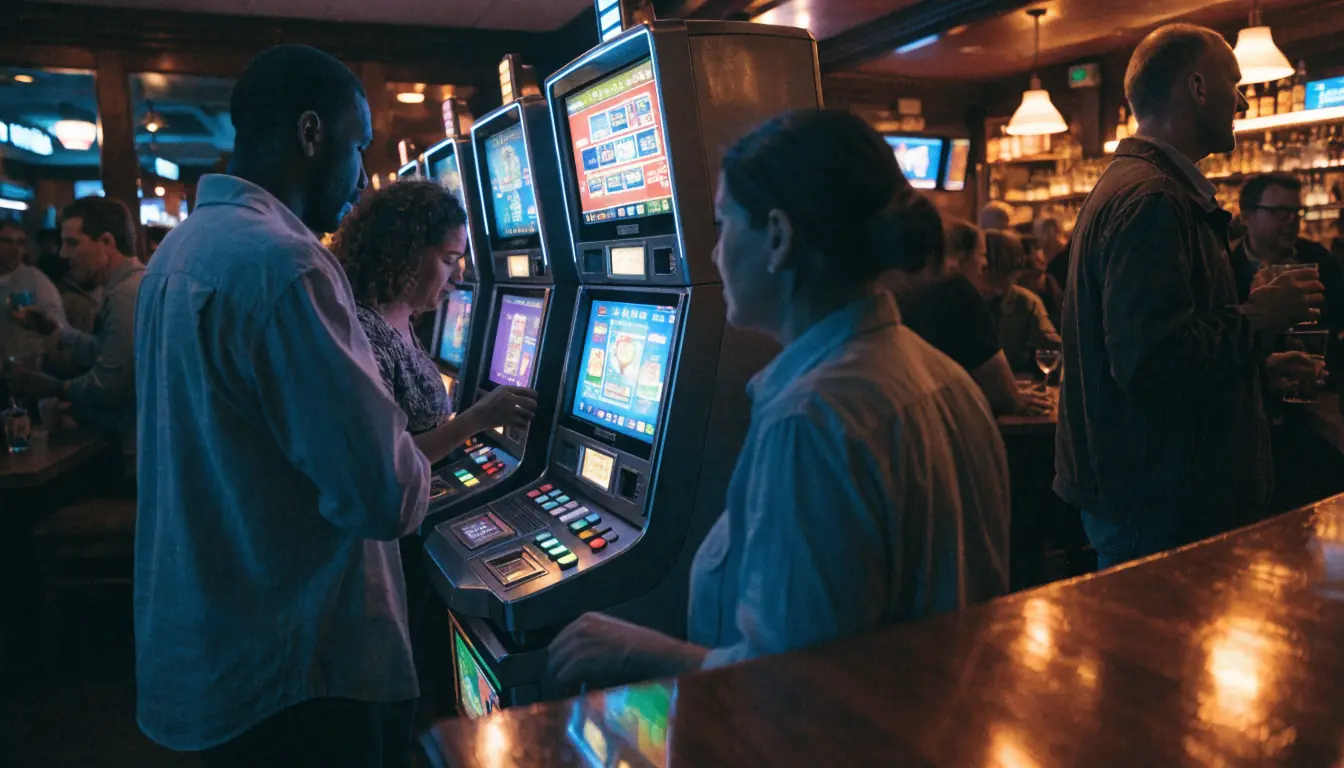
Where to Find Pokies That Are Open Right Now in Australia (2026)
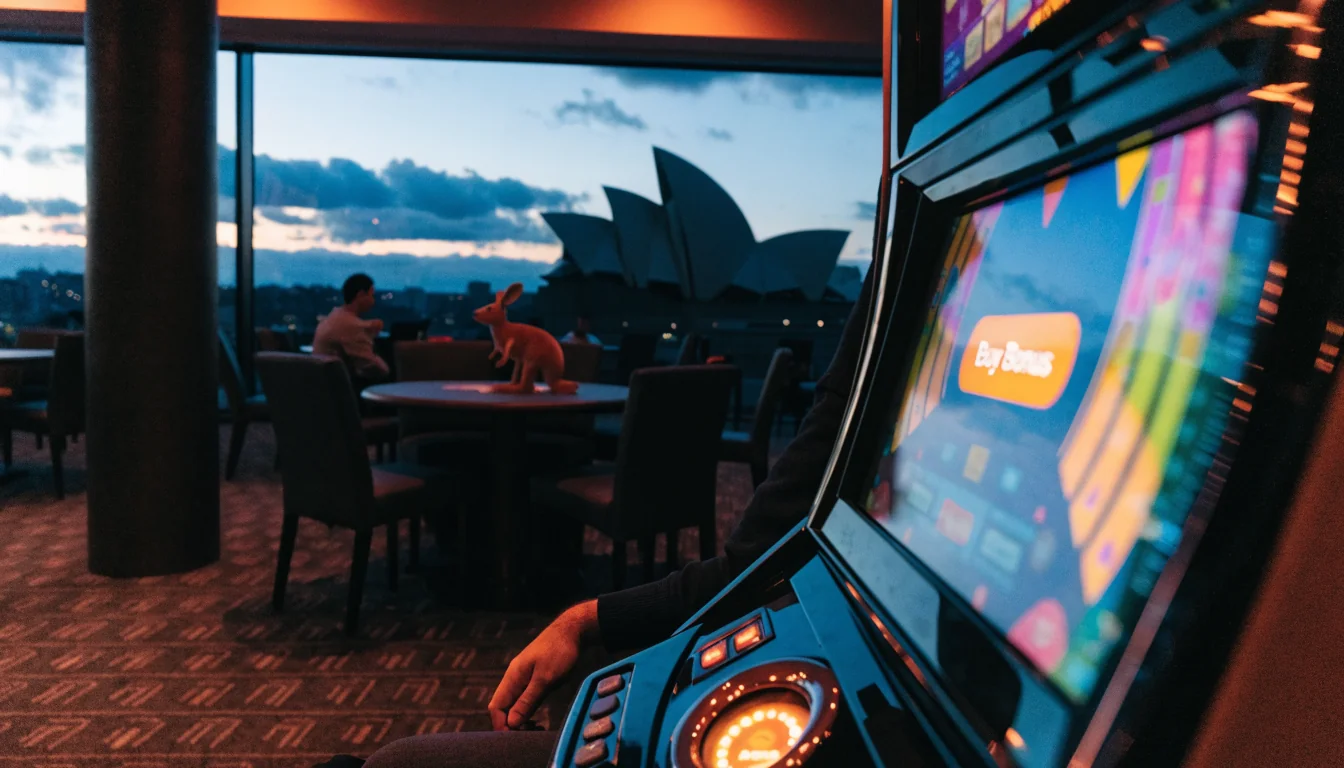
Someone asks where the pokies open near me are, and the honest answer is: almost everywhere, almost always. Electronic gaming machines run in every state and territory in the country — New South Wales, Victoria, Queensland, South Australia, Western Australia, Tasmania, the Australian Capital Territory and the Northern Territory all have them switched on in pubs, clubs and casinos. There’s no state where pokies simply don’t exist. The question was never really "does my state have them" — it’s "which venue near me has the doors open at this hour, on this day, running this particular set of machines." That’s a different problem, and it’s the one this section actually solves.
I spent enough time around gaming floors to know the difference between a venue that’s technically licensed to operate pokies and a venue where the machines are actually live and staffed at 2pm on a Tuesday. Licensing tells you what’s legally possible. It tells you nothing about whether the lights are on.
Since pokies venues aren’t always within reach, many Australian players turn to online options instead — here’s a quick look at operators worth knowing about for 2026.
License: Curacao · Bonus: up to A$2,000 Operates under a Curacao license and offers a welcome bonus of up to A$2,000 for new players.
Bonus: 100% up to A$750 + 200 free spins, 35x wagering · Payout speed: crypto 30-120 minutes, fiat 24-72 hours · Min. deposit: A$30 Pairs a 100% match up to A$750 with 200 free spins under 35x wagering, and stands out for fast crypto payouts alongside fiat withdrawals processed within a day or so; a low A$30 minimum deposit keeps entry accessible.
License: Curacao eGaming (Roby Games Ltd) · Bonus: 100% up to A$750 + 200 free spins Licensed under Curacao eGaming through Roby Games Ltd, with a welcome package matching 100% up to A$750 plus 200 free spins.
License: Curacao Gaming Control Board · Bonus: up to A$5,000 + 400 free spins Holds a Curacao Gaming Control Board license and backs its offering with a sizeable welcome bonus of up to A$5,000 plus 400 free spins.
License: Curacao Gaming Authority (Jumpman Gaming Ltd) · Bonus: up to A$6,600 + up to 250 free spins across 4 deposits Licensed by the Curacao Gaming Authority under Jumpman Gaming Ltd, offering a generous multi-deposit bonus of up to A$6,600 with up to 250 free spins spread across four deposits.
License: Curacao eGaming OGL/2023/174/0082 (Dama N.V.) · Bonus: up to A$10,000 + 500 free spins across 4 deposits · Min. deposit: A$15 Operating under a Curacao eGaming license via Dama N.V., it offers a substantial welcome package of up to A$10,000 and 500 free spins across four deposits, with a low A$15 minimum deposit.
License: Curacao, operated by Dama N.V. · Bonus: 325% up to 5.25 BTC + 250 free spins across 4 deposits Run by Dama N.V. under a Curacao license, it caters to crypto players with a 325% bonus up to 5.25 BTC plus 250 free spins spread over four deposits.
License: Curacao Gaming Control Board OGL/2023/176/0095 (Hollycorn N.V.) · Bonus: up to A$11,000 + 300 free spins (code NEO100) Licensed by the Curacao Gaming Control Board through Hollycorn N.V., offering a large welcome bonus of up to A$11,000 plus 300 free spins via a dedicated bonus code.
License: Curacao Gaming Control Board OGL/2023/176/0095 (Hollycorn N.V.) · Bonus: up to A$5,000 + 300 free spins across 4 deposits Also operated by Hollycorn N.V. under the same Curacao Gaming Control Board license, providing a welcome bonus of up to A$5,000 with 300 free spins across four deposits.
License: Curacao (operating since 2017) · Bonus: 250% up to A$2,000 + 50 free spins on the first of six deposits · Min. deposit: A$20 A long-running Curacao-licensed operator active since 2017, offering a 250% bonus up to A$2,000 with 50 free spins on the first of six deposits and a low A$20 minimum deposit.
Why "open now" isn’t a fixed answer
A pub with a gaming room isn’t obligated to run every machine every hour it’s trading. Staffing, local council conditions, and the venue’s own trading hours all shape what’s actually available when someone walks in. Two clubs a few suburbs apart can have identical machine counts on paper and completely different real-world availability — one running a full floor from mid-morning, the other only firing up the gaming room once the dinner crowd thins out.
This is why "pokies open near me" is really three separate questions stacked on top of each other:
- Is there a venue with EGMs in the area at all?
- Is that venue trading right now?
- Is the gaming room specifically open, staffed, and running machines — not just the bar?
Most searches conflate all three into one. They’re not the same question, and treating them as one is how people end up driving to a pub that’s open for meals but has the gaming room roped off.
Checking by state and territory
Because gaming machines are regulated at the state and territory level rather than nationally, the practical path to "what’s open now" runs through different bodies depending on where you are.
- New South Wales — the state with the largest concentration of pokies in the country. Local clubs (RSLs, leagues clubs, bowling clubs) are the default venue type here, alongside pubs and the state’s licensed casinos. NSW gaming matters sit with the state regulator, and enforcement around cashless reform has been particularly active here — more on that later, since NSW has been the epicentre of some real structural change.
- Victoria — pokies are split between hotels/pubs and clubs, with a cap system that limits machine numbers per venue and per municipality. Melbourne’s suburban pubs are as much a source of machine access as the city’s casino floor.
- Queensland — regulated through the Office of Liquor and Gaming Regulation, with pokies spread across hotels, clubs and casinos on a similar pub-and-club model to NSW and Victoria.
- South Australia and Western Australia — both have pokies in pubs and clubs, though WA has historically kept machine numbers restricted outside its casino, which changes the density of “near me” results compared to the eastern states.
- Tasmania — smaller population, smaller machine footprint, but pokies are present in pubs, clubs and the state’s casinos.
- Australian Capital Territory — overseen by the ACT Gambling and Racing Commission, with clubs historically forming the backbone of machine availability in Canberra.
- Northern Territory — pokies operate in pubs, clubs and casinos, regulated under NT’s own licensing framework.
None of this changes the fact that machines are legal and operating in all of these places. What changes is venue density, the split between pub-style and club-style access, and how tightly local rules constrain trading hours — which is really the deciding factor in whether something is "open now" rather than just "licensed to exist."
Pub, club or casino — it changes what you’ll find
"Pokies near me" tends to return a mix of three venue types, and they don’t behave the same way.
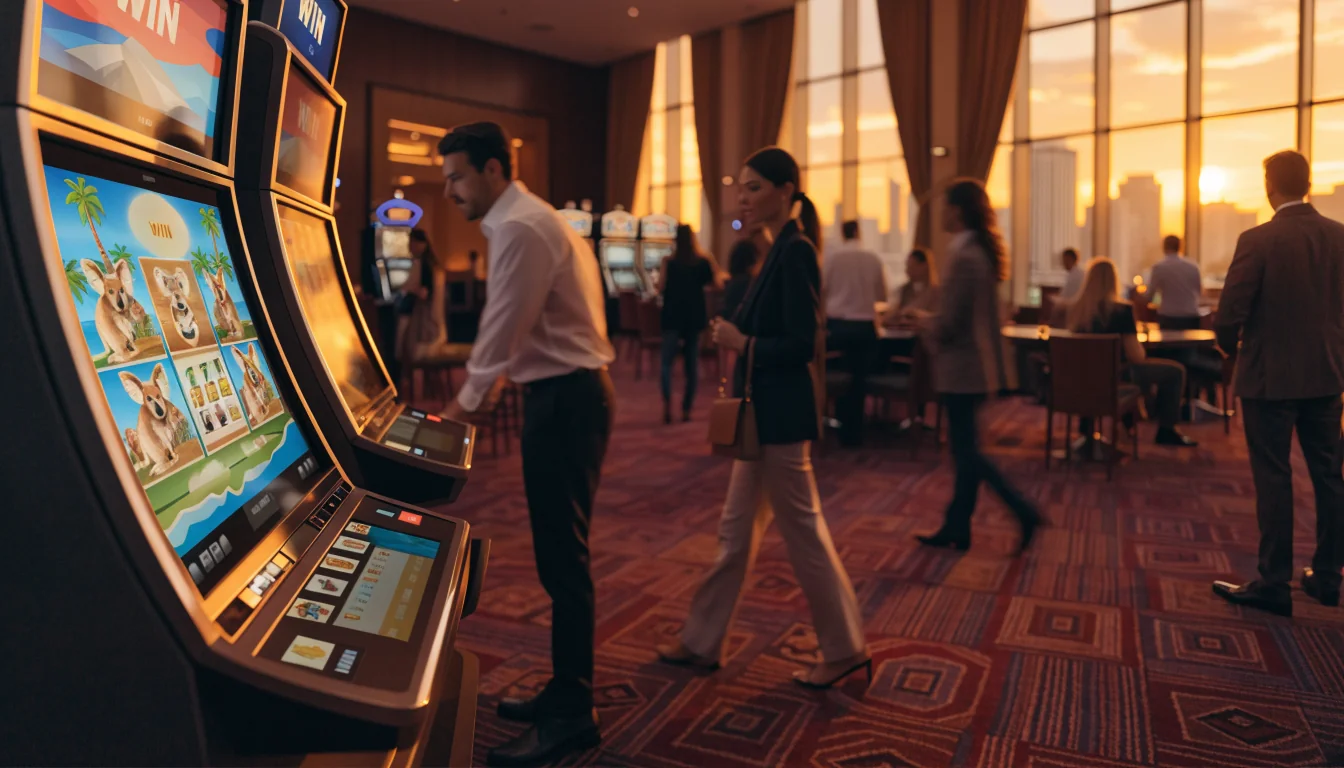
Pubs and hotels are usually the most convenient — attached to a bar, open during normal licensed trading hours, no membership required. The gaming room is often a side room or a partitioned area near the bar. Machine counts per venue are typically lower than clubs because of local caps, but there are more of them scattered around, so proximity is usually good.
Clubs — RSLs, leagues clubs, bowls clubs, workers’ clubs — tend to run larger gaming rooms with more machines, often as the club’s main revenue driver alongside food and drink. Some require signing in as a visitor or a nominal temporary membership; this isn’t a barrier so much as a formality tied to the club licensing model rather than the casino model. Clubs in NSW and Queensland in particular carry a disproportionate share of the country’s machine count.
Convenient, attached to a bar, usually open during normal trading hours, with fewer machines.
Larger gaming rooms, often require a quick sign‑in, host more machines and may have extended hours.
Largest and most varied floors, generally the longest trading windows, but can be further away and busier.
Casinos run the largest and most varied floors, generally with longer — and in some cases round-the-clock — trading, though the specifics of overnight access are a separate matter covered in the next section. Casino gaming floors also tend to carry a wider spread of denominations and machine types than a suburban pub’s back room.
None of these categories is universally "better." A pub is faster to get in and out of. A club has more machines but a sign-in step. A casino has scale but is usually further away and busier. The right answer depends on what someone’s actually looking for — a quick session on the way home, or a longer sit-down with more choice.
What determines whether the gaming room is actually running
A few practical things decide whether the machines at a given venue are live at any given moment, and they’re worth knowing because they explain why the same venue can be a hit one afternoon and a dud the next.
Trading hours set the outer limit. A venue can’t run pokies outside its licensed trading window, and those windows vary by venue and by local council conditions — some pubs close their gaming room earlier than the bar, some clubs run it later than the kitchen. There’s no single national cutoff; it’s set locally, venue by venue.
Staffing determines whether the room is actually attended. Gaming rooms need staff on the floor — for compliance reasons and for basic service like changing notes or resolving a machine fault. A quiet mid-morning shift might mean the gaming room technically could be open but isn’t staffed until later. This is the single biggest reason a venue shows up as "should be open" and turns out not to be.
Staffing risk
Even if a venue’s trading hours include “open now”, the gaming room may be offline without staff on the floor.
Local demand shapes when a venue bothers. Suburban pubs calibrate gaming room hours to when people actually come in and play. A pub in a business district might run pokies hardest at lunch and after work; a pub in a residential strip might not open the room until evening.
Public events and venue-specific closures — maintenance, private functions, council-mandated shutdowns — can take a gaming room offline temporarily even during what would otherwise be normal hours. This is venue-specific noise, not a pattern, and it’s the reason checking directly with a venue beats relying on general assumptions about "typical" hours.
Early openings — the 6am and 7am question
A specific version of this search is about very early access — whether pokies are open at 6am or 7am near a given location. This sits apart from the round-the-clock question covered in the next section, but it’s worth addressing directly because it’s a distinct pattern of behaviour.
Early-morning gaming access exists mainly where a venue’s trading licence extends that early — this tends to cluster around casinos and a smaller number of pubs and clubs with extended licences, rather than being a default across the board. A suburban pub with standard hours isn’t going to have machines running at 6am; a casino floor, or a club with an extended trading permit, might. There’s no fact establishing a uniform early-opening standard across Australian venues — it depends entirely on the individual venue’s licence conditions, which is exactly the kind of detail that only the venue itself can confirm on a given day.

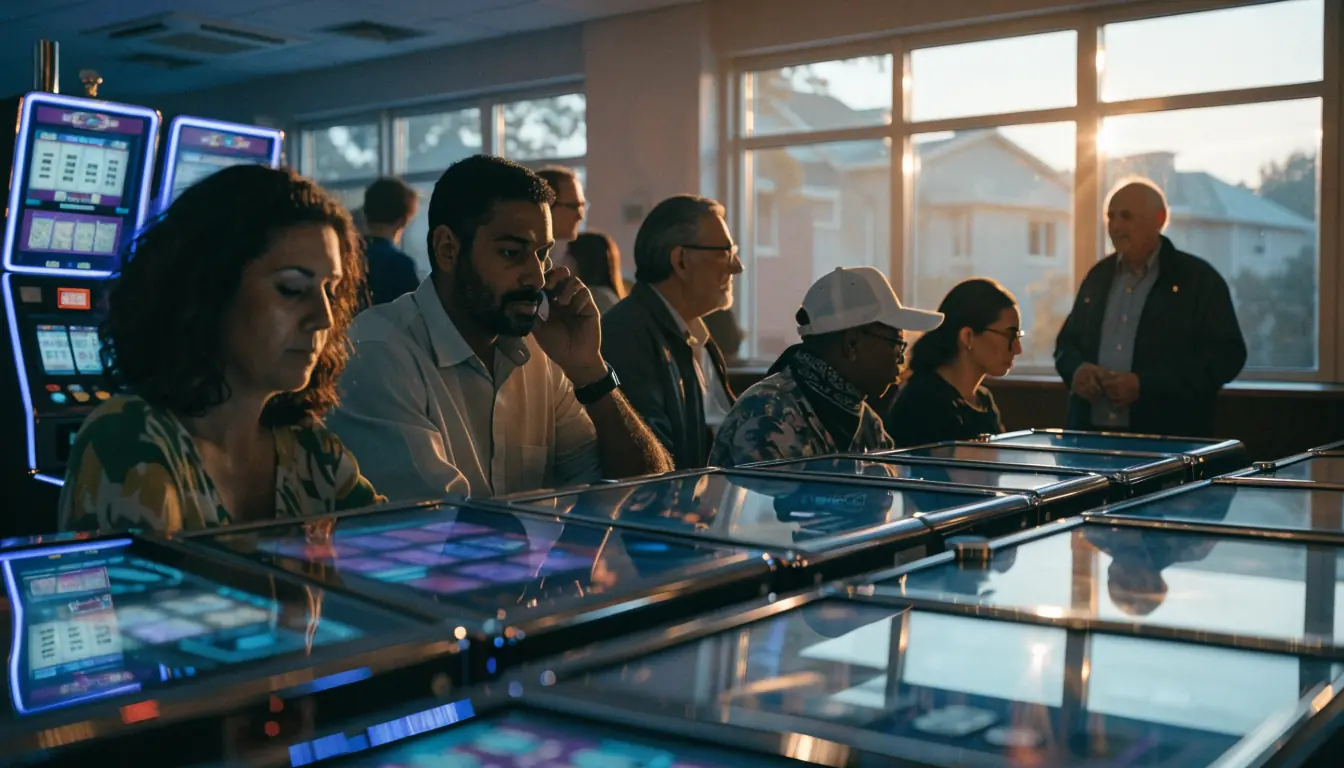
The practical upshot: an early start is a licensing-and-staffing question specific to each venue, not a fixed feature of the pokies landscape. Assuming a nearby pub matches casino-style early hours is how a 6am search ends in a locked door.
Scale — why this market behaves the way it does
It helps to understand the scale of what’s actually running behind all these "open now" searches, because it explains why pokies are such a fixture of Australian pub and club culture rather than a niche side activity.
In the 2020–2021 financial year, Australians placed bets worth almost AUD 150 billion on electronic gaming machines. Total player losses across that same year came to about AUD 12 billion, which worked out to roughly AUD 608 per person on a per-capita basis. Those aren’t numbers describing a marginal industry — they describe something embedded in ordinary weekly routines across the country, which is also why the venue network is so dense that "near me" rarely returns nothing.
There’s a separate, more recent figure worth flagging on its own terms rather than folding it into the FY2020-21 numbers: according to complyadvantage.com, pokies generated AUD 191.2 billion in gambling turnover in 2023. That’s a different measure, from a different source, for a different year — it shouldn’t be read as a continuation of the earlier figures, just as a separate data point about the scale of turnover more recently.
Scale of the market
In 2020‑21 Australian pokies generated roughly AUD 150 billion in bets, and a separate 2023 estimate puts turnover at AUD 191.2 billion, illustrating the massive national footprint.
On global share, the sourcing genuinely disagrees, and it’s worth saying so rather than picking a number that sounds more authoritative. One version puts Australia’s share of the world’s pub and club poker machines at 3%. A separate version puts it at around 18%. These are wildly different figures for the same claim, and nothing in the available material resolves which is accurate — so both are noted here rather than one being quietly dropped.
What’s not in dispute is the everyday reality: pokies are widely used across Australian pubs, clubs and casinos, in every jurisdiction, and that density is exactly why "what’s open near me" is a solvable question almost anywhere in the country — even if the precise hours need checking venue by venue.
The online detour — and why it’s a dead end
Every so often, "pokies open near me" search intent gets confused with "pokies open online" — as if a website could substitute for a venue that’s currently closed. It can’t, legally, and it’s worth being blunt about why.
Real-money online casino games — including online pokies, roulette, blackjack — are prohibited for Australian residents under the Interactive Gambling Act 2001. It’s an offence for an operator to offer that kind of real-money gambling to people in Australia. This isn’t a grey area or a matter of licensing quality; there’s no local licence that makes an online pokies site legitimate, because no such licence exists for this market. Any site claiming to be a "licensed online pokies casino for Australians" is making a claim that has no legal foundation here — it’s worth treating that phrase as a red flag rather than a reassurance.
What the law actually targets is the operator, not the player — an Australian playing at an offshore-licensed site isn’t committing an offence themselves, but that’s a legal technicality, not an endorsement. It doesn’t create a legitimate local product, and it doesn’t change the fact that there’s no such thing as a properly licensed online pokies venue operating for this market. So the "open near me" question stays a physical, real-world one: a pub, a club, a casino, with a floor and a trading licence — not a browser tab.
Sports betting and racing are a different story — those are licensed at the state and territory level, and that framework is legitimate. But that’s a separate category from pokies entirely and not the subject here.
Reading a venue’s listed hours correctly
When checking whether a specific pub, club or casino has pokies running, a few habits save time.
Treat "open" and "gaming room open" as separate facts. A venue’s general trading hours cover the bar and kitchen. Gaming room hours can be narrower. If a listing only gives one set of hours, that’s the venue’s overall trading window, not necessarily gaming-specific.
Legal risk
Websites claiming to be licensed Australian online pokies operators are illegal under the Interactive Gambling Act 2001.
Call or check the venue’s own page rather than relying on general assumptions. Aggregated hours from third-party listings drift out of date; a venue’s own current information is more reliable for something as specific as whether the gaming room is staffed right now.
Public holidays and one-off events are their own category — covered separately, but worth flagging here: don’t assume a venue’s usual weekday hours apply on a holiday without checking, since that’s exactly where standard patterns break.
Membership and sign-in requirements at clubs aren’t a sign the venue is "less open." It’s a structural feature of the club licensing model, not an indicator of restricted hours.
Taxation and payouts — a quick note on what changes and what doesn’t
One thing that doesn’t vary by venue, state or time of day: winnings from pokies in Australia aren’t taxed. That’s consistent everywhere machines are legally operating. What does vary by state, and by the type of gambling service, is how the operators themselves are taxed — that’s a jurisdiction-by-jurisdiction structure rather than a single national rate, and it’s part of why the club-versus-pub-versus-casino economics can look different from one state to the next, even when the player-facing experience feels similar.
The practical checklist
Pulling this together, finding pokies that are genuinely running right now comes down to a short list of checks, not a single lookup:
- Confirm the venue type — pub, club or casino — since each has different default access conditions.
- Check the venue’s specific trading hours, not just whether it’s “open” in a general sense.
- Separate gaming room hours from bar or restaurant hours where the venue lists them differently.
- Account for membership or sign-in steps at clubs — not a closure, just a formality.
- Treat early-morning access as venue-specific, not standard, and confirm directly rather than assuming.
- Rule out anything that looks like an “online pokies” alternative — there’s no legal domestic version of that product, whatever the marketing says.
None of this requires guesswork once the categories are separated out properly. The country runs pokies in every state and territory, across a dense network of pubs, clubs and casinos — the density is what makes "near me" workable at all. What it takes is checking the right layer of information: not whether pokies exist nearby, which they almost certainly do, but whether this particular venue, on this particular day, has the room actually running.
Round-the-clock access is its own animal, worth treating separately rather than folded into general daytime availability — that’s next.
24‑Hour Venues and Pubs Offering Pokies Near You
"Open 24 hours" is one of those labels that sounds absolute and rarely is. On paper, a licence can permit a venue to run pokies around the clock. In practice, what determines whether the lights are actually on at 4am is a mix of local council conditions, the venue’s own rostering decisions, and — increasingly — a state-by-state push to tighten how these machines operate at all, let alone all night.
24‑hour licence
A licence to run 24/7 does not guarantee that every machine is live all night; venues often scale down during quiet periods.
Pubs and clubs are the two categories worth separating here, because they don’t behave the same way. Clubs — the RSL and leagues club model — tend to have longer-standing relationships with continuous trading, partly because their gaming rooms have historically been treated as a core part of the membership offering rather than a side attraction. Pubs vary more. A suburban pub with a handful of machines in a back room is a different proposition from a large venue built around a dedicated gaming floor, and the second type is far more likely to have the staffing and security arrangements needed to justify staying open through the small hours.
Casinos are the exception that’s easy to overstate. A casino floor open continuously doesn’t mean every gaming area within it runs the same hours — high-limit rooms, for instance, sometimes keep separate schedules from the main pokies floor. Assuming uniform hours across an entire property is a mistake I’ve seen catch people out more than once.
What "24 hours" actually commits a venue to
A venue advertising round-the-clock pokies is not making a promise about staffing levels, machine availability, or even which machines will be switched on. It’s a trading hours statement, not a service guarantee. A quiet Tuesday night shift might run with a skeleton crew and half the floor powered down. None of that breaches anything — it’s just how discretionary trading works once the legal permission to stay open is separated from the commercial reason to actually do so.
This matters more now than it used to, because the regulatory conversation around pokies has shifted from "when can they run" to "how they run," and that shift touches all-hours venues directly.
The compliance backdrop reshaping late-night trading
The 2022 NSW Islington Report recommended making all pokies in the state cashless by the end of 2028. That’s a proposal from a single review, not a rule already in force, and it’s worth being upfront about that distinction — but it signals where policy pressure is heading, and venues that currently run heavy cash floors overnight are the ones most exposed to it. A cash-driven gaming room open at 3am, with minimal staff oversight, is precisely the scenario that AML reviewers point to when they talk about weak points in the system.
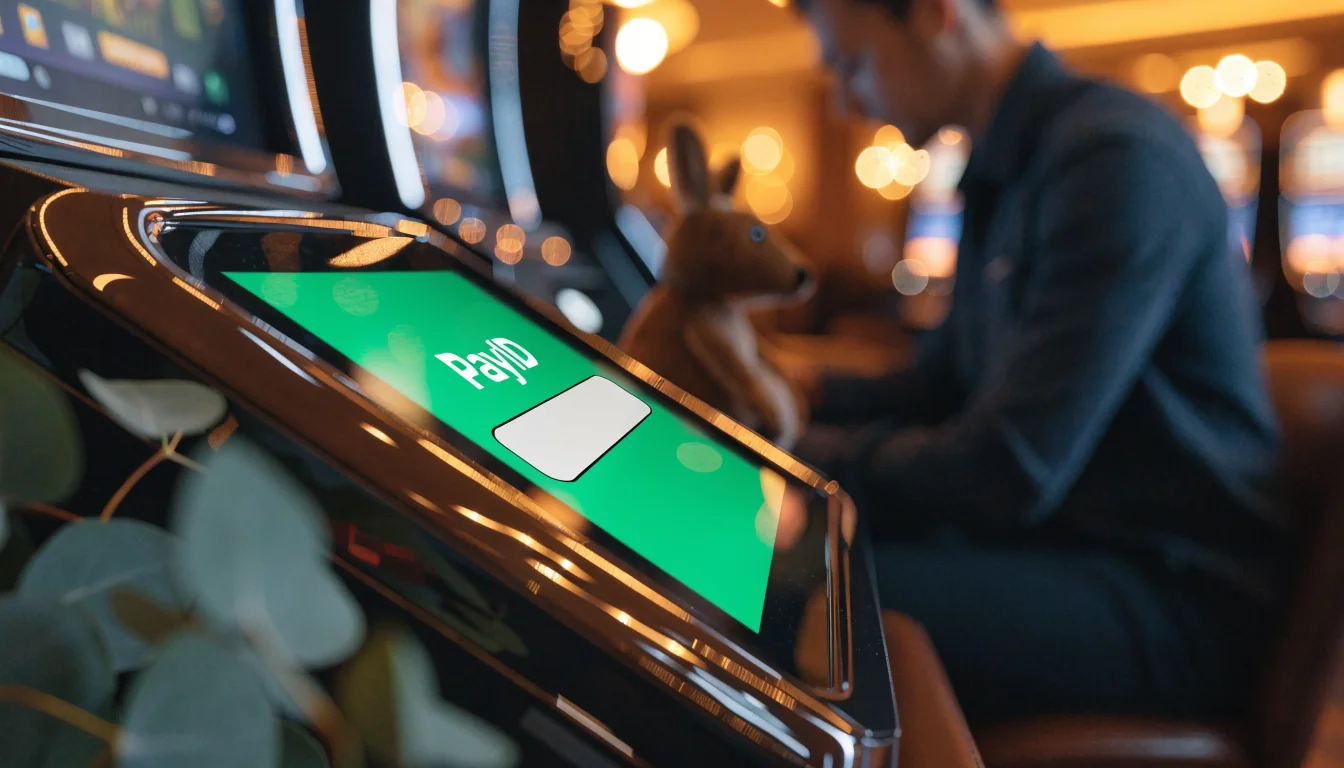
Separately, an amendment to the Casino Control Act 1992 gives NSW regulators the power to fine casino operators up to AUD 100 million for compliance failures. That figure applies to casinos specifically, not to the corner pub with a bank of machines — but it’s shaped how seriously the larger operators treat their overnight compliance obligations, because the exposure at that scale isn’t something you shrug off.
The direction of travel, according to industry compliance commentary, is toward account-based pokies that keep a running record of deposits, play, and withdrawals rather than accepting anonymous cash at any hour. Whether that becomes standard practice everywhere or stays a NSW-specific push isn’t settled. Different states are moving at different speeds, and nothing here should be read as a national timeline.
What this means in the room, late at night, is less anonymity than there used to be. A machine that logs an account trail doesn’t care what time it is — the same scrutiny applies at 3am as at 3pm. That’s a genuine change from the old model, where the overnight shift was, functionally, the least-watched part of the operation.
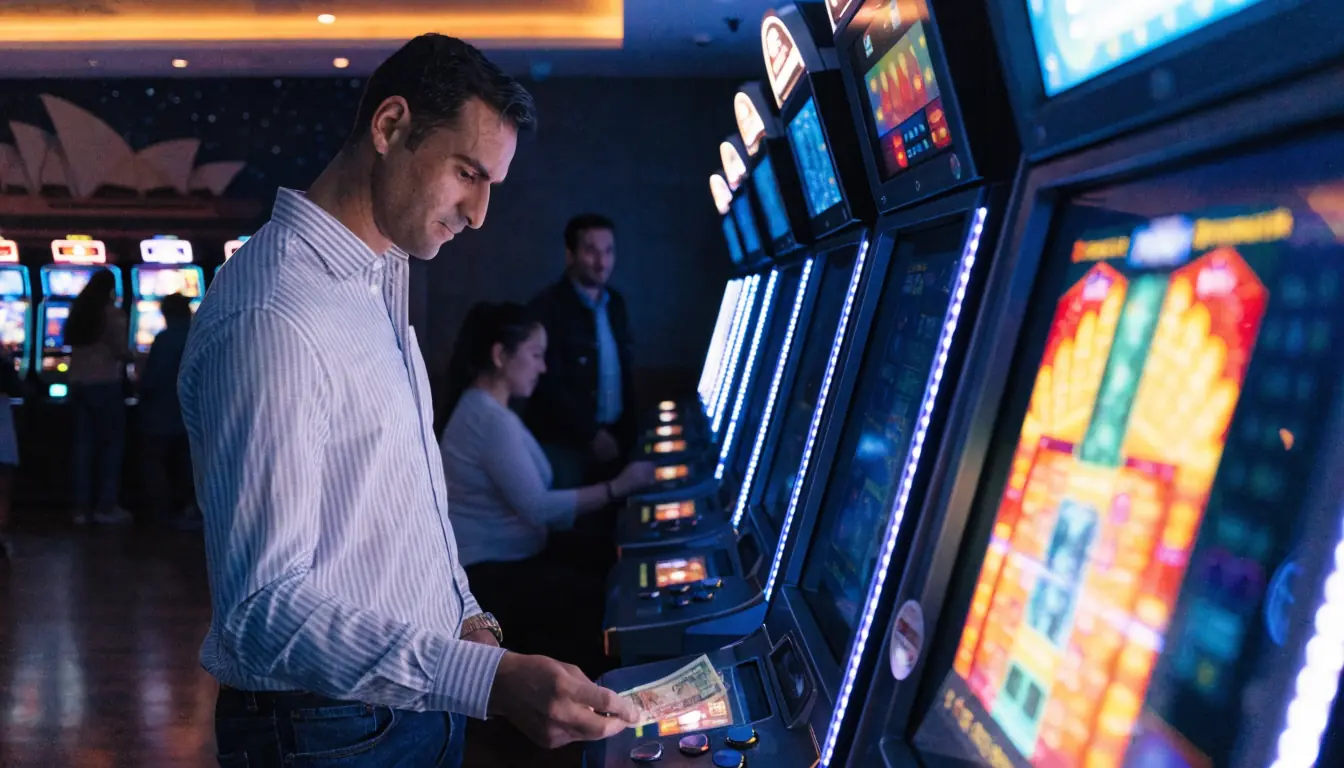
"Discreet." That’s the word venues never used to have to justify.
Practical read for anyone checking availability
A few things worth knowing before treating any listing of round-the-clock venues at face value:
- Trading hours and operating hours aren’t the same thing. A licence to run 24/7 doesn’t mean every machine is live every hour — venues scale down on quiet nights.
- Casinos may split hours by area. The main floor and specialty rooms don’t necessarily follow one schedule.
- Regulatory reviews are increasingly aimed at cash-heavy, low-oversight periods — which describes overnight trading in a lot of venues. Expect account-based and identity-linked systems to keep expanding into these hours rather than out of them.
- Compliance exposure at the top end is real. Fines running into the tens of millions for casino-level failures aren’t theoretical, and that pressure filters down into how seriously large operators police their own late-night floors.
None of this means round-the-clock pokies are disappearing. It means the version of "open now, no questions asked" that used to define the overnight shift is being replaced, gradually and unevenly, by something with a paper trail attached.
Are Pokies Open on Public Holidays like Anzac Day and Good Friday?
Public holidays sit outside the usual venue-hours logic. Anzac Day carries restrictions that don’t apply on an ordinary Tuesday: many venues keep pokies switched off until the afternoon out of respect for dawn services and commemorations, a rule tied to the date itself rather than to the venue’s normal trading pattern. Good Friday works similarly — some pubs and clubs close their gaming rooms entirely for the day, others open later than usual.
None of this is uniform. Rules sit with state and territory regulators, and a club in one state can be running machines while a comparable venue across the border stays dark. There’s no single national switch that flips for every venue at once.
The practical result: "open now" for a Tuesday afternoon tells you nothing about Anzac Day morning. Holiday hours have to be checked against that specific date, not assumed from a venue’s regular schedule. Calling ahead, or checking the venue’s own posted hours for that day, remains the only reliable way to know before turning up.
Cash‑Based Pokies and Cheque Options: What’s Available Now
Cash still works at plenty of venues. Feed in notes, play, cash out — some places still hand over a cheque rather than a straight payout. That’s the model most people grew up with, and it hasn’t disappeared everywhere just because cashless systems exist.
It also comes with more paperwork than it used to. Venues running more than 15 pokies need a compliance officer on record, risk assessments done, an AML/CFT program in place, and customer checks before certain transactions go through. Any cash transaction over AUD 10,000 gets reported. No exceptions, no "just this once."
Staff are also watching for patterns: unusually heavy cash access, large deposits, cash transfers, cheque disbursements that don’t quite add up, even certain occupations flagged as higher risk.
Not paranoia. Just the job now.
So cash-based venues are still out there. They’re just not the low-friction option they once were.
What are pokies in Australia?
Pokies are electronic gaming machines (EGMs) found in pubs, clubs and casinos across every Australian state and territory. In FY 2020–2021 Australians wagered almost AUD 150 billion on them, losing about AUD 12 billion.
Can I play online pokies for free?
Yes, but not for real money from Australian-licensed operators — the Interactive Gambling Act 2001 makes it an offence for online operators to offer real-money gambling to Australian residents. Free demo-style play exists, but any real-money online offering targets Australians illegally.
What law governs online gambling in Australia?
The Interactive Gambling Act 2001 (Cth) is the main federal law, making it an offence for online operators to offer real-money gambling to Australian residents.
How do criminals launder money through pokies?
Criminals insert large amounts of cash into machines, play minimally, then cash out to create a record of winnings, or buy winning tickets from other players. They also use money mules and structure smaller cash deposits across multiple venues to stay under reporting thresholds.
Created by the ”Casino Security Info” editorial team.