
Plinko Casino Australia 2026: Games, Sites and Stakes
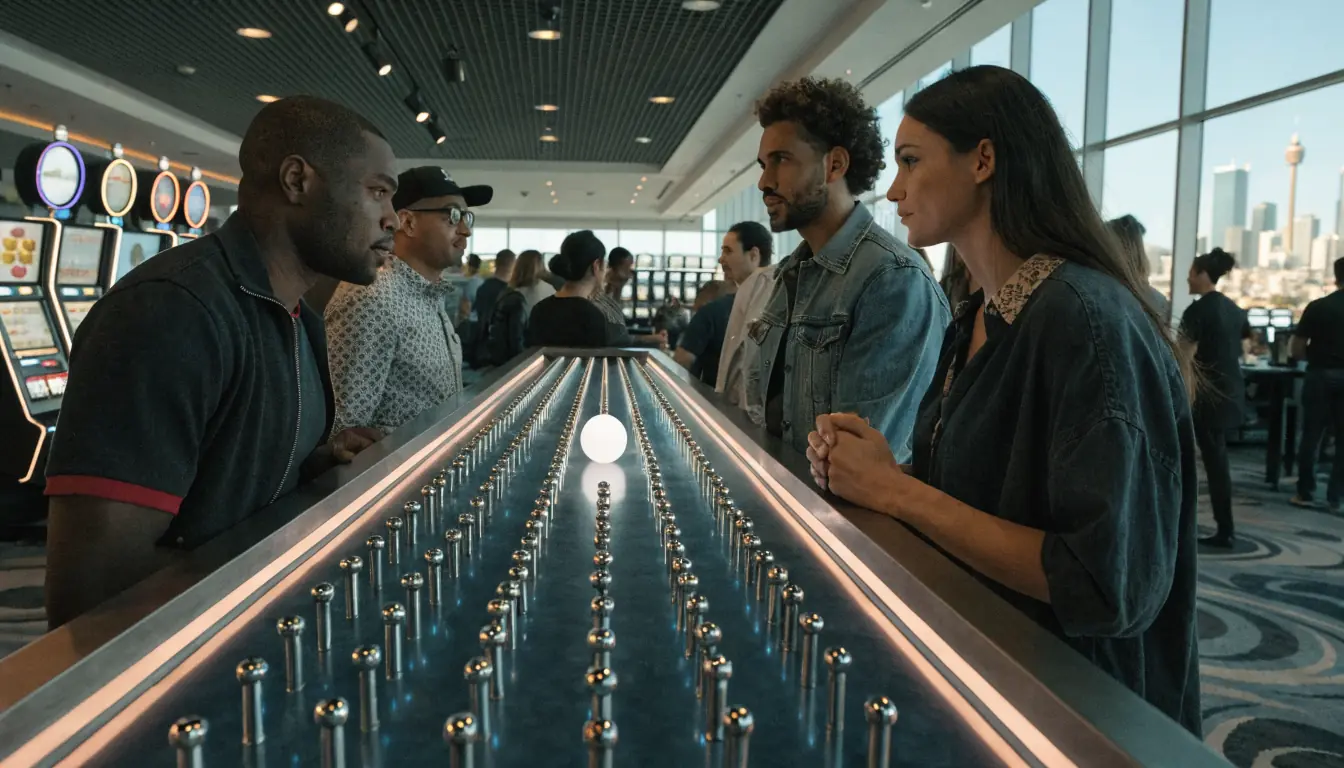
Table of Contents
- Plinko Slot Variations and How They Fit Into Australia’s Pokie Landscape
- Playing Plinko Online in Australia: Platforms, Access and Market Growth
- Real‑Money Plinko Casino Games: Stakes, Withdrawals and Player Protections
- Plinko Game Mechanics: RNG, Live‑Dealer and Demo Options
- Where to Find Plinko Casinos: Traditional Venues and Crypto‑Friendly Sites
- Quick Look at Plinko Casino Reviews and What to Expect
- Understanding the Plinko Casino Offering in Australia for 2026
- Free‑Play Plinko: Demo Modes and Responsible Gaming
- Plinko and Cryptocurrency: What the Current Landscape Shows
- Plinko in the ‘Lucky Guru’ Narrative and Its Appeal
Plinko Slot Variations and How They Fit Into Australia’s Pokie Landscape
Plinko didn’t start as a slot. It started as a board with pegs and a ball, borrowed from television game shows, and somewhere along the way software studios worked out that the same drop-and-bounce mechanic could carry a wagering structure just as well as any reel set. That’s the thing worth sitting with before comparing "gods of Plinko" to a fruit-machine pokie down at the local club: the format didn’t evolve from slots, it was grafted onto the same delivery pipe. Same RNG under the hood, same wrapper, different physics on the front end.
What a Plinko slot actually is
Strip away the branding and a Plinko slot machine is a ball-drop simulator sitting on top of a random number generator. The visual — pegs, a triangular board, a row of multipliers at the bottom — is theatre. The number that decides where the ball lands is generated before the animation even finishes rendering. That’s not a criticism, it’s how every RNG-based casino product works, Plinko included. Online casino software of this kind is regularly checked by independent testing agencies, and Plinko variants sit under the same audit umbrella as any other RNG title. What differs from one release to the next is the dressing: how many rows the board has, how the multiplier tiers are arranged, whether there’s a theme layered over the top.
Titles marketed as "Plinko Rush," "Plinko Top," or built around a mythology angle like a "gods" theme are, mechanically, the same drop-and-multiply structure wearing different skins. A player moving between a temple-themed build and a stripped-down classic board isn’t playing a different game in any meaningful sense — they’re playing the same underlying probability engine with new artwork and a different multiplier ladder printed on the board.

Where Plinko sits next to a traditional pokie
Australians already have a frame of reference for slot-style products that doesn’t need explaining twice: the pokie. The scale of that machine culture is not small. Australia holds around 3% of the world’s pub and club poker machines while accounting for roughly 0.3% of the global population — a concentration that shows up starkly at state level. New South Wales alone carries approximately 95,800 pokies. On the Central Coast, a single region holds 4,672 of them, which works out to 2.37% of the country’s entire pokie stock. Break it down further and the density gets uncomfortable to look at directly: Gosford has about 1,928 machines, close to one for every 71 adults; Wyong has around 2,608, near one per 47 adults.
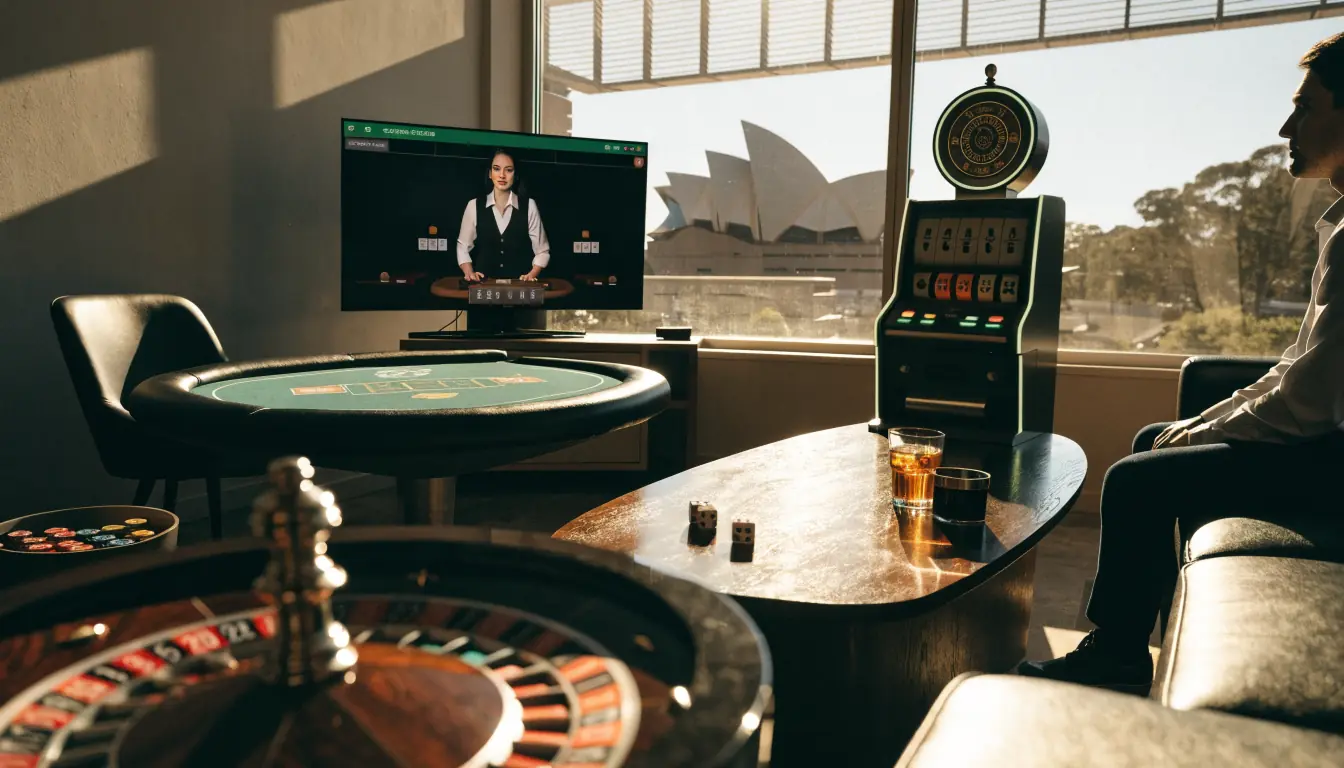
I mention this not to pad out a Plinko piece with unrelated pokie statistics, but because it’s the backdrop every Australian player carries into any slot-adjacent game without necessarily thinking about it. A machine standing in a club in Wyong and a Plinko board rendered on a screen are addressing the same appetite — a quick, visual, outcome-in-seconds wager — through two completely different regulatory doors. The physical pokie sits inside a licensed, state-regulated venue. The online Plinko slot, RNG and all, sits outside any domestic licensing framework altogether, because no such framework for online casino products exists in Australia. Same appetite, same underlying randomness, entirely different legal footing. That distinction runs through everything else in this article and it starts right here, at the level of "what is this thing."
Slot category, not table game
Within the online space itself, Plinko gets filed alongside other slot products. Slot games — what Australian sites and players call online pokies — are the dominant category on most Australian-facing online casino platforms, and Plinko titles ride in under that same umbrella rather than being treated as a separate genre. That’s a deliberate classification choice by operators, not an accident of naming. Grouping Plinko with online pokies puts it next to the highest-traffic, highest-familiarity category on the site, rather than filing it under table games or specialty games where it would get less visibility. Worth knowing when you’re trying to work out why a Plinko board is sitting three tiles away from a five-reel video slot in a lobby — it’s a merchandising decision, not a mechanical one.
Plinko is filed under the online slot (pokie) category in Australian markets, not as a separate table‑game genre, which affects its placement in casino lobbies.
The variations that actually matter
Not every difference between Plinko builds is cosmetic. A few genuinely change how the game plays, even if none of them change what it fundamentally is:
- Board size and row count — more rows generally means more possible landing positions and a wider spread between the lowest and highest multiplier slots. Fewer rows means a tighter, faster game.
- Multiplier layout — how the values are arranged across the bottom row (symmetrical, weighted toward the centre, or skewed toward the edges) shapes how often a ball lands somewhere unremarkable versus somewhere dramatic.
- Theming layer — a “gods” theme, a temple theme, a straightforward numbered-board version. This is pure presentation: sound design, background art, symbol replacement. It doesn’t touch the RNG.
- Auto-play and batch-drop features — some builds let a player queue multiple ball drops at once rather than dropping one at a time. This changes pacing, not odds.
- Demo availability — many Plinko builds, like other slot games generally, can be played in a demo mode using virtual funds rather than real balance, letting a player see the board behaviour without a wager attached.
That last point deserves a beat of its own, because it’s the cleanest way to separate what people mean when they search for "Plinko slots demo" versus a real-stakes version of the same board. The demo isn’t a watered-down cousin — it typically runs the identical RNG-driven engine, just detached from a cashier. The difference is entirely in what’s at stake, not in how the ball falls. Real-money mechanics, deposit rules, and withdrawal conditions belong to a different conversation than the one this section is having — they’re covered on their own further into this piece.
Why the variation matters more than the theme
I’ve sat through enough pitch decks dressed up with mythology and "power multiplier" language to say this plainly: the theme is the part that gets marketed, and the row count and multiplier spread are the part that actually determines how the game behaves session to session. A studio can release ten differently-named Plinko products off one core build with nothing more than new art and a repositioned multiplier table. That’s not a flaw in the format — it’s just how slot production works at scale, Plinko included, and it’s no different from how a dozen fruit-themed pokies at a Central Coast club can share one underlying cabinet architecture.

What doesn’t change, across every version, is the randomness engine sitting underneath. Online casino games of this type use random number generators to decide outcomes, and that principle holds whether the board is called "Plinko Rush" or dressed up as a temple relic. The bounce animation gives the impression of physics deciding the outcome. It doesn’t. The RNG decided before the ball left the top peg.
The bigger picture
The online casino sector generally has picked up pace as technology has moved forward globally, and Plinko is one of the smaller beneficiaries of that shift — a simple mechanic that translates well to a phone screen and doesn’t need much explaining to a new player. Sitting it next to Australia’s pokie numbers isn’t a stretch: both are chasing the same short-session, high-frequency style of play. The venue, the licensing, and the legal footing are where they part ways entirely — and that’s the ground the next sections cover.
Offshore sites offering Plinko to Australian players do not hold a domestic licence; the operator’s offering is technically prohibited under the Interactive Gambling Act.
Playing Plinko Online in Australia: Platforms, Access and Market Growth
No Australian state or territory regulator issues a licence for online Plinko, or for any other online casino game, so "platform" here doesn’t mean a local operator with an ACMA-issued number on its footer. It means an offshore site, usually licensed somewhere in Europe or Malta, that Australian residents can technically reach and technically play on. The Interactive Gambling Act 2001 doesn’t stop the player from clicking through — it stops the operator from being allowed to offer the game to them in the first place. That gap between "illegal to offer" and "not illegal to access" is where the entire online Plinko market in Australia actually lives.
I’ve watched people search for a straightforward answer to "what online casino has Plinko" expecting a shortlist with a green checkmark next to the legitimate ones. There isn’t one. There’s no register to check the name against, because there’s no domestic licensing regime that produces a register. Any site claiming to be the licensed Australian home of Plinko is either wrong or hoping you won’t ask.
How access actually works
Plinko itself is simple mechanically — a ball drops through pegs into a payout slot — which is exactly why it travels so well between formats. On offshore platforms it typically shows up two ways:
- RNG-based Plinko: a software version where the drop outcome is generated by a Random Number Generator, audited by independent testing agencies the same way other RNG-based online casino games are.
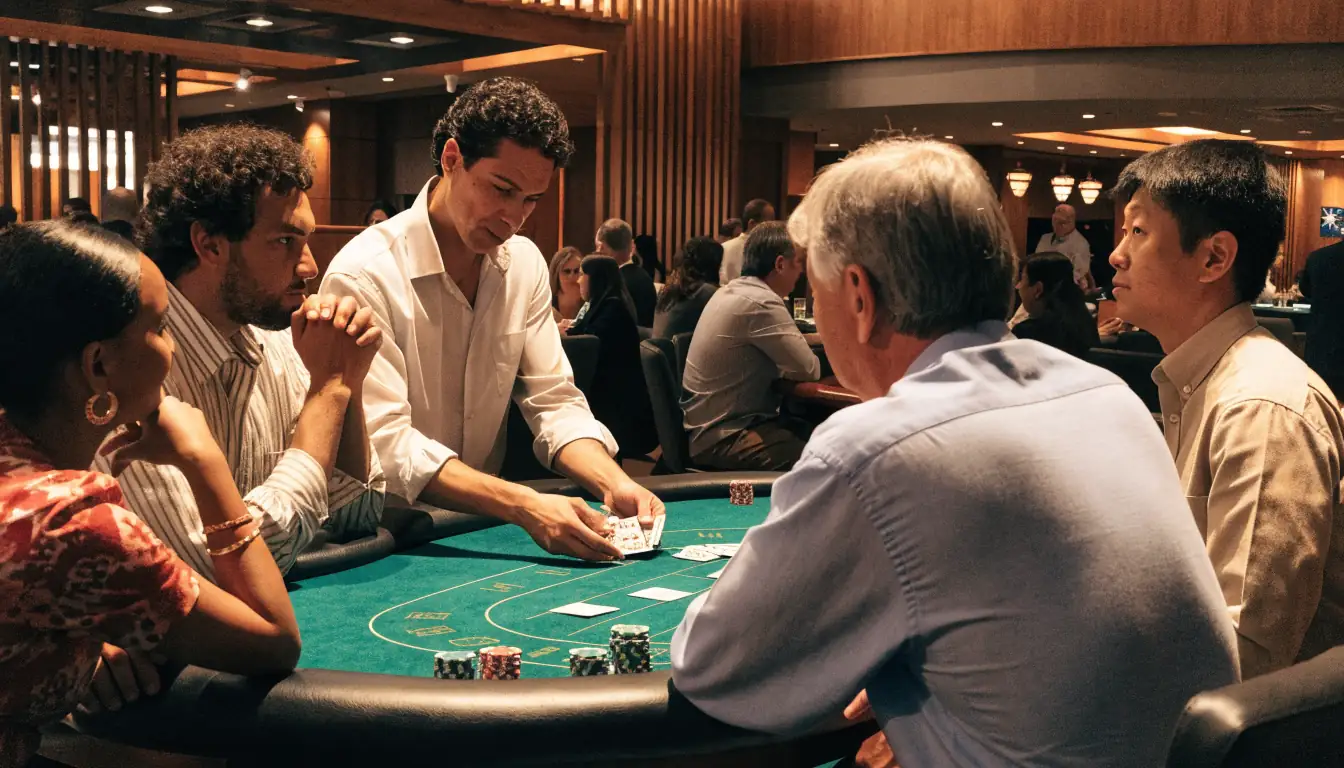
- Live-dealer style Plinko: streamed in real time, with a host running the drop instead of software determining it invisibly. This format leans on the same production infrastructure used for live-dealer table games — cameras, a studio, a human presence — which is part of why it reads as more transparent to some players even though the underlying randomness claim is harder to verify from the outside.
Both versions exist because both exist for casino games generally — this isn’t a Plinko-specific innovation, it’s Plinko riding infrastructure built for poker, blackjack and roulette.
The growth story, and what it actually tells you
The line you’ll see repeated across the industry is that online casino activity has grown on the back of broader technological change — better streaming, better mobile access, more payment rails — and that the number of online casino sites, Australian-facing operators included, keeps climbing. That’s a real trend, but it comes from one industry review looking at a fast-moving subject, not from a regulator counting licences, because there are no licences to count. Treat it as directional, not as a market size you can bank on.
What’s worth noticing is what’s not driving that growth: it isn’t domestic legalisation. Nothing changed in the Interactive Gambling Act to open this up. The growth is happening entirely offshore, in a regulatory space Australia doesn’t control and doesn’t tax, which is precisely why it keeps expanding faster than anything a local regulator could greenlight through normal channels.
Market growth figures are directional – they reflect industry observations, not official licence counts, because no Australian licence exists for online casino games.
Where ACMA actually sits in this
The Australian Communications and Media Authority oversees online gambling regulation in the sense that it enforces the IGA against operators — it issues formal warnings, refers matters on, and can act against services found to be offering prohibited products to Australian residents. What it does not do is license, inspect, or vouch for any Plinko platform. Its role is closer to a border check than a quality stamp. A site staying online despite ACMA’s remit isn’t evidence of compliance; it’s evidence of how hard offshore enforcement actually is.
This matters for how "regulated environment" gets used in marketing copy. When a platform says it operates in a regulated environment, it usually means regulated somewhere else — Malta, the UK, Curaçao — not regulated for the Australian market, because that regulation doesn’t exist. The distinction sounds pedantic until you need to file a complaint and discover which country’s rules actually apply to your account.
Age gates and what they’re worth
Every legitimate-looking platform will ask for a birthdate before letting anyone near a Plinko board, and the number that matters is 18 — that’s the minimum age set for online casino operators serving Australia, same as everywhere else in the sector. Self-declared birthdates aren’t verification, though; genuine identity checks tend to surface later, usually at withdrawal rather than sign-up. Worth remembering before assuming an age gate at the door means the account has actually been vetted.
The bonus layer that comes with access
Almost every Plinko-carrying platform greets new accounts with some kind of welcome offer, and almost every one of those offers comes wrapped in conditions — wagering requirements before winnings can be withdrawn, restrictions on which games count toward clearing them, and expiry windows that quietly void the bonus if it isn’t used in time. None of that is unique to Plinko. It’s the standard shape of online casino bonus terms generally, and Plinko games get folded into it the same way any other title does.
The terms are usually there, in writing, before the deposit goes through. Reading them changes very little about whether to play. It changes a lot about what "free" actually turns out to mean.
None of this makes the growth of online Plinko access illusory — people are clearly finding these platforms and playing on them in growing numbers, per that same industry-wide reading of the market. It just means growth and legality are two separate questions, and only one of them has a straight answer.
Real‑Money Plinko Casino Games: Stakes, Withdrawals and Player Protections
The question I get asked most about Plinko isn’t how the ball drops. It’s whether playing it for actual money is something an Australian can legally do. The honest answer sits in a gap most marketing copy skips over entirely.
Illegal Offering
Any operator that supplies real‑money Plinko to Australian residents without an Australian licence is breaching the law and can be subject to enforcement action.
Federal law here doesn’t touch the player. The Interactive Gambling Act 2001 — sources also cite an earlier 1997 version, and I won’t pretend that discrepancy doesn’t exist — prohibits online casino style games, including slots, poker, blackjack and roulette, from being offered to Australian residents. Plinko, dressed up as a slot or a drop-game, falls into that same bucket. But the Act was built to restrict operators, not to criminalise the person placing a bet. So an individual playing Plinko for real money on an offshore-licensed site isn’t breaking the law. The site offering it to them, if it’s doing so without authorisation to operate in Australia, is the one standing on the wrong side of it.
That distinction is the whole reason this market looks the way it does. No operator can legally run real-money Plinko from inside Australia, so every real-money option a player finds will be based offshore, licensed elsewhere, and reachable only because the law doesn’t reach across borders to stop the player from clicking through.

What "real money" actually involves
Once actual funds are on the table, three things change from demo play: stakes carry real risk, withdrawals require verification, and bonus terms stop being cosmetic.
- Stakes. Real-money Plinko lets a player set a wager before each drop, and that amount is deducted regardless of outcome. There’s no verified figure I can point to for typical stake ranges across operators, and I’d rather say that than invent one.
- Withdrawals. Cashing out real winnings triggers identity checks. This isn’t a Plinko-specific quirk — it’s standard practice tied to age and residency confirmation, since the minimum age to play at any online casino operator is 18, and platforms generally require players to be Australian residents to participate at all.
- Bonus terms. Any deposit bonus, free spin offer, or “bonus cash” tied to Plinko will carry wagering requirements, restrictions on which games count toward clearing them, and an expiry window. What those numbers actually are isn’t something I can state here — operators publish their own terms, and they vary by site and by promotion. Anyone chasing a bonus should read that specific operator’s terms before assuming anything.
Where the "no deposit bonus" claim falls apart
A lot of search traffic around Plinko is chasing the phrase "no deposit bonus" — free credit, no card required. I’ll say plainly: I have no verified data on which operators offer this for Plinko specifically, what the credit amount is, or what strings are attached. Any number you see quoted elsewhere for this should be treated as promotional copy, not fact. Promising figures I can’t back up would be worse than saying nothing.
Player protections that actually apply
The 2001 Act was framed around harm minimisation, not prohibition for its own sake. That framing matters because it shapes what protections exist even in a market with no domestically licensed real-money casino operators:
- Age and residency verification before withdrawal — a control point, not just paperwork.
- Wagering terms disclosed before a bonus is accepted, not buried after the fact.
- The player, not the operator, retains legal standing simply by choosing to play — but that standing offers no recourse if an offshore site refuses a withdrawal or changes its terms mid-promotion. There’s no domestic regulator to complain to about an operator based outside Australia.
That last point is worth sitting with. "Player protections" in this context means protection from prosecution, not protection of your bankroll. Those are different things, and no operator’s homepage will make that separation for you.
Apps and downloads
Some real-money Plinko products exist as downloadable apps rather than browser-based play. The legal position doesn’t shift based on whether the game runs in a browser or an installed app — it’s the same offshore-operator, same-player framework either way. A download doesn’t confer legitimacy any more than a browser tab removes it.
Crypto as a stake option
Cryptocurrency deposits for real-money Plinko come up often in search behaviour, and I’ll cover the landscape for that separately. For stakes and withdrawals specifically: crypto doesn’t change the legal position of the player, and it doesn’t create a domestic licensing pathway that doesn’t otherwise exist.
None of this means real-money Plinko is unavailable to Australians. It means the safety net people assume comes with "real money" — a regulator, a complaints body, an enforceable licence — isn’t part of the picture here in the way it is for sports betting or lotteries.
Bonus Terms
Welcome offers on Plinko platforms usually carry wagering requirements and expiry windows that can nullify the bonus if not met.
Plinko Game Mechanics: RNG, Live‑Dealer and Demo Options
Strip away the branding and a Plinko board is one of two things underneath: a random number generator producing a result, or a camera pointed at a physical board with a real person running it. Everything else — the theme, the multipliers shown on screen, the sound design — sits on top of one of those two engines.
The RNG version is what most people mean when they say "Plinko casino game." There’s no physical disc, no gravity, no board. The software calculates where the ball lands the way any online pokie calculates a reel outcome — through an algorithm designed to produce results that can’t be predicted or influenced. That algorithm is the same category of engine used across roulette, blackjack and slot titles online. Online casino software uses random number generators that are regularly audited by independent testing agencies, which is the whole point of the exercise: nobody buys the outcome, including the operator running the site.
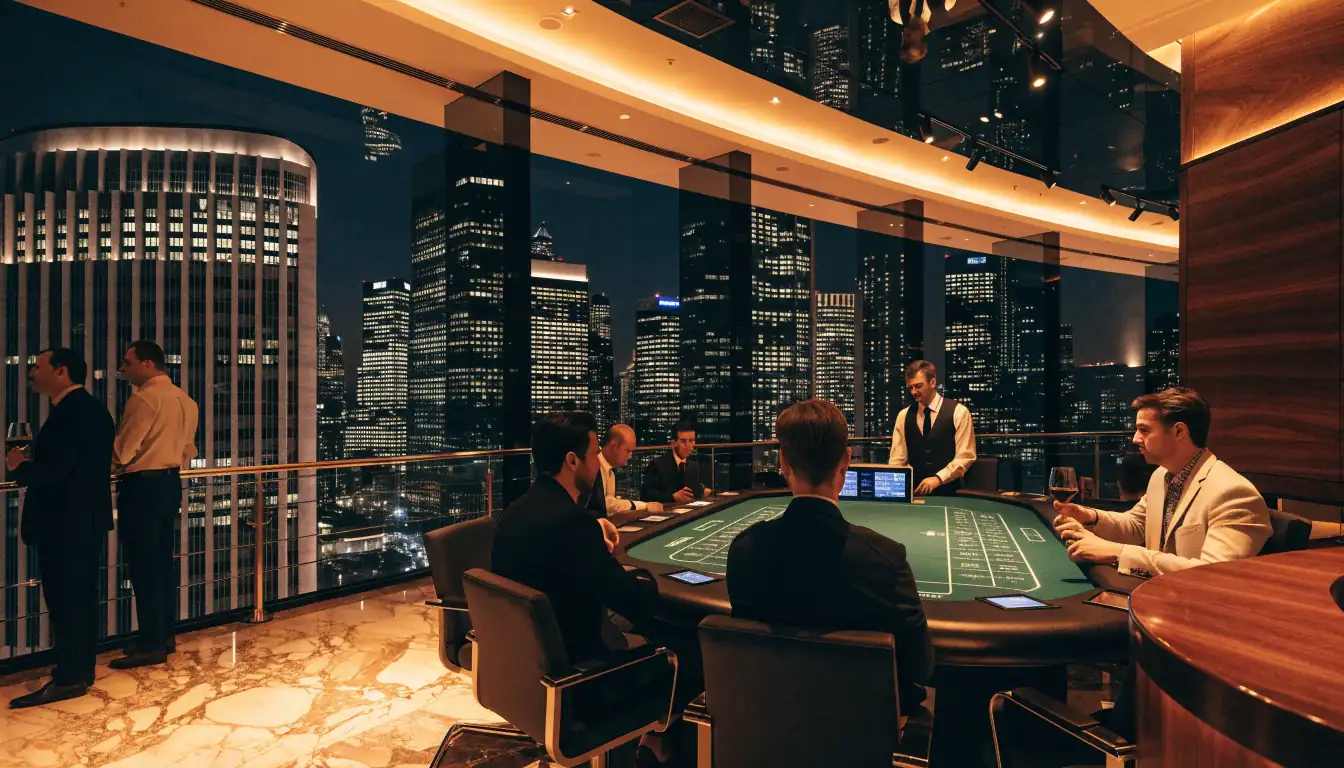
Live-dealer Plinko works differently, and it’s worth knowing the difference before assuming they’re interchangeable. Live dealer games are streamed in real-time with professional dealers, giving the format an immersive feel that RNG versions don’t attempt to replicate. In practice that means an actual board, an actual drop, and a video feed instead of a number generator quietly running in the background. It’s closer to watching a live roulette wheel than playing a slot. The trade-off is pace — a live stream runs on its own rhythm, while an RNG round resolves as fast as the software allows.
Why the distinction matters
I’ve seen players assume "live" means "fairer," as if a camera somehow proves more than an audit does. It doesn’t work that way. Both formats are built to the same fairness standard in principle — one through algorithmic certification, the other through physical transparency. Neither format guarantees anything about long-term results; they just prove the short-term process wasn’t rigged.
Live‑dealer Plinko rarely provides a free‑play demo because streaming a physical board incurs production costs, unlike RNG versions.
Demo mode: same mechanics, no stake
Most Plinko titles built as slot-style RNG products come with a free-play option. Many slot games can be played in demo mode with virtual funds, and Plinko sits comfortably in that category since it’s classified as one of the dominant slot-style formats — the online pokies — on Australian-facing casino sites. Demo mode runs the identical RNG engine behind the scenes; the only thing missing is a real balance. It’s the fastest way to see how a specific board’s multiplier layout behaves before deciding whether it’s worth a real stake, and it’s the version most people should start with regardless of experience.
Live-dealer Plinko generally doesn’t offer that same free option — a streamed dealer and board involve real production costs, so operators don’t typically run a no-stakes version of it. That’s a practical limit of the format rather than a rule written anywhere, but it holds across most live casino offerings, not just Plinko.
The short version: RNG for speed and demo access, live-dealer for the theatre of watching a real board. Different engines, different experience, same underlying question — did the result actually happen at random.
Where to Find Plinko Casinos: Traditional Venues and Crypto‑Friendly Sites
Ask "where can I actually find Plinko" and the honest answer splits into two very different worlds, and neither of them is a licensed Australian online casino — because that category doesn’t exist.
Land‑based venues
Plinko in its physical, mechanical form — a board, pegs, a ball dropped from the top — is closer to a carnival game or a novelty attraction than a pokie. Pubs and clubs running poker machines under state licences don’t typically stock a physical Plinko board next to the pokie floor; it’s not the same regulatory category, and the machines that dominate those venues are the video and reel-based ones I’ve already covered. If you’ve seen Plinko live, it was more likely at a show, an event, or a themed attraction than a licensed gaming room.
Where the digital version actually lives
The Plinko people search for online — the drop-a-ball, watch-it-bounce, collect-a-multiplier version — lives almost entirely on offshore sites. That’s a direct consequence of the law, not a gap in the market. The Interactive Gambling Act 2001 makes it illegal to offer online casino games, Plinko included, to anyone in Australia, and the Australian Communications and Media Authority enforces that against operators, not players. The result: there are no domestically licensed real-money online casino operators an Australian player can turn to. Every site offering real-money Plinko to an Australian audience is doing so from outside the jurisdiction the IGA actually reaches.
Crypto‑friendly sites
Among those offshore operators, a subset markets itself specifically around cryptocurrency deposits — Bitcoin, Ethereum, sometimes a handful of other coins. That positioning is partly a payments workaround and partly a branding choice aimed at players who’ve already decided they want distance from card-based tracking. It doesn’t change the legal picture underneath. A site accepting Bitcoin for Plinko stakes sits in the same offshore, unlicensed-for-Australia category as one accepting Visa or Mastercard — the currency is different, the regulatory status isn’t.
Crypto Misconception
Using cryptocurrency for Plinko stakes does not alter the legal status – the game remains unlicensed for Australian players.
What "licensed" means here
Reviews and landing pages love the word "licensed." Worth asking: licensed where. None of these operators hold an Australian licence, because none can. Any licence displayed belongs to another jurisdiction entirely, and there’s no local register to check it against. That’s not a technicality — it’s the whole reason "find a licensed Plinko casino in Australia" is a question without a domestic answer.
Quick Look at Plinko Casino Reviews and What to Expect
Read enough Plinko write-ups — whether the title says Plinko Rush, Plinko Deluxe, Plinko Verde, or just borrows a name like "Mr Beast Casino" for attention — and a pattern shows up fast. Every review circles back to the same two questions: what does the bonus actually cost you, and can you even play this legally from here.
On bonuses, the reviews all describe the same mechanism, just dressed differently. A welcome offer or free-play credit comes attached to wagering requirements, restrictions on which games count toward clearing them, and an expiry date after which the offer disappears whether you’ve used it or not. "Free" spins on a Plinko board are rarely free of conditions — the conditions are just printed smaller than the headline number.
On legality, most reviews either skip the question or answer it vaguely. Worth being direct here: it’s not illegal for an individual in Australia to play at an offshore-licensed site. The law is written to target the operators offering these games, not the person playing them. That’s a narrower statement than "it’s legal," and reviews that blur the two aren’t being careful with the distinction.
What a review won’t tell you, because it usually doesn’t say, is whether the site holds any licence that means something in this market. Names like "Plinko Casino Free" promise low stakes or no stakes; they don’t promise oversight.
Before digging into a specific platform, it helps to treat reviews as a first pass, not a verdict. They flag the bonus terms and the participation question. The details — deposit rules, verification, what happens at withdrawal — sit in the next layer down.
Understanding the Plinko Casino Offering in Australia for 2026
Before you try Plinko at any casino, it helps to know how each site is licensed, what its welcome offer looks like, and how quickly you can get your winnings out. Here’s a quick rundown of options worth a closer look in 2026.
License: Curacao · Bonus: up to A$2,000 Holds a Curacao license and offers a welcome bonus worth up to A$2,000, giving newcomers a solid starting bankroll.
Bonus: 100% up to A$750 + 200 free spins, 35x wagering · Payout speed: crypto 30-120 minutes, fiat 24-72 hours · Min. deposit: A$30 Pairs a 100% match bonus up to A$750 with 200 free spins on 35x wagering, and stands out for fast crypto payouts alongside standard fiat processing times, all accessible with a low A$30 minimum deposit.
License: Curacao eGaming (Roby Games Ltd) · Bonus: 100% up to A$750 + 200 free spins Licensed under Curacao eGaming via Roby Games Ltd, with a welcome package matching deposits 100% up to A$750 plus 200 free spins.
License: Curacao Gaming Control Board · Bonus: up to A$5,000 + 400 free spins Regulated by the Curacao Gaming Control Board and backs new players with a generous offer of up to A$5,000 plus 400 free spins.
License: Curacao Gaming Authority (Jumpman Gaming Ltd) · Bonus: up to A$6,600 + up to 250 free spins across 4 deposits Operated by Jumpman Gaming Ltd under a Curacao Gaming Authority license, spreading a bonus of up to A$6,600 and up to 250 free spins across four deposits.
License: Curacao eGaming OGL/2023/174/0082 (Dama N.V.) · Bonus: up to A$10,000 + 500 free spins across 4 deposits · Min. deposit: A$15 Licensed by Curacao eGaming under Dama N.V., offering a large welcome package of up to A$10,000 and 500 free spins spread over four deposits, with an accessible A$15 minimum deposit.
License: Curacao, operated by Dama N.V. · Bonus: 325% up to 5.25 BTC + 250 free spins across 4 deposits Run by Dama N.V. under a Curacao license, this crypto-friendly casino offers a 325% bonus up to 5.25 BTC plus 250 free spins split across four deposits.
License: Curacao Gaming Control Board OGL/2023/176/0095 (Hollycorn N.V.) · Bonus: up to A$11,000 + 300 free spins (code NEO100) Licensed by the Curacao Gaming Control Board through Hollycorn N.V., with a bonus of up to A$11,000 and 300 free spins available via a specific promo code.
License: Curacao Gaming Control Board OGL/2023/176/0095 (Hollycorn N.V.) · Bonus: up to A$5,000 + 300 free spins across 4 deposits Also operated by Hollycorn N.V. under the same Curacao Gaming Control Board license, offering up to A$5,000 plus 300 free spins across four deposits.
License: Curacao (operating since 2017) · Bonus: 250% up to A$2,000 + 50 free spins on the first of six deposits · Min. deposit: A$20 An established operator running since 2017 under a Curacao license, offering a 250% bonus up to A$2,000 with 50 free spins on the first of six deposits, and a low A$20 minimum deposit.
Zoom out from any single site or game type, and the picture for plinko casino Australia searches in 2026 looks less like an industry and more like a workaround. No domestic operator can hold a licence to run online casino games — Plinko included — because the Interactive Gambling Act 2001 doesn’t allow that licence to exist. So the "offering" Australians actually encounter is offshore by default, not by preference.
That matters for how the whole market should be read. Slot titles — what locals call online pokies, the dominant category on the sites that do exist — sit under the same rule as Plinko: both are built on the same RNG foundations, both are legally out of reach for any local sourced or licensed provider. The Australian Communications and Media Authority oversees this space, but its powers point at enforcement against operators, not at issuing permissions. There’s no local approval process to describe, no local rollout timeline to track. That’s the honest baseline for 2026: not growth in a regulated sense, but continuity of an offshore arrangement the law was written to discourage rather than manage.
Future enforcement by ACMA could tighten access to offshore Plinko sites, so players should monitor regulatory updates.
I’ve seen "market outlook" used to imply momentum — new titles, better terms, wider access. None of that applies here in any way that changes the legal footing. What’s worth tracking isn’t expansion. It’s whether enforcement posture shifts, whether ACMA’s actions against non-compliant sites intensify, and whether that changes what’s practically reachable. Everything else — bonus structures, table variety, payment rails — belongs to the sections that follow, not to this one.
Free‑Play Plinko: Demo Modes and Responsible Gaming
Demo mode is where most people actually meet Plinko for the first time. No deposit, no account balance at risk — just virtual funds standing in for cash, dropped through the same board, hitting the same pegs. Many slot titles offer this free‑play option, and Plinko is no exception. It’s a straightforward way to see how the drop behaves, how the multiplier slots pay out, before any real money enters the picture.
Underneath, demo mode runs on the same engine as the paid version. The Random Number Generator determining where each ball lands is the identical piece of software, audited by the same independent testing agencies that check the real‑money product. "Free" here doesn’t mean simplified or rigged softer — it means the stakes are removed, not the mechanics.
What demo mode can’t do is teach restraint. That’s a separate discipline. Time limits, spending awareness, knowing when a session should end — none of that gets tested when nothing is actually lost. Responsible‑gaming measures exist precisely because the free version feels consequence‑free right up until the real one doesn’t.
Practice the drop in demo mode. Practice the stopping in real life.
Plinko and Cryptocurrency: What the Current Landscape Shows
Search around crypto-based Plinko turns up scripts, white-label templates, offshore sites accepting Bitcoin or Ethereum — and not much else that’s verifiable. No regulator publishes numbers on how many Australians use crypto to fund Plinko play, and no operator discloses that data either. Anyone claiming otherwise is filling a gap with a guess dressed up as a fact.

What’s not a guess is the legal framing around it. Online casino games, Plinko included, are prohibited under the Interactive Gambling Act 2001 regardless of what currency moves through them. Paying in Ethereum instead of a bank transfer doesn’t change which side of the law an operator sits on — it just changes the payment rail. The restriction on this market goes further still: digital currencies aren’t meant to be accepted for deposits or betting at all under the compliance rules that apply here.
So the "crypto Plinko" pitch survives mainly as marketing language aimed at circumventing card and bank restrictions — not as evidence of a distinct, regulated product.
Official sources don’t publish figures on this segment.
Plinko in the ‘Lucky Guru’ Narrative and Its Appeal
Every few months a new packaging trick shows up around Plinko: a review site or landing page dressed up as some benevolent "guru" pointing you toward a "lucky" board. It’s marketing copy wearing a costume. Strip the branding away and it’s the same peg-and-ball drop discussed everywhere else on this page.
The appeal is obvious — a name like that promises insider knowledge, a shortcut past the odds. There isn’t one. No character, mascot or review persona changes what happens when a disc falls through pegs.
What matters more is where these narratives can legally appear. Advertising for online casino products can’t run on social media or general online platforms, and it can’t be aimed at or shown to minors on TV, in stadiums or online. A "lucky" mascot doesn’t get an exemption from that. If a promotion is dodging those restrictions rather than following them, that’s worth noticing before anything else about the pitch.
Can I play online pokies for free?
Yes, many slot games offer a demo mode using virtual funds instead of your real balance. The demo typically runs the same RNG-driven engine, so the board behaves the same — only the wager is absent.
What is Plinko’s place among online pokies in Australia?
Plinko is classified alongside slot games (online pokies) on most Australian-facing casino sites rather than as a table or specialty game. It’s a merchandising choice by operators, since slots are the dominant, highest-traffic category.
How can I verify if a gambling operator is legal?
Online gambling in Australia is regulated by the Australian Communications and Media Authority (ACMA). Note that there are no domestically licensed real-money online casino operators for Australian players — online casino games are prohibited under the Interactive Gambling Act 2001, which targets operators, not individual players.