Pokies Parlour Casino Australia: How They Work in 2026
 Available in AU
Understanding Pokies in Australian Parlours and Casinos
I’ve watched people push twenty-dollar notes into a pokie for an hour without saying a word to anyone. Nobody at the venue thinks that’s unusual. That’s the first thing to understand about pokies in Australia: the machines aren’t a niche curiosity tucked into the corner of a casino. They’re everywhere — pubs, clubs, casino floors — and everyone in the room treats that as ordinary.
Electronic gaming machines, or "pokies" as they’re called on this market, operate in every Australian state, plus the Australian Capital Territory and the Northern Territory. There’s no state or territory where the machines are simply absent. That uniformity is itself worth pausing on — most gambling products vary sharply by jurisdiction, but pokies have become a fixture nationwide, regardless of local politics or population size.
The scale nobody quite advertises
Numbers around pokies get thrown around loosely in marketing copy, so it’s worth being precise about what’s actually documented.
In the 2020–2021 financial year, Australians placed bets worth almost AUD 150 billion on electronic gaming machines. That’s turnover — money cycled through the machines, not money lost outright, since a large share of any bet gets returned to players as winnings that get bet again. But even accounting for that churn, the total player loss for the same year came to about AUD 12 billion. Divide that by the population and you get a per-capita loss of AUD 608 for that financial year — meaning the average Australian, including people who never touch a pokie, effectively lost that much through the machines.
Before spinning the reels at any online pokies parlour in 2026, it pays to check how each casino stacks up on licensing, bonuses and payout terms.
License: Curacao · Bonus: up to A$2,000 Holds a Curacao license and offers a welcome bonus of up to A$2,000 for new players.
Bonus: 100% up to A$750 + 200 free spins, 35x wagering · Payout speed: crypto 30-120 minutes, fiat 24-72 hours · Min. deposit: A$30 Offers a 100% match bonus up to A$750 plus 200 free spins with 35x wagering, backed by fast crypto payouts (30-120 minutes) or fiat payouts within 24-72 hours, and a low A$30 minimum deposit.
License: Curacao eGaming (Roby Games Ltd) · Bonus: 100% up to A$750 + 200 free spins Licensed under Curacao eGaming via Roby Games Ltd, with a 100% bonus up to A$750 plus 200 free spins for newcomers.
License: Curacao Gaming Control Board · Bonus: up to A$5,000 + 400 free spins Operates under a Curacao Gaming Control Board license and provides a generous welcome package of up to A$5,000 plus 400 free spins.
License: Curacao Gaming Authority (Jumpman Gaming Ltd) · Bonus: up to A$6,600 + up to 250 free spins across 4 deposits Licensed by the Curacao Gaming Authority through Jumpman Gaming Ltd, offering a substantial bonus of up to A$6,600 with up to 250 free spins spread across four deposits.
License: Curacao eGaming OGL/2023/174/0082 (Dama N.V.) · Bonus: up to A$10,000 + 500 free spins across 4 deposits · Min. deposit: A$15 Backed by a Curacao eGaming license (Dama N.V.) and a low A$15 minimum deposit, it offers a large bonus package of up to A$10,000 plus 500 free spins across four deposits.
License: Curacao, operated by Dama N.V. · Bonus: 325% up to 5.25 BTC + 250 free spins across 4 deposits Operated by Dama N.V. under Curacao licensing, this crypto-friendly casino offers a striking 325% bonus up to 5.25 BTC plus 250 free spins across four deposits.
License: Curacao Gaming Control Board OGL/2023/176/0095 (Hollycorn N.V.) · Bonus: up to A$11,000 + 300 free spins (code NEO100) Licensed by the Curacao Gaming Control Board via Hollycorn N.V., with a sizeable bonus of up to A$11,000 plus 300 free spins available using a bonus code.
License: Curacao Gaming Control Board OGL/2023/176/0095 (Hollycorn N.V.) · Bonus: up to A$5,000 + 300 free spins across 4 deposits Also under Hollycorn N.V.’s Curacao Gaming Control Board license, offering a bonus of up to A$5,000 plus 300 free spins spread over four deposits.
License: Curacao (operating since 2017) · Bonus: 250% up to A$2,000 + 50 free spins on the first of six deposits · Min. deposit: A$20 A Curacao-licensed casino operating since 2017, offering a 250% bonus up to A$2,000 plus 50 free spins on the first of six deposits, with a A$20 minimum deposit.
I’ve seen operators describe pokies as "just another form of entertainment," and on one level that’s true — most people who play do so for an evening’s diversion and stop when they mean to. But an industry that produces AUD 12 billion in documented annual losses isn’t a side attraction. It’s core business for the venues that host it, and the economics of the pub and club sector in Australia are built around that fact more than most patrons realise.
More recent turnover figures point in the same direction. According to complyadvantage.com, pokies generated AUD 191.2 billion in gambling turnover in 2023. I’ll flag this as reported by that one source rather than as an agreed industry benchmark — turnover figures get calculated differently depending on who’s counting and what’s included — but even treated cautiously, the number is consistent with a market that has continued to grow rather than shrink.
Where Australia sits globally is less settled. One figure holds that Australia accounts for 3% of the world’s pub and club poker machines. Another puts the number at around 18%. These are not close enough to be a rounding difference — they’re describing different things, or different counting methods, or both, and no source I’ve seen reconciles them. I’d rather say that plainly than pick whichever number sounds more dramatic. What’s not in dispute is that Australia’s per-capita exposure to pokies is unusually high for a country of its population, regardless of which global-share figure you trust.

Where the machines actually sit
The word "pokies" gets used loosely to cover three quite different settings, and the differences matter more than most overviews admit.
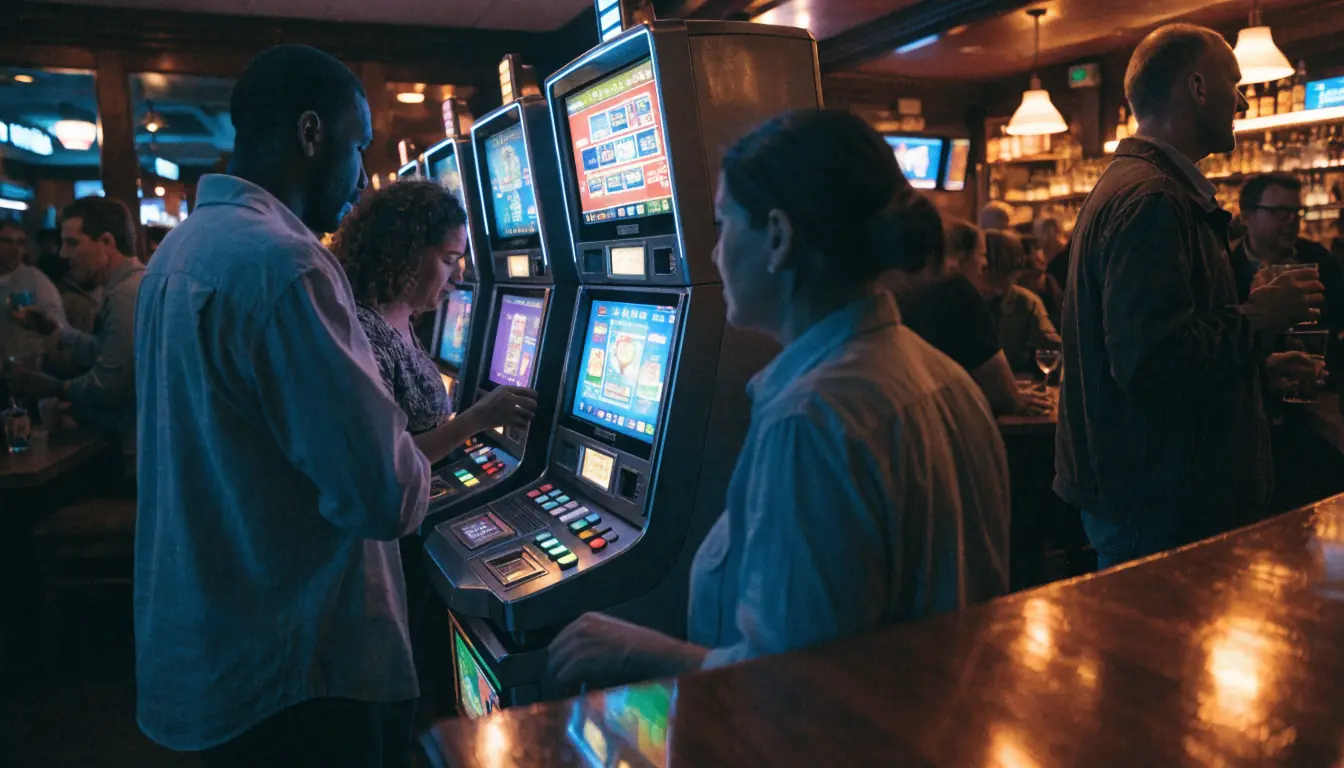
Pubs and clubs host the bulk of the machines most Australians will ever play. These are typically community clubs — RSLs, leagues clubs, local pubs with a gaming room — operating under state-based liquor and gaming licences. The atmosphere is deliberately unglamorous: carpet, ATMs near the door, a bar within view. Regulation here focuses heavily on venue-level caps, signage, and self-exclusion schemes rather than the kind of high-roller compliance seen in casinos.
Casinos hold pokies as part of a broader gaming floor that also includes table games — blackjack, roulette, baccarat. The machines sit alongside dealers, pit bosses, and a different regulatory tier entirely, because casinos are licensed individually by their state regulator under specific casino control legislation, with obligations that don’t apply to a suburban club.
Primary venue type, hosting the majority of machines in community clubs and local pubs with a gaming room.
Machines are part of a broader casino floor with table games and a dedicated casino licence.
Blend pub‑style accessibility with casino‑style service, operating under a standard pokies licence rather than a separate regulatory category.
Parlour-style venues — a term used more loosely in marketing than in law — blend the accessibility of a pub gaming room with some of the service trappings of a casino floor: dedicated staff, loyalty tracking, sometimes a members’ lounge. I’ll come back to what actually distinguishes these venues in the next section; for now, the point is that "pokies parlour" isn’t a separate regulatory category so much as a business model layered on top of the same underlying machines.
What doesn’t change across any of these settings is the core mechanic: insert money, spin, and the machine pays out according to its programmed return. The venue, the décor, the loyalty card — none of that changes what’s happening inside the machine. It’s easy to lose sight of that when the surroundings get more polished.
The regulatory patchwork
Australia doesn’t have a single national pokies regulator. Each state and territory runs its own framework — the Office of Liquor and Gaming Regulation, the ACT Gambling and Racing Commission, and equivalent bodies elsewhere all set their own rules on machine numbers, venue caps, and operating hours. Taxation of gambling operators also varies by state and by the type of gambling service offered, which is one reason pokies revenue and machine density differ so much depending on where in the country you’re standing.

One thing that is consistent nationally: winnings aren’t taxed in the hands of the player. Whatever a pokie pays out, the player keeps in full — the tax burden sits with the operator, not the gambler. That’s worth stating plainly because it’s one of the few genuinely simple facts in a regulatory landscape that otherwise resists simple summary.
It’s also worth being direct about what pokies are not. Under the Interactive Gambling Act 2001, online casino-style games — slots, roulette, blackjack, poker played for real money over the internet — are prohibited for Australian residents. There is no domestic licence that permits an operator to offer online casino games to people in Australia, and no amount of "licensed and regulated" language on a website changes that. The law targets the operator, not the player, so an individual isn’t committing an offence by visiting an offshore site — but that’s a different thing from the offering itself being legal to provide. Physical pokies in a pub, club or casino sit entirely outside this prohibition; they’re a land-based, state-licensed product. Anything marketed as an online "pokies" experience with real-money slots is operating in a space Australian law doesn’t sanction domestically, and no public register exists here that a player could check to verify otherwise.
Why pokies keep drawing regulatory attention
The reason pokies get more scrutiny than, say, a lottery ticket comes down to how the machines handle cash. A high volume of cash moving through a machine, combined with limited traceability once that cash goes in, makes pokies a convenient tool for purposes that have nothing to do with entertainment.
Money Laundering Risk
Large cash insertions followed by minimal play and immediate cash‑out are classic red flags for money‑laundering and can attract significant regulatory penalties.
The mechanics are almost mundane once you see them laid out. Someone inserts a large sum of cash into a machine, plays minimally — just enough spins to look like genuine use — and then cashes out. The ticket or receipt that comes out the other end looks, on paper, like gambling winnings. It isn’t. It’s the same dirty money, now wearing a clean receipt. In some cases, offenders don’t even need to play themselves — they simply buy a winning ticket off another patron, handing over cash in exchange for a docket that converts straight to a traceable, "legitimate" payout.
There’s a second pattern that’s harder to spot at a single venue but shows up clearly across several: structuring, where smaller amounts of cash get spread across multiple venues specifically to stay under the thresholds that trigger reporting obligations. No single transaction looks suspicious. The pattern across venues does.
Australian regulators and compliance providers have described a consistent set of red flags that emerge from this behaviour:
- Large or repeated cash insertions followed by only minimal play, then an immediate cash-out.
- Frequent small redemptions spread across different venues within a short window of time.
- Customers who refuse to provide identification, or who use multiple player cards rather than one linked account.
None of these on their own proves wrongdoing — someone might genuinely have a bad night and cash out early, or forget their loyalty card and pick up a spare. But taken together, and repeated, they’re the pattern compliance teams are trained to notice, and they’re a large part of why the industry now faces the reporting and due-diligence obligations it does.
The direction regulators are pushing in is fairly consistent: tighter customer due diligence, more active transaction monitoring, and — increasingly — a shift toward cashless, account-based pokies. According to facctum.com, moving to account-based machines improves traceability and cuts down on the anonymity that makes structuring and ticket-washing possible in the first place. I’d treat that as one compliance provider’s assessment rather than a settled industry consensus, but the logic behind it is straightforward: a transparent, account-based pokie records the deposit, the gameplay, and the withdrawal as a single traceable chain. Cash, by contrast, is anonymous the moment it changes hands. A machine can’t tell the difference between a note that came from a pay cheque and one that didn’t — an account can at least tell you whose account it moved through.
What this means walking into a venue
None of this changes what a pokie looks like from the player’s side of the glass. It’s still a screen, a set of reels or a grid, a button, and a running credit balance. The compliance architecture behind it — AUSTRAC’s reporting thresholds, venue-level identification requirements, the shift toward cashless play — is mostly invisible to someone feeding a note into the machine on a Friday night.
But it’s not irrelevant to that person either. It’s the reason a venue might ask for ID at a certain payout level. It’s the reason some clubs have moved to player cards rather than cash tickets. It’s the reason "cashless" isn’t just a convenience feature being rolled out — in New South Wales specifically, it’s tied to a directional push from a state-commissioned review toward eliminating cash-based play in pokies altogether, a reform aimed as much at closing laundering channels as at modernising the player experience.
Cash‑less transition
States such as NSW are pushing for fully cashless pokies by the end of 2028, meaning future players may need to rely on account‑based machines rather than notes.
Understanding pokies in Australia, in other words, means holding two things at once. On one side: a genuinely enormous, ordinary, state-regulated form of entertainment played by a huge share of the adult population, generating billions in turnover and taxed at the operator level rather than the player level. On the other: a cash-handling system attractive enough to criminal money movement that it now carries a specific, named set of red flags and a growing regulatory push toward eliminating cash from the equation entirely.
Neither side cancels the other out. The machine in the corner of the local club is the same machine, mechanically, whether it’s being used by someone chasing a jackpot on a Saturday night or someone structuring deposits to stay under a reporting threshold. What differs is everything around it — the venue’s compliance posture, the state’s licensing regime, and increasingly, whether the machine even accepts cash at all.
The sections that follow move from this baseline into the more commercial layer sitting on top of it: how bonus offers get structured within these venues, what actually separates a "parlour" from a standard pub gaming room, and what the mechanics of a sign-up or loyalty offer look like once you read past the marketing language. None of that changes the underlying facts laid out here — it sits on top of them.
Pokies Parlour Bonus Structures and Sign‑Up Offers
Ask anyone who has worked a loyalty desk and they’ll tell you: the phrase "no deposit sign up bonus" gets more foot traffic than any jackpot sign in the building. It costs the venue almost nothing to offer and it puts a card in someone’s hand. That’s the whole mechanic. Everything else — the terms, the caps, the fine print — is built around getting that card issued.
Bonus structure breakdown
The typical sign‑up offer includes:
- Membership sign‑up credit – a fixed amount of play credit issued when a player joins the venue’s loyalty scheme.
- Deposit‑linked credit – additional credit added as a percentage or flat top‑up when funds are loaded onto a player card.
- Tiered loyalty rewards – credits, vouchers or invitations that accumulate with tracked play, forming the basis of VIP programmes.
All these elements are tax‑free for the player but impact the operator’s taxable gaming revenue.
Here’s the part that surprises people: none of this happens online. The Interactive Gambling Act 2001 makes it an offence for an operator to offer real‑money gambling to Australian residents over the internet, which is why a "pokies parlour casino" promotion in this market is a physical, in‑venue thing — a loyalty program, a membership offer, a card‑linked credit — not a website with a "claim bonus" button. If you see an online operator promising Australians a sign‑up bonus for real‑money pokies, that offer sits outside what’s legally available here. Worth saying plainly, because the wording of these promotions is often designed to blur that line.
What a legitimate offer actually looks like
Inside a parlour or club, bonus structures tend to fall into a few shapes:
- Membership sign‑up credit — a fixed amount of play credit issued on joining the venue’s loyalty scheme, tied to that card and that venue.
- Deposit‑linked credit — additional play value added when a member loads funds onto their card, structured as a percentage or flat top‑up rather than cash.
- Tiered loyalty rewards — credits, vouchers or invitations that accumulate with tracked play, which is where the “VIP” language starts appearing, though that’s its own topic.
None of these are taxed on the player’s side — winnings in Australia aren’t taxed, full stop, regardless of how they were generated. What is taxed, and taxed unevenly, is the operator. Gaming tax varies by state and by the type of gambling service being offered, which is one reason a bonus structure at a club in one state won’t look identical to one at a casino in another. The tax base is different, so the margin the venue is willing to give away as a "bonus" is different too. Anyone comparing two offers side by side and wondering why one is more generous is, in effect, comparing two different tax environments.
Why the presentation is so careful
Compliance failure isn’t hypothetical here. Operators found non‑compliant face remedial directions, infringement notices and civil fines — and in NSW specifically, an amendment to the Casino Control Act 1992 lets regulators fine casino operators up to AUD 100 million for compliance failures. That number changes how legal and marketing teams write a bonus offer. Vague wording that could later be read as misleading isn’t a stylistic risk, it’s a financial one measured in nine figures. So the offers you see are usually narrower than they first sound: capped amounts, restricted to specific machines or times, requiring the card to be presented and scanned before the credit activates.

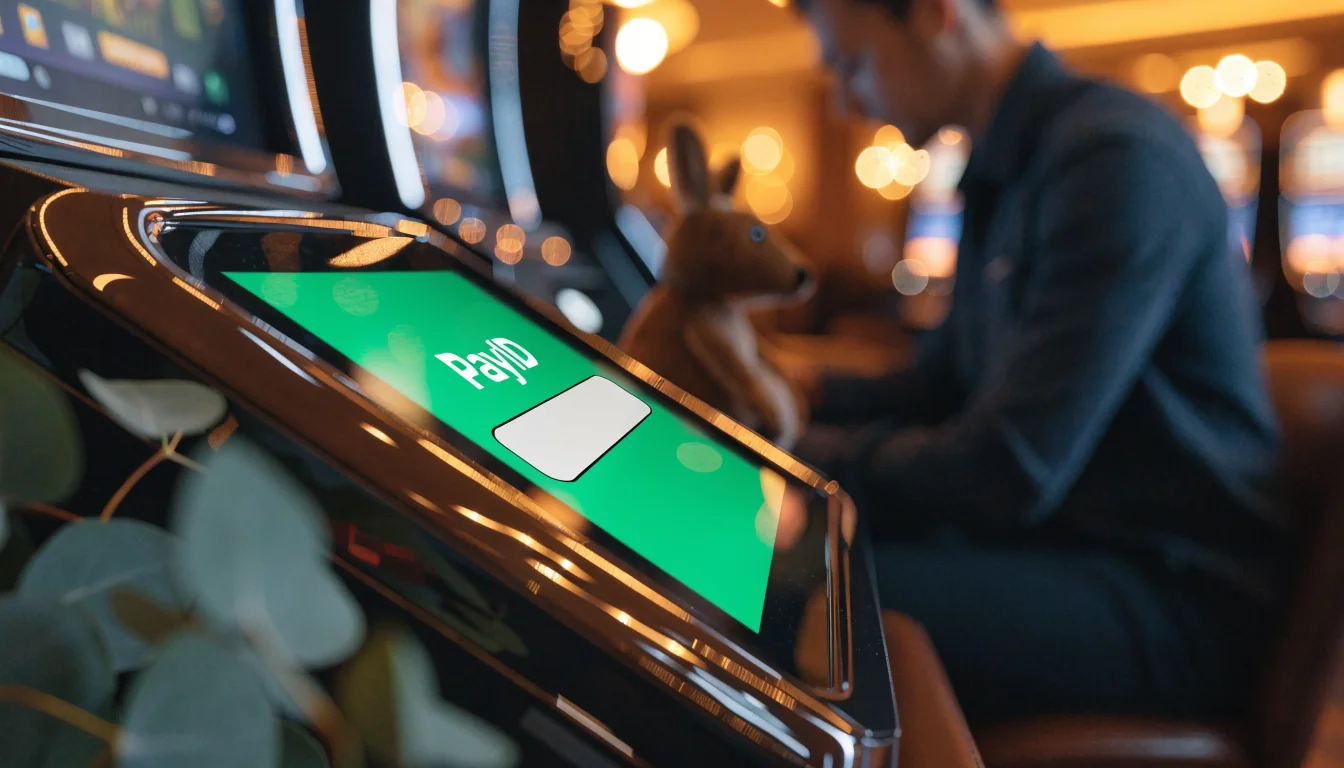
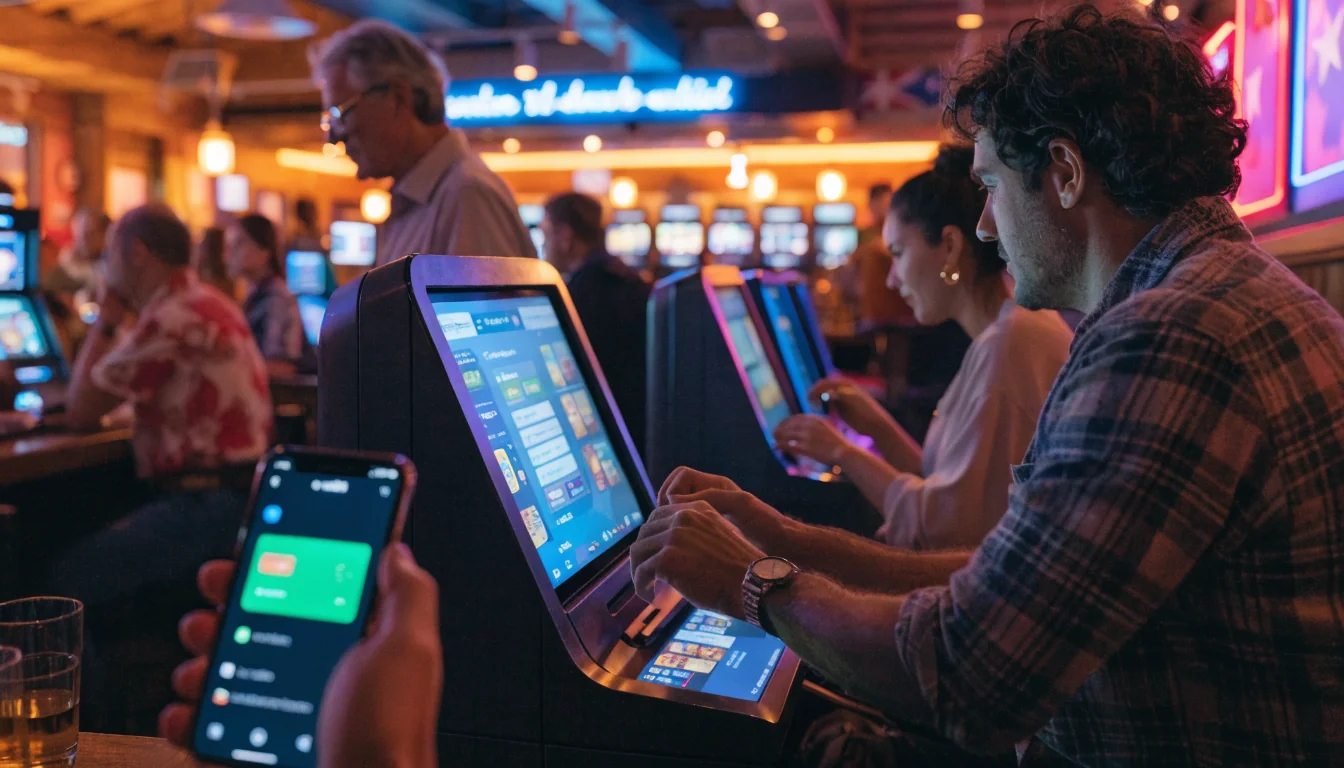
That card‑scan requirement isn’t only about loyalty tracking. The direction of travel in this market is toward cashless, account‑based play — the 2022 NSW Islington Report recommended all NSW pokies go cashless by the end of 2028, a single report’s recommendation rather than a rule in force today, but one that already shapes how venues design their sign‑up systems. A bonus tied to a digital account is also a bonus that leaves a full record: who claimed it, when, on what machine, for how long. That traceability cuts both ways — it protects the operator during an audit, and it means the "generous welcome offer" is never really anonymous.
"No deposit" is the phrase that does the most work in marketing copy, and it’s worth reading literally rather than generously. It means the credit was issued without a cash deposit. It says nothing about whether the credit can be withdrawn, how long it stays active, or which machines it applies to — those mechanics belong to a different conversation. What’s fair to say here is narrower: a sign‑up offer at a licensed Australian venue is a loyalty tool shaped by state tax rules and compliance exposure, not a marketing gift with no cost behind it.
No advertisement is required to spell out the wagering terms in the same sentence as the headline offer, but a responsibly run venue will show them up front, before anyone signs anything.
Pokies are mainstream yet AML‑sensitive
Pokies are a ubiquitous form of entertainment in Australia, but their cash‑handling nature also makes them a focal point for money‑laundering controls.
Parlour Casinos: How They Differ from Regular Pokies Venues
A parlour casino sits somewhere between the two worlds it borrows from. The floor still runs on pokies — same machines, same wall-to-wall hum — but the service layer around them is lifted from a casino: hosts, dedicated lounges, sometimes table games nearby, a general sense that someone is watching the room rather than just topping up the till. Pokies are widely used across Australian pubs, clubs, and casinos, and a parlour casino is really just a venue that decided the pub-and-club format wasn’t enough scaffolding for what it wanted to offer.
The regulatory nuance is where it stops being a matter of decor. A pub with a bank of machines answers to the licensing regime that governs pokies venues generally. A parlour casino, once it starts operating under a casino licence, answers to a different and heavier framework. In New South Wales, an amendment to the Casino Control Act 1992 lets regulators fine casino operators up to AUD 100 million for compliance failures — a figure that has no equivalent in the standard pub-and-club licensing world. That gap in exposure tells you something about how differently the two categories are treated on paper, even when the machines themselves look identical.
There’s also a direction of travel worth noting, though it’s specific to one jurisdiction and one report rather than a settled industry standard. The 2022 NSW Islington Report recommended making all NSW pokies cashless by the end of 2028. If that recommendation is followed through, it would reshape parlour casinos and ordinary pokies venues alike — but as a proposal from a single review, not as current law. Worth flagging as "recommended," not "required."
What this means in practice: a parlour casino isn’t a bigger pub. It’s a different regulatory animal wearing a familiar face. The machines don’t care which licence they sit under. The compliance file behind the counter does.

VIP Parlour Casino Experience and Eligibility
A "VIP programme" at a parlour casino sounds like a lounge with better coffee. In practice it’s a tracking system with perks attached. The venue needs to know who its high-value patrons are, how often they play, and how much moves through their accounts — the perks are what makes people volunteer that information willingly.
That tracking isn’t incidental. Any venue running more than 15 pokies has to appoint a compliance officer, run risk assessments, keep an AML/CFT programme running, perform customer due diligence, and report cash transactions over AUD 10,000. VIP status just formalises what compliance already requires: a name attached to the play.
Venues under that threshold carry a lighter load — registration with AUSTRAC, identification records, suspicious matter reports — but they’re not the ones building VIP rooms. Scale and compliance obligation move together.
So eligibility isn’t really about loyalty points. It’s about a patron generating enough turnover to justify the paperwork on both sides. The exclusivity is real. So is the file being kept on you.
Pokie Parlour Bonus Mechanics: What Players Should Know
A bonus is a promise with conditions attached, and the conditions are where the actual product lives. Wagering requirements, cash-out limits, eligible games — none of it is decoration. It’s the contract.
What’s worth naming plainly: no venue operating within Australia can legally wrap real-money online casino play into a "bonus" and offer it to residents. The Interactive Gambling Act 2001 makes that an offence for the operator, not a grey area for the player to navigate. Any pitch that reads like an online casino sign-up dressed up as a "pokies bonus" isn’t a technicality — it’s the exact thing the law targets.
Operators found non-compliant don’t just get a warning letter. Regulators can issue remedial directions, infringement notices, civil fines, and the reputational damage tends to outlast the fine.
None of that is published as a fixed schedule of numbers, and I’m not going to invent one here. What’s consistent is the shape of the risk: the bonus terms sit on top of a legal structure, not beside it.
Written by the editors at Casino Security Info.