Pokies Tips and Tricks 2026: What Actually Works
 Available in AU
How to Increase Your Chances of Winning on Australian Pokies
I spent years watching people feed twenty-dollar notes into machines convinced they’d found a "pattern." There isn’t one. Pokies run on random number generators, and no amount of watching a machine "get close" changes what the next spin does. That’s the uncomfortable starting point for any honest conversation about tips to win pokies — the tips that actually hold up are about managing exposure and reading the market you’re playing in, not about beating math that isn’t beatable.
So let’s talk about what actually moves the needle, and what the numbers around Australian pokies tell you before you ever put money in.
The scale you’re playing against
Pokies — formally electronic gaming machines, or EGMs — sit in pubs, clubs and casinos across the country in numbers that don’t really exist anywhere else. Australia holds 3% of the world’s pub and club poker machines while accounting for just 0.3% of the global population. New South Wales alone runs approximately 95,800 of them. That’s one state.
Before trying out any pokies tips and tricks in 2026, it helps to know which casinos are actually worth testing them on. Here’s a quick rundown of operators worth a closer look.
License: Curacao · Bonus: up to A$2,000 Operates under a Curacao license and offers a welcome bonus worth up to A$2,000 for new players.
Bonus: 100% up to A$750 + 200 free spins, 35x wagering · Payout speed: crypto 30-120 minutes, fiat 24-72 hours · Min. deposit: A$30 Pairs a sizeable welcome package with fast crypto payouts, while fiat withdrawals take a bit longer, and a low minimum deposit keeps entry accessible.
License: Curacao eGaming (Roby Games Ltd) · Bonus: 100% up to A$750 + 200 free spins Licensed under Curacao eGaming through Roby Games Ltd, with a welcome bonus that includes both a matched deposit and free spins.
License: Curacao Gaming Control Board · Bonus: up to A$5,000 + 400 free spins Holds a Curacao Gaming Control Board license and stands out for a generous welcome offer combining a large bonus match with hundreds of free spins.
License: Curacao Gaming Authority (Jumpman Gaming Ltd) · Bonus: up to A$6,600 + up to 250 free spins across 4 deposits Licensed by the Curacao Gaming Authority under Jumpman Gaming Ltd, with a multi-deposit welcome package that adds up to a substantial bonus and free spins.
License: Curacao eGaming OGL/2023/174/0082 (Dama N.V.) · Bonus: up to A$10,000 + 500 free spins across 4 deposits · Min. deposit: A$15 Operated by Dama N.V. under a Curacao eGaming license, offering one of the larger multi-deposit welcome packages along with a low minimum deposit requirement.
License: Curacao, operated by Dama N.V. · Bonus: 325% up to 5.25 BTC + 250 free spins across 4 deposits Run by Dama N.V. under a Curacao license, known for a crypto-friendly welcome bonus spread across multiple deposits with free spins included.
License: Curacao Gaming Control Board OGL/2023/176/0095 (Hollycorn N.V.) · Bonus: up to A$11,000 + 300 free spins (code NEO100) Licensed by the Curacao Gaming Control Board under Hollycorn N.V., offering a large welcome bonus plus free spins redeemable with a bonus code.
License: Curacao Gaming Control Board OGL/2023/176/0095 (Hollycorn N.V.) · Bonus: up to A$5,000 + 300 free spins across 4 deposits Also licensed by the Curacao Gaming Control Board under Hollycorn N.V., with a multi-deposit welcome bonus that includes a solid batch of free spins.
License: Curacao (operating since 2017) · Bonus: 250% up to A$2,000 + 50 free spins on the first of six deposits · Min. deposit: A$20 A Curacao-licensed casino operating since 2017, offering a welcome bonus with free spins on the first of several deposits and a low minimum deposit.
Scale like that isn’t trivia. It tells you something about how the industry is built: high machine density, high turnover, and a business model that doesn’t need any individual player to lose big — it needs a lot of players losing a little, over and over, for a long time. NSW clubs pulled in $1.945 billion in net profit from pokies in the six months between December 2017 and May 2018. Nationally, according to one industry data source, pokies generated $191.2 billion in Australian gambling turnover in 2023. Turnover isn’t profit and isn’t loss — it’s money cycled through the machines — but it shows the volume the system is designed to process.
Set that against what players actually took home. Australians bet almost AUD$150 billion on electronic gaming machines in FY 2020–2021, and lost AUD$12 billion of it. Per person, that loss worked out to AUD$608 for that year. Those aren’t numbers I use to scare anyone off pokies. I use them because "tips and tricks" mean nothing if you don’t first understand the actual house edge you’re negotiating with. Any strategy that ignores this scale is a strategy built on a fantasy version of the machine.


Why "hot" and "cold" machines are a story, not a system
Every venue has a machine someone swears is "due." I’ve heard it from regulars who play the same seat every week, and I’ve heard the venue staff quietly laugh about it afterward. The mechanism is simple: each spin on a modern EGM is generated independently. The machine has no memory of what happened last spin, no internal tally building toward a "cold streak" ending. A machine that hasn’t paid in an hour is exactly as likely to pay on the next spin as one that just did.
What people are actually reacting to is variance — the natural, sometimes long, sometimes short gaps between wins that any random system produces. Games are built with different volatility profiles, meaning some pay smaller amounts more often and others pay rarely but bigger. That’s a real design difference. It is not the same thing as a machine being "hot" or "loco" for the night. Dragon Link pokies and 5 Dragons pokies, both popular across Australian venues, are known among players for bonus-heavy free spin features rather than frequent small wins — which is a volatility characteristic, not a signal you can time.
If there’s a genuine tip hiding in here, it’s this: match the game’s pace to what you actually want from a session. A high-volatility game will burn through a bankroll faster on average while you wait for a bigger hit; a low-volatility one spreads the same bankroll across more spins with smaller returns along the way. Neither is a system for winning. Both are ways of shaping how you lose, which is the only lever you’re actually holding.
Hot/Cold Myth
Don’t rely on perceived hot or cold machines; each spin is independent and the machine has no memory of previous outcomes.
What you can control, and what you can’t
I’ve sat through enough conversations with players who wanted a secret to know the honest answer disappoints people. There isn’t a button sequence, a time of day, or a seat that changes the math. But there’s a shorter list of things that genuinely do sit within a player’s control, and they’re worth taking seriously precisely because they’re the only real levers available.
Session length. The longer you play against a machine’s built-in edge, the more that edge compounds against you. This isn’t superstition, it’s just how expected value works over repeated trials. A short session has more variance — you might walk away up, you might walk away down, but the range of outcomes is wider. A long session narrows that range toward the expected loss. If you’re chasing "tips for winning on the pokies," the closest thing to a real one is: shorter sessions preserve variance in your favour; long sessions erode it.
Bankroll as a hard stop, not a target. Deciding in advance what you’re willing to lose — and treating that number as an exit point rather than a floor to dig out from — is the single most practical habit I’ve seen separate people who enjoy pokies from people who resent them. It doesn’t change the odds of any individual spin. It changes what happens to you across a hundred of them.

Bet size relative to bankroll. Betting small relative to what you’ve brought means more spins, more time on the machine, more chances to hit a bonus feature before the money runs out. Betting big means faster, more dramatic swings in both directions. Neither improves the underlying return-to-player built into the machine — that number is fixed by the game’s math, not by how you approach it — but bet sizing changes the shape of your session dramatically.
Understanding the feature, not just the base game. Machines like Dragon Link and 5 Dragons are built around free-spin bonus rounds that carry a different, generally more generous, payout structure than the base game. Players chasing "best tips" for these titles are really chasing the bonus round — that’s where the bulk of a session’s upside typically sits. Knowing that the base game is largely a mechanism for reaching the feature, rather than a source of return in itself, changes how you read your own session. If you’re twenty minutes in with no bonus trigger, you’re not "due" one. You’re just in the base game, doing what the base game does.
The gap between free play and real money
A lot of what gets marketed as pokies tips is really advice for a version of the game that doesn’t carry any actual financial law behind it. Free-play or "social" pokies apps let you spin the same reels, the same Dragon Link and 5 Dragons titles even, without any money changing hands in either direction. That’s a legitimate way to learn a game’s rhythm, its bonus triggers, its feature frequency, before ever committing a dollar. Online pokies tips for fun play genuinely do transfer in one sense: if you’ve never seen how a specific game’s bonus round unfolds, playing it for free first is a reasonable, low-cost way to remove that unfamiliarity.
Free‑play vs Real Money
Free‑play sessions are useful for learning game mechanics, but they don’t reflect the odds or pressure of real‑money play.
What doesn’t transfer is any read on your odds. A free-play version isn’t a preview of how the same title behaves for real money in terms of session outcomes — it’s a different bankroll dynamic entirely, since there’s no actual loss possible and therefore no real pressure shaping the decisions you make. I’ve watched people build false confidence on free-play sessions and then get surprised at how differently they felt once real money was on the line. The mechanics are the same. The experience of risk is not.
It’s also worth being clear-eyed about something else: online casino-style pokies for real money aren’t a legal product for Australian residents in the first place. The Interactive Gambling Act prohibits operators from offering online casino games — including slots — to people in Australia, regardless of where that operator is based. It’s not illegal for an individual to play at an offshore site, since the law targets the operator rather than the player, but there’s no such thing as a licensed local online pokies option to compare "tips" against. Anything framed as "online pokies tips" in the context of real-money play on this market is, by definition, describing something with no domestic legal footing. The practical, land-based venue — pubs, clubs, licensed casinos — is where the actual regulated Australian pokies experience lives.

Reading return-to-player without overclaiming it
Return-to-player, or RTP, is the long-run percentage of money wagered on a game that’s returned to players over an enormous number of spins — not a promise about any individual session, and not something that guarantees anything over the handful of hours a typical visit involves. I’m not going to hand you a table of specific RTP figures for named games, because the honest position is that machine-by-machine and jurisdiction-by-jurisdiction RTP settings aren’t uniformly published in a way that would let me responsibly print numbers here. Where a venue or manufacturer does disclose a machine’s RTP, that’s public information worth checking before you sit down — it exists precisely because regulators require some baseline transparency, even though the presentation varies by state and venue.
What’s more useful than chasing an exact percentage is understanding what RTP does and doesn’t tell you. A machine with a higher long-run RTP setting doesn’t pay more per spin than a lower one in any way you’d notice across a single session — the difference shows up only across volumes of play no individual player will ever personally reach. Treating RTP as a session-level predictor is a common mistake, and it’s one that leads people to believe a machine "owes" them a win because of a number printed somewhere in its help screen. It doesn’t work that way. RTP is a manufacturer’s long-run design parameter, not a debt to the player.
Transparent pokies and why account-based play matters
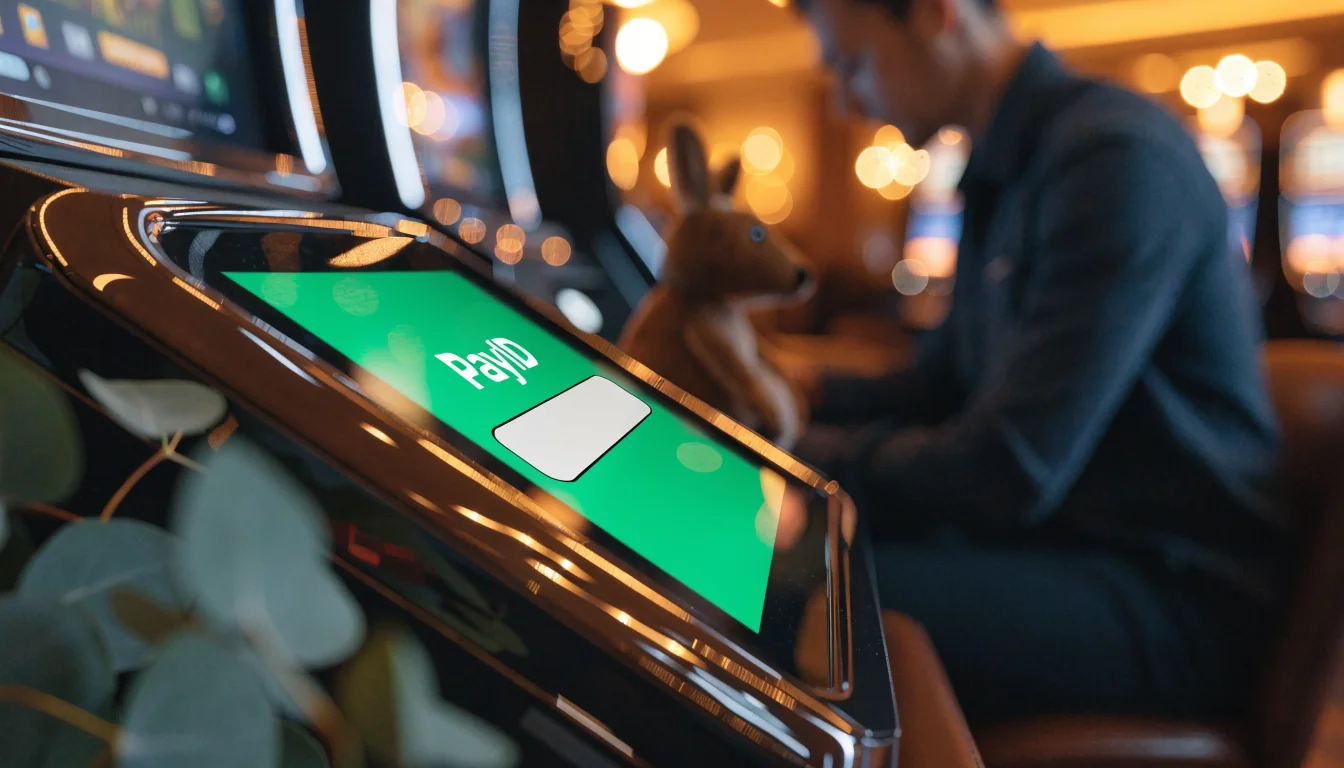
One genuine shift worth understanding, especially if you’re evaluating venues rather than individual games, is the move toward what’s increasingly called transparent pokies — machines built around account-based, cashless play rather than the old coin-and-note-in, ticket-out model. From a player’s perspective this can look like a minor convenience change. From a broader market perspective it’s a meaningful one: account-based systems create a traceable record of play in a way that anonymous cash-in machines never did.
Traceability Note
Account‑based transparent pokies don’t change your odds, but they give you a clear record of how much you have spent.
That traceability doesn’t change your odds on any given spin. But it does change what a session actually looks like on paper, and for players trying to keep an honest account of their own play — rather than relying on memory or the vague sense of "I think I’m about even" — an account-based system gives you an actual record to check against. If you’re serious about managing bankroll as I described above, a venue running transparent pokies makes that discipline easier to enforce on yourself, because the numbers are sitting in an account rather than scattered across a night’s worth of note insertions you didn’t track.
What "tips" actually reduces to
Strip away the marketing language around pokies strategy and what’s left is a short, unglamorous list:
- Play games whose volatility matches your bankroll and your patience. High-volatility titles like Dragon Link or 5 Dragons ask for a bigger bankroll cushion to reach their bonus features; low-volatility games ask for less patience but offer smaller peaks.
- Set a loss limit before you start, and treat it as the end of the session, not a checkpoint to push past.
- Favour smaller bets over a longer session if your goal is time on the game rather than a big result. Favour bigger bets over a shorter session if you’d rather accept faster variance for a shot at a larger outcome. Neither changes the machine’s long-run edge — both just change what your night looks like.
- Use free-play versions to learn a game’s bonus mechanics, not to judge your odds. The rhythm transfers. The stakes, and the pressure that comes with them, do not.
- Check for published RTP information where a venue or manufacturer makes it available, and understand it as a long-run design figure rather than a prediction for your session.
- Prefer venues running account-based, transparent pokies systems if you want an honest, checkable record of your own play — it won’t shift the odds, but it removes the guesswork about what you’ve actually spent.
None of this promises a win. Nothing legitimately can — not on a market where Australians lost AUD$12 billion on these machines in a single financial year, against turnover in the hundreds of billions. What this list does is take the myth-shaped questions — which machine is "due," which seat is "lucky," which time of night pays better — off the table entirely, and replace them with the handful of decisions a player genuinely does make: which game, how much, for how long, and how honestly they’re tracking it.
I’d rather tell someone that plainly than sell them a system. The system, such as it is, belongs to the machine.
Smart Pokies Tricks: Play Safely, Stay Compliant and Spot Red Flags
None of what follows is about beating the odds. That’s the previous section’s job. This one is about the part venues don’t put on posters: how the machines fit into a compliance system, why certain behaviours get flagged, and what "playing smart" actually means once you stop pretending the house doesn’t watch.
AML Risk
Pokies are a recognised money‑laundering risk; large cash insertions with minimal play can trigger regulatory scrutiny.
Pokies in Australia sit inside a regulatory structure that predates most players’ first spin. The Interactive Gambling Act became law on 28 June 2001, and it still frames how gambling is treated federally — including the fact that any winnings you walk away with aren’t taxed. That last point gets repeated in marketing as if it were a gift. It isn’t. It’s a policy choice, and it has nothing to do with whether the machine is fair to you tonight.
Why pokies attract more than just players
Here’s the part that doesn’t make it into the "tips and tricks" listicles: pokies are also a documented money laundering risk. Not a theoretical one — public inquiries and sector guidance both name electronic gaming machines as a major AML exposure point, and the reason is unglamorous. High cash volume plus limited traceability. A machine that takes notes and pays out tickets is, from a compliance standpoint, a cash conversion tool. Most people using it have no idea that’s the lens regulators view it through. Most staff behind the counter do.

I’ve watched a compliance officer explain this to a new cashier in about four sentences: cash goes in, ticket comes out, ticket gets cashed, and nobody in that chain has to explain where the original cash came from unless someone’s watching for it. That’s not a flaw specific to one venue. It’s the structural reason AML programs exist around pokies at all.
Three typologies come up repeatedly in this space:
- Cash placement with minimal play — a large sum goes into the machine, there’s little or no actual gameplay, and the balance gets withdrawn shortly after. The machine is being used as a laundering step, not as entertainment.
- Purchasing winning tickets — buying someone else’s payout ticket off them, so the “winnings” on paper belong to a different person than the cash that produced them.
- Structuring across venues — spreading cash through multiple pokies venues in amounts small enough that no single transaction looks unusual on its own.
None of these require a criminal mastermind. Collusion between a handful of patrons, or between a patron and a staff member willing to look the other way, is enough. Weak oversight does the rest. This is precisely why "just play at a place that seems legit" is not a safety strategy — legitimacy isn’t something you can eyeball across a gaming floor, and it isn’t something a venue’s signage tells you either.
What a red flag actually looks like
If you’ve spent time around gaming floors, you start to recognise the pattern before you know the terminology for it. Regulators and compliance teams describe it in fairly consistent terms:
- Large cash insertions followed by almost no play, then an immediate cash-out.
- Frequent small redemptions spread across different venues rather than one.
- Several patrons visibly working together to move cash through machines.
- A customer who won’t provide ID, or who cycles through multiple player cards.
- Redemption patterns that don’t match what’s normal for that venue.
- Someone with access to more cash than their apparent profile would suggest.
- A pattern of depositing progressively higher values and larger cash amounts over time.
None of these on their own proves wrongdoing. A person can refuse ID out of simple stubbornness. A big cash-out can be an actual win. What makes these "red flags" rather than coincidences is the pattern — repetition, combination, and deviation from what’s typical for that person or that venue. Trained staff are taught to notice the pattern, not to accuse based on a single instance.
I mention this not to turn every regular player into a suspect in their own head, but because understanding what venues are actually watching for changes how you read the rules that annoy you. Being asked for ID isn’t the venue being difficult. Card-based systems that track your session aren’t there to spy on your losses for marketing purposes, even if that’s also a side effect. They exist because "we have no idea who put this cash in or where it came from" is the exact gap AML controls are built to close.
Red‑Flag Summary
Typical red flags include large cash‑in with little play, frequent small cash‑outs across venues, and refusing ID or using multiple player cards.
Where "smart play" and compliance overlap
There’s a version of "smart pokies tricks" floating around that’s really just superstition dressed as strategy — timing your session, switching machines, watching for a "hot" one. That belongs in the winning-chances discussion, and it was covered there. What belongs here is different: the practical behaviours that keep your play legible, low-friction, and free of anything that could get you flagged, delayed, or questioned for reasons that have nothing to do with luck.
Use one identity, consistently. Multiple player cards, or refusing to use one at all, is a listed red flag — not because a single incident means anything, but because it’s the exact pattern criminals use to break a large cash flow into anonymous fragments. If you’re an ordinary player, this costs you nothing to avoid. Stick to one card, one name, one account.
Expect identification requests as normal, not personal. Customer verification and patron profiling are standard AML controls, not an accusation. A venue asking for ID on a large redemption is doing what it’s required to do, not treating you as a suspect. Getting defensive about it doesn’t help; refusing it is one of the specific behaviours that gets logged.
Understand what cashless systems are actually for. Account-based, cashless pokies — what the industry sometimes calls "transparent pokies" — exist partly because they improve traceability compared to cash-in, ticket-out machines. From a player’s side, this can feel like extra friction: an account, a log-in, a paper trail of your own play. From a compliance side, it’s the difference between a session that can be reconstructed and one that can’t. If you’re offered the cashless option, using it isn’t a loss of privacy in any way that matters to an ordinary player — it’s the version of the machine that’s harder to misuse and, not coincidentally, easier for you to keep track of yourself.
Play Cleanly
Using a single identity, a cashless account, and staying at one venue keeps your play compliant and hassle‑free.
Keep sessions in one place rather than spreading them thin. Structuring — small transactions across multiple venues to avoid scrutiny at any one of them — is a laundering typology, not a player behaviour. But the practical read-across for an ordinary player is this: bouncing between several venues doing small cash-outs at each doesn’t make your play invisible, it makes it look like a pattern someone is specifically taught to notice. There’s no upside to it, tactically or otherwise.
Don’t buy or sell winning tickets. It sounds obvious written down, but "purchasing winning tickets" is a named typology for a reason — it happens, usually presented casually, as a favour or a shortcut. Taking someone else’s payout ticket in exchange for cash puts you inside a laundering chain whether or not you understood that’s what it was.
The harm side of the ledger
It’s worth being blunt about something the compliance framing tends to underplay: poker machines are recognised as the most harmful form of gambling in NSW. That’s not a claim about any individual machine being rigged or unfair — it’s about volume, accessibility, and the design of a product built for long, low-friction sessions. AML controls exist to stop criminal cash flows. They don’t exist to protect a player from playing longer than intended, spending more than intended, or mistaking a losing session for one that’s about to turn.


That’s a separate problem, and it needs a separate tool. BetStop, the national self-exclusion register, exists for exactly this reason — a mechanism outside any single venue’s control, so excluding yourself doesn’t depend on one operator’s goodwill or memory. It’s not a red-flag system. It’s not an AML tool. It’s the one lever built specifically for the player, not the regulator.
A quick reference: red flags versus ordinary play
| Behaviour | Ordinary play | Documented red flag |
|---|---|---|
| Identification | Provided when asked, consistent name | Refused, or rotated across multiple cards |
| Cash-in and play | Play precedes and matches the cash inserted | Large cash-in, little or no play, quick cash-out |
| Venue pattern | Mostly one venue, consistent habits | Small redemptions spread deliberately across many venues |
| Social pattern | Playing alone or with friends casually | Multiple patrons visibly coordinating cash movement |
| Cash access | Consistent with known income or spending pattern | Access to cash clearly beyond the person’s apparent profile |
| Ticket handling | Cashing your own winnings | Buying or selling someone else’s winning ticket |
None of this is a checklist for catching criminals at the next machine over — that’s what venue staff and AUSTRAC reporting obligations are for, not casual observation. It’s here because knowing the shape of what gets flagged tells you, indirectly, what "playing cleanly" looks like from the other side of the counter. Consistent identity. Play that matches the cash. One venue, one pattern, no coordination with strangers moving money through the same row of machines.
The regulatory apparatus around pokies — AUSTRAC reporting thresholds, compliance officers, customer due diligence — wasn’t built with a Tuesday-afternoon player in mind. It was built because the same machine that pays out a modest win can, in different hands, move a large amount of untraceable cash. You don’t need to carry that weight every time you sit down. You do need to understand it’s there, because it explains almost every "annoying" rule you’ll run into — the ID checks, the card systems, the questions about a big cash-out. None of it is about doubting you specifically.
Play in a way that leaves a clean, boring trail: same identity, one venue, cash that matches your play. That’s not a trick for winning. It’s the version of caution that actually holds up.
What does RTP mean in pokies?
RTP stands for return-to-player — the percentage a machine is mathematically set to pay back over time. It’s fixed by the game’s design, not by how you bet or when you play, so no strategy changes it.
How Do Criminals Launder Money Through Pokies?
Typical methods include inserting large amounts of cash with little or no play before cashing out, buying winning tickets from genuine players, and structuring small transactions across multiple venues. High cash volumes and limited traceability make pokies a recognised money laundering risk, which is why red flags like unusual redemption patterns and refusal to identify are monitored.
What Are Pokies In Australia?
Pokies are electronic gaming machines (EGMs) found in pubs, clubs and casinos across the country. Australia holds about 18% of the world’s poker machines despite having only 0.3% of the global population, and NSW alone has roughly 95,800 of them.
Prepared by the Casino Security Info editorial staff.