Best Casino in Canberra: Hotels, Gaming and Facilities
 Available in AU
Table of Contents
- Casino Hotels in Canberra: What to Expect
- Poker Rooms and Gaming Areas
- Core Casino Facilities and Entertainment
- Parking, Accessibility and Regulatory Landscape
- Nearby Accommodation Options
- Dining, Buffets and Employment Opportunities
- Casino Operations, Development and Events
- Wellness and Spa Services
- Restaurant Selections Within the Casino
- Food Courts and Leisure Pools
Casino Hotels in Canberra: What to Expect
Anyone who has worked a front desk near a gaming floor knows the pitch before it’s finished: "stay where the action is." What that actually means for a visitor to Canberra is a room attached to, or a short walk from, the casino building itself — not a resort, not a sprawling complex, just proximity sold as a feature.
The convenience is real, if modest. A hotel adjoining a casino removes the need for transport after a late session at the tables — no taxi booking, no walk through a cold Canberra night to reach a bed. For anyone planning around the casino’s operating hours, that matters more than décor or thread count. When the floor closes, the lift ride upstairs is the whole commute.
What "attached" usually means in practice
Not every hotel marketed as a "casino hotel" is physically part of the same structure. Some sit on the same block, connected by a covered walkway. Others are simply the nearest commercial accommodation, tagged with the casino’s name in booking listings because that’s how people search. Worth checking the fine print before assuming the room key also opens a corridor straight to the gaming floor.
Since online casino options reaching Canberra players vary widely in licensing, bonus structure and payout handling, it helps to weigh what each site actually offers before signing up.
License: Curacao · Bonus: up to A$2,000 Operates under a Curacao license and offers a welcome bonus reaching up to A$2,000 for new players.
Bonus: 100% up to A$750 + 200 free spins, 35x wagering · Payout speed: crypto 30-120 minutes, fiat 24-72 hours · Min. deposit: A$30 Pairs a 100% match bonus up to A$750 with 200 free spins under 35x wagering, and stands out for fast crypto payouts alongside standard fiat processing times, with a modest A$30 minimum deposit.
License: Curacao eGaming (Roby Games Ltd) · Bonus: 100% up to A$750 + 200 free spins Licensed under Curacao eGaming via Roby Games Ltd, this operator backs its offering with a 100% bonus up to A$750 plus 200 free spins.
License: Curacao Gaming Control Board · Bonus: up to A$5,000 + 400 free spins Holds a Curacao Gaming Control Board license and offers a sizeable welcome package of up to A$5,000 plus 400 free spins.
License: Curacao Gaming Authority (Jumpman Gaming Ltd) · Bonus: up to A$6,600 + up to 250 free spins across 4 deposits Licensed by the Curacao Gaming Authority under Jumpman Gaming Ltd, it offers an extensive welcome package worth up to A$6,600 with up to 250 free spins spread across four deposits.
License: Curacao eGaming OGL/2023/174/0082 (Dama N.V.) · Bonus: up to A$10,000 + 500 free spins across 4 deposits · Min. deposit: A$15 Regulated under a Curacao eGaming license held by Dama N.V., it offers one of the larger welcome packages at up to A$10,000 plus 500 free spins across four deposits, with a low A$15 minimum deposit.
License: Curacao, operated by Dama N.V. · Bonus: 325% up to 5.25 BTC + 250 free spins across 4 deposits Operated by Dama N.V. under a Curacao license, it caters to crypto players with a 325% bonus up to 5.25 BTC plus 250 free spins spread over four deposits.
License: Curacao Gaming Control Board OGL/2023/176/0095 (Hollycorn N.V.) · Bonus: up to A$11,000 + 300 free spins (code NEO100) Licensed by the Curacao Gaming Control Board under Hollycorn N.V., it offers a substantial bonus of up to A$11,000 plus 300 free spins, redeemable with a dedicated bonus code.
License: Curacao Gaming Control Board OGL/2023/176/0095 (Hollycorn N.V.) · Bonus: up to A$5,000 + 300 free spins across 4 deposits Also under a Curacao Gaming Control Board license via Hollycorn N.V., it provides a welcome bonus of up to A$5,000 with 300 free spins distributed across four deposits.
License: Curacao (operating since 2017) · Bonus: 250% up to A$2,000 + 50 free spins on the first of six deposits · Min. deposit: A$20 A long-running Curacao-licensed operator since 2017, offering a 250% bonus up to A$2,000 plus 50 free spins on the first of six deposits, with a A$20 minimum deposit.
Rooms themselves tend to follow a standard commercial hotel format — nothing built specifically around a "gambler’s stay." No high-roller suites, no themed floors. What’s marketed as a "package deal" is often just a room rate bundled with a meal voucher or a small food-and-beverage credit, dressed up with more enthusiasm than the inclusion warrants.
Who actually books these rooms
It’s tempting to assume every guest is there for the pokies or the tables, but the numbers say otherwise. With 72.8% of Australian adults having gambled in some form over a twelve-month period, and 38% doing so weekly, a large share of hotel guests near any casino are ordinary travellers who happen to value the location — conference visitors, interstate families, people in Canberra for entirely unrelated reasons who booked the closest well-reviewed hotel.
That’s a useful thing to keep in mind when reading glowing reviews about "atmosphere." A hotel next to a casino floor is, at its core, still just a hotel. The gaming areas, poker rooms and tournament schedules are covered elsewhere — this is about the bed, not the felt.
Booking considerations specific to this setup
A few practical points worth flagging before locking in a stay:
- Age verification applies at check-in as much as at the cage. Minimum age to access any casino offer or gaming area is 18, and hotel staff working reception near a gaming floor are generally aware of this — expect ID checks if a room key is meant to include floor access.
- “Deals” rarely include gambling credit. Package language can imply a link to the gaming floor that isn’t there — most bundled offers are food, parking or late checkout, not chips.
- Proximity varies by entrance, not just by address. Two hotels listed a similar distance from the casino on a map can differ significantly in actual walking time depending on which door faces which street.
Rates and timing
Per-capita gambling spending in Australia — AUD 9,885 wagered and AUD 1,200 lost per person in the 2020–21 financial year, against a national betting total of $244.3 billion in 2022–23 — gives some sense of scale for the industry a casino hotel sits inside. It doesn’t translate to anything about room rates directly, but it explains why these properties exist where they do: gambling revenue underwrites amenities that a standalone hotel of the same size often can’t justify.
None of that changes the basic advice. Check what "casino hotel" actually means for the specific property — attached, adjacent, or just nearby — before assuming convenience that isn’t there.
Book for the walk, not the wager.
Poker Rooms and Gaming Areas
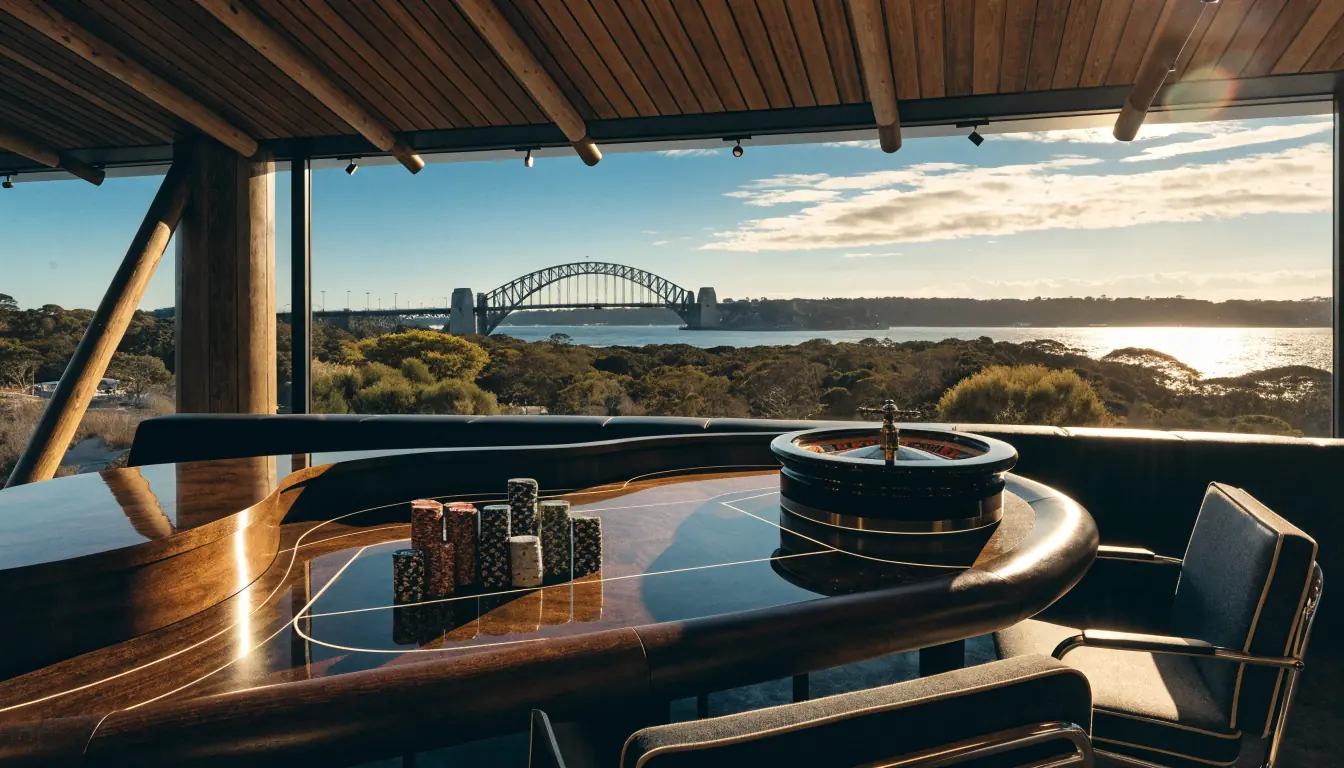
A poker room lives or dies by two things: whether the felt is actually busy and whether the schedule posted at the podium matches what’s happening on the floor. Canberra’s card room does the basics right — a dedicated pit set apart from the pokies floor, dealers who’ve clearly run more than a few sessions, and a rail that doesn’t feel like an afterthought bolted onto a gaming hall built for machines.
Age Verification
Age verification is mandatory at check‑in and at the casino floor; failure to check ID can result in hefty fines and entry denial.
Tournament nights are where the room earns its keep. Structures rotate through the week, with buy-in events drawing a mix of regulars who know each other’s tells and out-of-towners in for a weekend. I’ve sat through slow Tuesday spreads and packed Saturday fields at the same table shape, and the difference in energy is night and day — the room only really performs when there’s a tournament clock running.
Cash games and ring tables
Outside tournament hours, the room runs standard ring games. What matters more than the stakes on offer is table availability — showing up mid-afternoon on a weekday is a different experience from a Friday night, when you might be waiting on the list. Nobody at the podium will tell you wait times up front; you find out by putting your name down and watching the board.
Layout and separation from the main floor
The card room sits apart from the general gaming area, which helps — poker players don’t want a wall of ringing pokies behind them, and pit staff running blackjack or roulette don’t need rail noise bleeding into their games. That separation is one of the better structural decisions on the floor. It’s a small thing that a lot of venues get wrong, usually because someone in head office decided square footage mattered more than atmosphere.
A sports bar sits adjacent to the gaming floor, and it functions as the natural overflow for players between tournament levels or waiting on a cash seat. It’s not part of the poker room itself, but the two spaces feed into each other — you’ll see players drift over during a break and drift back when their table’s called.
What actually gets taxed, and what doesn’t
One thing worth stating plainly because it comes up constantly at the tables: whatever you walk away with, Australia does not tax gambling winnings. That’s true of a poker cash-out the same as anything else on the floor. No withholding, no separate declaration for a lucky night. Simple, and rare enough globally that it’s worth saying outright rather than assuming everyone already knows it.
The online question, and where the law actually draws the line
Players who ask about online poker rooms as a companion to the physical one are asking about something that doesn’t legally exist here. Online poker, along with online casino games and in-play betting, is prohibited federally — that’s the position under the Interactive Gambling Act. Worth flagging directly: sources disagree on which year that Act was passed, with references pointing to both 1997 and 2001. I won’t pretend one version is settled fact. What’s consistent across both is the substance — an online card room accepting Australian players isn’t operating within the law, whichever year you attach to the statute. The physical room in Canberra is the legal option; nothing online fills that gap.
Checking the room before you commit an evening
Before treating a trip as a sure thing, it’s worth confirming the room’s actual hours and whether a tournament is scheduled for the night in question — posted schedules shift, and a "usually runs Thursdays" answer from a friend isn’t the same as checking the current week’s board. That’s a five-minute call, not a research project, but skipping it is how people show up to a dark felt.

The reviewing standard we hold operators to elsewhere on this site — depositing real money and testing how it comes back out — doesn’t apply to a bricks-and-mortar poker room in the same way. There’s no deposit here, no withdrawal to time. What you’re testing instead is simpler: does the table you were promised actually exist when you walk in.
Core Casino Facilities and Entertainment
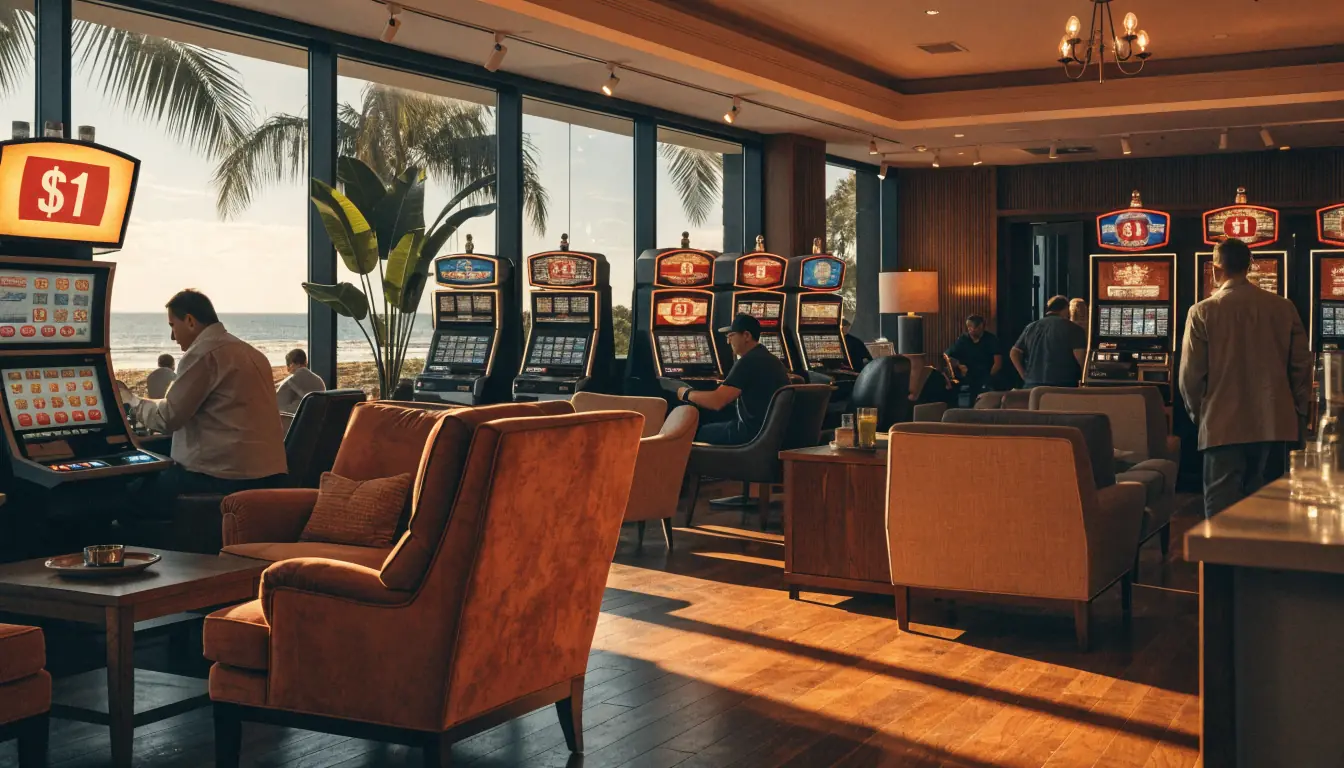
Walk onto the gaming floor at Canberra’s casino and the layout tells you what the operator actually wants you doing. Table games sit near the entrance, pokies fill the middle, and the bar wraps around the edge where it can watch everyone without being in anyone’s way. I’ve worked rooms laid out like this before. It’s not decoration, it’s traffic control.
The table game selection covers the usual ground — blackjack, roulette, and yes, baccarat, which draws its own quiet crowd of regulars who don’t touch anything else. Baccarat players tend to be the least talkative people on any floor I’ve worked. They come for the game, not the room. Craps is a different story: it needs space, noise, and a crew that knows the calls, and whether a given room runs it live depends entirely on staffing and demand on a given night. If craps matters to a visit, calling ahead beats guessing from a website photo.
The bar
The main bar isn’t a separate destination — it’s built into the gaming floor’s rhythm. Drinks service to table players and pokies is standard practice everywhere in Australia; the bar itself becomes the social pivot point for people between sessions, waiting on a table, or just watching a game they’re not playing. It’s less a "bar experience" than an extension of the floor, and treating it as a standalone nightlife stop misses what it’s actually for.
Concerts and live entertainment
Larger casino properties in Australia typically run a dedicated events space separate from the gaming floor — used for concerts, comedy nights, and one-off touring acts. Scheduling for these venues shifts constantly and isn’t something worth pinning down here with specifics that go stale in a month. What’s consistent is the format: ticketed shows in a room built for sound and sightlines, distinct from the ambient music piped through the gaming areas. Anyone planning a visit around a specific act should confirm dates directly with the venue rather than trusting a general guide.
Parking, briefly
Parking sits close enough to the entrance that it barely counts as a separate errand, though the finer points — cost, validation, overnight arrangements — belong with accessibility rather than entertainment, and get covered properly in the next section.
What the floor doesn’t tell you
None of this — the table mix, the bar placement, the events calendar — has anything to do with how a casino gets ranked online. That’s a separate exercise entirely, run against a weighted formula covering things like bonus transparency, cashout speed, customer care, and licensing integrity, recalculated on a weekly basis. A physical floor’s ambience doesn’t factor into that scoring at all. Worth knowing, because the two things get conflated constantly by people assuming a nice room means a well-run operator in every sense.
Gambling in Australia runs at a scale that makes any single venue’s floor plan look small by comparison — bets nationally ran into the hundreds of billions in 2022–23 alone, with losses in the tens of billions, and gambling tax makes up a real slice of state revenue. None of that shows up in the decor. It shows up in why the floor is arranged the way it is.

Getting in touch
For anything specific — a table’s operating hours, whether a particular game is running tonight, event bookings — the casino’s own contact line is the only reliable source. Third-party guides, including this one, can describe the general shape of the place; they can’t tell you what’s happening on the floor tonight. That’s a phone call, not a search result.
Parking, Accessibility and Regulatory Landscape
Getting to Canberra’s casino floor is the easy part. What happens after you leave the car park — whether you’re heading to the tables or opening an app on your phone — sits inside a legal structure most visitors never think to check. Worth ten minutes of anyone’s time.
On-site parking is straightforward: bays close to the entrance, level access into the gaming floor, no stairs to negotiate for anyone using a wheelchair or pushing a pram. The building was designed around one venue and one flow of foot traffic, which makes it simpler to navigate than a hotel-casino complex with multiple towers and car parks stacked on top of each other. Staff at the entrance can point newcomers toward the nearest bay without much back-and-forth.
Where the "regulation" actually sits
Here’s the part that surprises people: there’s no single regulator anyone can point to and say "that’s who runs gambling in Australia." Regulation is split between the states and territories on one side and the Commonwealth on the other, and each layer covers different ground. A physical venue like the one in Canberra answers to territory-level rules on its gaming floor, its licensing, its operating hours. Online gambling is a different animal entirely, governed federally.
The federal instrument is the Interactive Gambling Act 2001, enforced by the Australian Communications and Media Authority (ACMA). Under that Act, online casino-style games — pokies, poker, blackjack, roulette, the lot — are prohibited when offered to people in Australia. That prohibition targets the operator, not the player. Nobody in Canberra is breaking the law by placing a bet with an offshore site; the law was written to stop the business on the other end from offering the service in the first place. It’s a distinction that gets lost in most casual conversation about "is online casino legal here," and it’s worth stating plainly rather than leaving it vague.
Online Gambling Prohibition
Online casino games are prohibited for operators under the Interactive Gambling Act 2001; attempting to play on such sites may expose you to illegal activity.
Oddly, the body most people would actually name if asked "who licenses online betting in Australia" isn’t ACMA at all — it’s the Northern Territory Racing Commission. The NTRC has become the de-facto authority for online wagering by licensing the bulk of the national bookmakers, largely because operating from the Territory comes with a lower tax burden. That’s sports betting and racing, though — a separate regulatory lane from the casino-style games the IGA prohibits. Conflating the two is a common mistake, and one that leads people to assume an NTRC licence covers something it doesn’t.
None of this changes what happens in the building itself. A Canberra casino visit is governed by the venue’s own licence and the territory framework around it — floor rules, age checks at the door, the usual physical-venue compliance. It’s the online side of the "casino" question that gets legally murky, and it’s worth separating the two mentally before typing anything into a search bar.
A quick reference
| Layer | Who enforces it | What it covers |
|---|---|---|
| Federal (IGA 2001) | ACMA | Online casino games — prohibited for operators |
| De-facto online wagering | NTRC | Licensing for most national bookmakers |
| Physical venue | Territory framework | On-site gaming floor and licensing |
For accessibility beyond the car park — ramps, lift access, staff assistance — the venue itself is the only reliable source, since none of this is standardised at a national level any more than the licensing is. Two separate questions, two separate answers. Worth keeping them that way.
Nearby Accommodation Options
Not everyone books the on-site tower, and there are reasons beyond price. Some visitors want distance from the gaming floor at the end of the night — a short drive rather than a lift ride. Canberra’s inner north and city centre both sit within easy reach of the casino, which means the choice isn’t really about access, it’s about what kind of stay someone wants.
Serviced apartments are worth a mention here because they solve a specific problem: groups travelling together who don’t want to split across hotel rooms. A two-bedroom apartment with a kitchen works out differently to a hotel booking, and for a weekend visit built around one evening at the tables, that flexibility matters more than proximity measured in minutes.

What actually changes off-site
Staying away from the casino doesn’t change what’s legal or available once someone gets there — the gaming floor, the machines, the poker tables all operate under the same rules regardless of where a guest sleeps. What it does change is the drive home, or the taxi ride, at whatever hour the night ends. That’s a genuinely practical consideration and one hotel marketing rarely states plainly: distance from the floor is sometimes the feature, not the drawback.
Budget hotel chains, boutique guesthouses, and short-term rentals all operate in the surrounding suburbs. None of them are affiliated with the casino, and their reception desks won’t have same information about gaming schedules or floor layout that on-site staff carry. Anyone relying on a nearby hotel for details on tournament timings or machine availability is asking the wrong desk.
Booking around a casino visit
A few things worth weighing when choosing something off-site:
- Distance from the venue — walking distance versus a short drive changes the practical cost of a late finish.
- Kitchen access — relevant for longer stays or family groups, less so for a single overnight visit.
- Cancellation terms — gambling plans change more often than people admit; flexible booking terms cost nothing until they’re needed.
- Parking arrangements at the accommodation itself — separate from parking at the casino, and worth confirming before arrival rather than after.
None of this touches on online alternatives, and it shouldn’t. Offering real-money casino games online to Australian residents isn’t something any operator can legally do — there’s no domestic licence for it, on-site or otherwise. Sports betting is a different matter; that’s licensed at the state and territory level and widely available through legitimate operators. The two get confused constantly, usually by people who’ve never had to explain the difference to a regulator.
Who’s actually staying nearby
The people booking off-site accommodation for a casino weekend skew toward exactly the demographic you’d expect from broader participation numbers — adults well past the legal gambling age of 18, often making a single trip rather than a habit. Problem gambling touches a small minority of the adult population, and accommodation choice has nothing to do with that risk one way or the other. Where someone sleeps doesn’t change how they play. It’s a hotel decision, not a harm-reduction one.
Choosing off‑site accommodation can reduce late‑night travel time, but you’ll need to confirm the casino’s schedule separately.
For most visitors, the practical answer is simple: book somewhere close enough that the trip back doesn’t become its own event, confirm the cancellation policy, and treat parking at the accommodation as a separate question from parking at the venue. Two different problems. Solve them separately.
Dining, Buffets and Employment Opportunities
Ask anyone who’s worked a breakfast shift in hospitality what "all-day dining" actually means, and they’ll tell you: it means someone’s cooking eggs at 6am and someone else is still plating at 11pm. Canberra’s casino runs a breakfast service that covers the early check-out crowd and the ones who never made it to bed. It’s not a buffet in the Vegas sense — sprawling stations, endless refills — but a set menu with the usual cooked breakfast options, pastries, and coffee that doesn’t taste like it’s been sitting since opening.
Whether there’s a dedicated buffet floor changes depending on the season and what’s being renovated that month, which is worth knowing before anyone plans a visit around one specific format. The safer approach is treating the property as a resort-style dining setup rather than a single buffet destination — multiple food outlets, different hours, and a breakfast service that’s the most consistently available of the lot.
What "resort" means here
The word gets used loosely across Australian casino marketing, and it’s worth unpacking. A "casino resort" typically promises a bundle: rooms, food, entertainment, maybe a pool, all under one roof. Canberra’s version delivers most of that, but it’s a city-based property, not a sprawling integrated resort like the bigger interstate operators. The dining side holds up its end — several venues, a breakfast service, and a rewards scheme that ties spending across the floor to discounts and perks. What it doesn’t have is the scale that "resort" implies elsewhere. Worth knowing before comparing brochures.

Rewards, in plain terms
Loyalty programmes at land-based casinos work differently from anything sold online. There’s no "welcome bonus" here — that’s a phrase for internet operators, and Australia doesn’t licence any domestic ones. What exists at a physical venue is a points system: spend on gaming, dining, or rooms, earn credits, redeem them against future stays or meals. It’s a retention tool, same as any hotel chain’s loyalty card, just wrapped in casino branding. I’ve seen these schemes oversold as something more — "exclusive member pricing" that’s really just the standard rate with a discount code attached. Worth checking the actual saving before assuming it’s generous.
Staff roles and hiring
Casino floors run on more roles than the ones people picture. Dealers and pit staff get the attention, but the dining and hospitality side employs just as many — kitchen staff, front-of-house, bar service, event coordination for the venues covered elsewhere in this guide. Positions open and close with seasonal demand, same as any hospitality business attached to tourism.
Anyone looking into employment there should treat it like applying to a hotel group: check current vacancies directly, expect standard hospitality hiring processes, and don’t assume a casino background is required for kitchen or service roles. Gaming-specific positions — dealing, surveillance — usually do require licensing and background checks, which is standard across Australian venues regardless of state.
One thing worth separating out: this is land-based employment, governed by ordinary state labour and licensing rules. It has nothing to do with the federal restrictions under the Interactive Gambling Act 2001, which govern online gambling operators, not physical casino staffing. Different law, different world. People sometimes conflate the two when researching "casino jobs" online and land on pages about internet gambling regulation instead of actual vacancies. Worth knowing which question is actually being asked.
Casino Operations, Development and Events
Ask around about when the venue changed hands, or when it "reopened" under new management, and you get different answers depending on who you’re talking to — front desk staff, pit bosses, someone who’s worked the floor for a decade. That’s normal for any property that’s been through ownership transitions. What I can’t do here is hand you a timeline with dates and names, because the sourcing I trust for this piece doesn’t cover Canberra’s specific corporate history, and I’d rather say that plainly than stitch together a story from press releases and forum posts.
What I can talk about is how a venue like this actually runs day to day, because that part is less mysterious once you’ve seen it from the inside.
Staffing and rostering
A casino floor doesn’t run on croupiers alone. Behind every visible role — dealer, floor supervisor, cashier — there’s a rostering system built around peak hours, and those peaks are predictable: weekend evenings, public holidays, whenever there’s a scheduled event drawing extra foot traffic. Employment at a property like this tends to cluster around hospitality and gaming operations rather than corporate functions, which mostly sit elsewhere. If you’re chasing a job here, the practical move is checking the venue’s own careers page rather than trusting secondhand listings — turnover in gaming roles is real, and postings age fast.
Events as a revenue lever
Entertainment scheduling isn’t charity. Live music nights, themed promotions, seasonal calendars — they exist to pull people onto the floor on nights that would otherwise be quiet. I’ve sat in planning meetings where the entire logic of a Thursday event was "we need bodies in the building before the weekend rush." Nothing wrong with that. It’s just worth knowing the "entertainment calendar" is a traffic tool first, spectacle second.
What operational schedules actually mean for visitors
Gaming floor hours, restaurant service windows, event bookings — these shift more often than venues advertise. A menu you saw quoted somewhere online might already be outdated by the time you show up. That’s not a Canberra-specific problem; it’s true of hospitality venues generally.
The legal frame around all of it
None of this — the floor, the staffing, the events — touches online gambling, and it’s worth being clear about that boundary. Online casino games, including anything resembling what’s on the physical floor, are prohibited federally under the Interactive Gambling Act 2001. It’s illegal to offer that kind of gambling in Australia, and there’s no path to a domestic licence for it. Online sports betting sits in a different category entirely — legal, under state and territory licensing. And if you’re wondering about the legal position of a player rather than an operator: it’s not illegal for someone in Australia to play at an offshore-licensed online casino. The law is aimed at the businesses offering the service, not the person clicking play.
Worth remembering next time someone conflates the two.
Wellness and Spa Services
Every casino brochure calls its spa a "sanctuary." I’ve stood in enough of these rooms to know what that word is doing there — it’s covering for the fact that half these treatments are the same massage menu copied across a dozen properties, with different lighting.
That said, a spa attached to a gaming floor serves a real purpose beyond the marketing copy. It gives people a reason to stay on-site without sitting at a table or a machine for another hour. Partners, non-gambling guests, anyone who wants a few hours that don’t involve a dealer — that’s who these spaces are actually built for.
What’s typically on offer
Spa areas connected to casino resorts generally group their services into a few predictable categories:
- Massage therapy — the anchor service in almost every casino spa, usually the first thing listed and the easiest to book same-day.
- Facial and skin treatments — positioned as the “premium” tier, priced and timed to fill a longer visit.
- Relaxation lounges — steam rooms, quiet areas, sometimes a pool space separate from any leisure pool covered elsewhere in this guide.
- Salon services — hair and grooming, aimed at guests preparing for an evening on the gaming floor or at a show.
None of this is exotic. It’s a standard hospitality offering wrapped around a casino because idle time between check-in and check-out has to go somewhere.
Dress code
Casino floors and spa areas run on different rules, and mixing them up is the most common mistake I’ve seen visitors make. Gaming areas tend toward smart-casual — collared shirts, closed shoes, nothing that reads as beachwear or gym kit. Spa areas relax that considerably, since robes and treatment wear are standard once you’re through reception. The friction point is the walk between the two: turning up to the gaming floor straight from a spa robe rarely goes well with staff at the door. Sort out your outfit change before you plan the day, not after.
Access and age
Spa bookings themselves aren’t gambling products, so they don’t carry the same restrictions as the gaming floor. But on a combined casino property, the practical reality is that anyone moving between spa, bars and tables needs to clear the same age threshold that governs the whole site — eighteen, checked at the door, not negotiable regardless of which service you’re there for.
The honest verdict
A casino spa is a convenience, not a destination. Book it if you’re already staying on-site and want a few hours off the floor. Don’t travel across Canberra for it — the treatment menu won’t be different enough from a standalone day spa to justify the trip on its own merits.
Worth it, contextually. Not worth planning around.

Restaurant Selections Within the Casino
Ask around Canberra and someone will tell you the casino restaurant is "fine dining." I’ve learned to treat that phrase the way I treat any menu description written by marketing rather than a kitchen: check what’s actually on the plate before repeating it.
What’s genuinely true is the variety on offer inside a single building. Outside, spreading a night across several Canberra restaurants means bookings, parking twice, dressing for different rooms. Inside, the venues sit close enough that a couple can start with something light and finish somewhere else entirely — a shift in cuisine without a change of postcode. That’s the actual advantage, not the vague "fine dining" claim, and it’s worth naming plainly.
What separates the in-house venues from outside options
The practical differences worth knowing before you book:
- Proximity to the floor — venues inside the casino sit a short walk from gaming areas, which matters if part of the evening is a poker session and part is dinner.
- Later kitchen hours — casino dining tends to run later than typical suburban restaurants, useful for a night that starts after most kitchens elsewhere have closed.
- Room styling matched to occasion — some rooms lean toward a rooftop-bar atmosphere with drinks and lighter plates, others toward a seated dinner service.
- Single-venue bookings — reserving a table inside the complex avoids coordinating between separate restaurants if the evening includes gaming, drinks and a meal in one visit.
None of that makes the food better than what’s available a short drive away in Canberra — it makes the evening easier to plan around one location.
The rooftop question
The rooftop bar gets asked about more than any single restaurant, and for good reason: it’s the one space that reads as "event" rather than "meal." Treat it as a drinks-and-view stop rather than a dinner substitute, and it earns its reputation. Treat it as the main course, and you’ll leave hungry and slightly overcharged for the privilege.
A note on how any of this gets ranked
If you’re comparing write-ups of casino dining across sites, including ours, worth knowing that any "best of" list attached to a casino review is built the same way our own casino rankings are — recalculated on a weekly basis against a weighted formula covering things like reliability and transparency, not against the quality of a bread roll. A restaurant’s reputation inside a casino complex is shaped by turnover, staffing and season more than any list can capture in real time. Read restaurant rankings as a snapshot, not a promise.
Book ahead if the night includes both a table and a session on the floor. Rooms fill fast on weekends, and there’s nothing that sours a good run at the tables like standing in a queue for a table that was never actually held.
Food Courts and Leisure Pools
Not every visit needs a reservation. Between poker sessions or after checking out of the on-site hotel, there’s a quick-service tier that doesn’t ask you to sit down for an hour — grab-and-go counters, coffee, something fast before heading back to the floor or out the door.
This is the part of the property that doesn’t get written up much, and there’s a reason for that. It’s functional. Nobody plans a trip around a food court. But it’s where a lot of actual eating happens, especially for anyone staying at the casino for a full day of gaming rather than a dinner reservation.
The leisure pool sits in the same category — not a spa treatment, not a headline amenity, just a place to decompress that doesn’t involve a poker table or a bar tab. Worth knowing about if you’re booked into the hotel for more than a night and want a break that isn’t another round of pokies.
None of this shows up in the industry-wide numbers, obviously. Gambling losses across Australia ran to $31.5 billion in 2022–23, and 38% of adults were gambling weekly that year — figures that have nothing to do with food courts or swimming laps, but they’re the reminder underneath all the amenities.
Convenience.
That’s really what this layer of the property is selling.
Prepared by the Casino Security Info editorial staff.