Best Casino in Tasmania: Casino Hotels Guide 2026
 Available in AU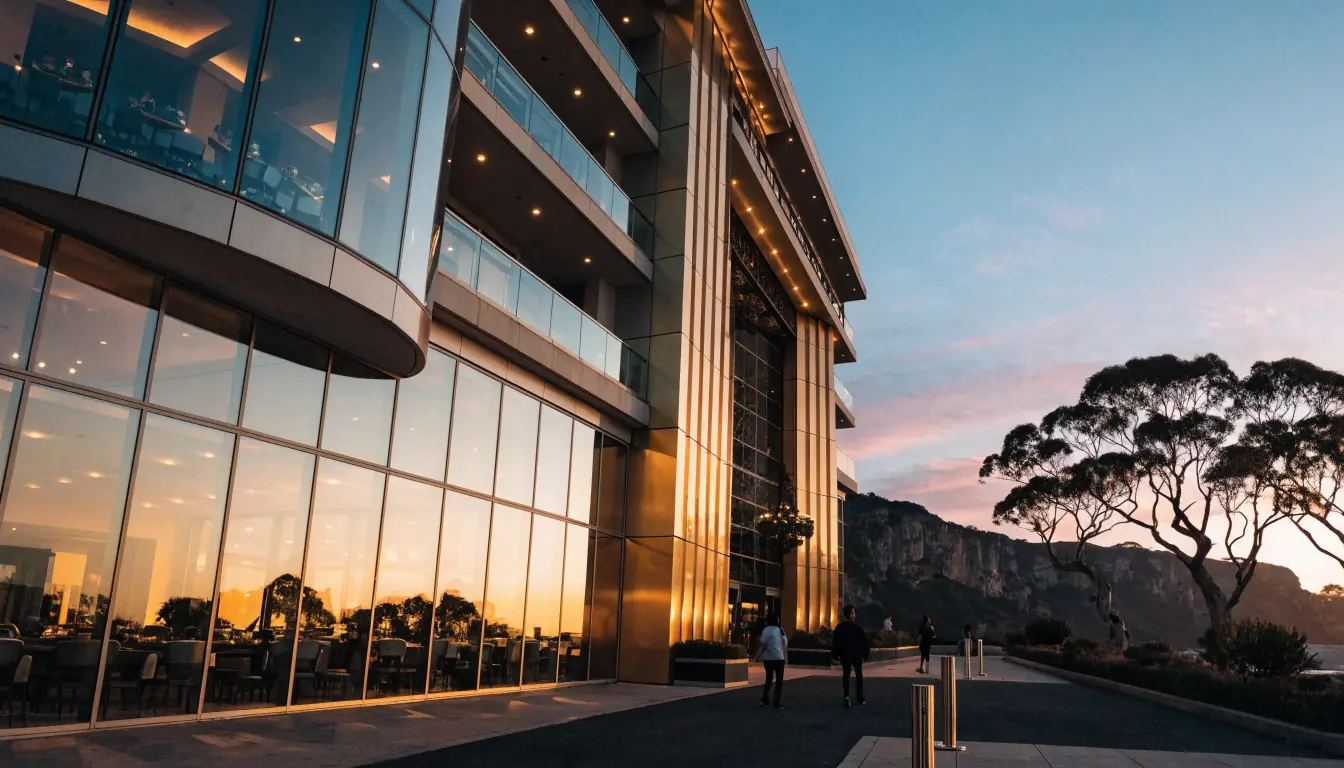
Table of Contents
- Casino Hotels in Tasmania – What to Expect
- Casino Gaming Areas and Poker Rooms
- Parking and Accessibility at Tasmanian Casinos
- Accommodation Options Near Tasmanian Casinos
- Contact Details, Licensing and Regulatory Information
- Dining Buffets, Breakfast Offers and Employment Opportunities
- Casino Opening Hours and Ongoing Developments
- Restaurant Selections Within Casino Complexes
- Wellness Facilities: Spa and Leisure Services
- Food Courts and Pool Areas – Amenities Overview
Casino Hotels in Tasmania – What to Expect
I spent years watching how hotel rooms get allocated on a gaming floor, and the pattern is the same everywhere: the "premium suite" upsell has less to do with thread count and more to do with keeping a certain kind of player close to the tables. Tasmania’s casino hotels follow that logic too, even if the pitch sounds like pure hospitality.
The island has two licensed casino properties, both of which double as full-service hotels rather than gaming halls with a few rooms bolted on. That distinction matters. A property built around accommodation tends to invest in things a pure gaming venue skips — proper soundproofing, better bedding, room service that runs past midnight because someone’s still at the tables downstairs. When a casino treats its hotel as an afterthought, you feel it in the details: thin walls, tired carpet, a front desk that clearly reports to the pit boss rather than the other way round.
What "casino hotel" actually buys you
The convenience sold in every brochure is real, up to a point. Staying on-site means no taxi after a late session, no walking through a car park at 2am, and a room key that also works as your way back to bed when the run of cards turns bad. That’s worth something. What it doesn’t buy is a discount on losses, and it’s worth saying plainly: room rates, "complimentary" upgrades and loyalty perks are priced into the business the same way free drinks are on a gaming floor — as a cost of keeping you there longer, not as a reward for playing well.
Since Tasmanian players rely on offshore-licensed platforms, it pays to check licensing, bonus terms, and payout conditions before signing up with any online casino.
License: Curacao · Bonus: up to A$2,000 Licensed in Curacao, this operator stands out for a welcome bonus reaching up to A$2,000.
Bonus: 100% up to A$750 + 200 free spins, 35x wagering · Payout speed: crypto 30-120 minutes, fiat 24-72 hours · Min. deposit: A$30 Offers a 100% match bonus up to A$750 plus 200 free spins with 35x wagering, and features fast crypto payouts within 30-120 minutes alongside a low A$30 minimum deposit.
License: Curacao eGaming (Roby Games Ltd) · Bonus: 100% up to A$750 + 200 free spins Operating under a Curacao eGaming licence via Roby Games Ltd, it pairs this with a 100% bonus up to A$750 plus 200 free spins.
License: Curacao Gaming Control Board · Bonus: up to A$5,000 + 400 free spins Licensed by the Curacao Gaming Control Board, it offers a substantial welcome package of up to A$5,000 plus 400 free spins.
License: Curacao Gaming Authority (Jumpman Gaming Ltd) · Bonus: up to A$6,600 + up to 250 free spins across 4 deposits Backed by Jumpman Gaming Ltd under a Curacao Gaming Authority licence, it provides a generous multi-deposit bonus totaling up to A$6,600 plus up to 250 free spins.
License: Curacao eGaming OGL/2023/174/0082 (Dama N.V.) · Bonus: up to A$10,000 + 500 free spins across 4 deposits · Min. deposit: A$15 Licensed by Curacao eGaming under Dama N.V., it combines a large bonus of up to A$10,000 plus 500 free spins across four deposits with an accessible A$15 minimum deposit.
License: Curacao, operated by Dama N.V. · Bonus: 325% up to 5.25 BTC + 250 free spins across 4 deposits Operated by Dama N.V. under a Curacao licence, this crypto-friendly casino offers a notable 325% bonus up to 5.25 BTC plus 250 free spins across four deposits.
License: Curacao Gaming Control Board OGL/2023/176/0095 (Hollycorn N.V.) · Bonus: up to A$11,000 + 300 free spins (code NEO100) Licensed by the Curacao Gaming Control Board via Hollycorn N.V., it features a large bonus of up to A$11,000 plus 300 free spins redeemable with a promo code.
License: Curacao Gaming Control Board OGL/2023/176/0095 (Hollycorn N.V.) · Bonus: up to A$5,000 + 300 free spins across 4 deposits Also under Hollycorn N.V.’s Curacao Gaming Control Board licence, it offers a multi-deposit bonus of up to A$5,000 plus 300 free spins.
License: Curacao (operating since 2017) · Bonus: 250% up to A$2,000 + 50 free spins on the first of six deposits · Min. deposit: A$20 Operating under a Curacao licence since 2017, it offers a 250% bonus up to A$2,000 plus 50 free spins on the first of six deposits, with a A$20 minimum deposit.
Room standard across Tasmania’s casino hotels sits closer to a solid business hotel than a resort. Expect:
- Standard rooms with reliable air conditioning and blackout curtains — useful when your sleep schedule runs opposite to the sun’s.
- Higher-tier rooms with views over the water or the hills, priced at a premium that has nothing to do with gaming spend unless a host has flagged your account.
- Suites that get offered informally to players tracked as high-value, rarely advertised at the public rate.
None of this is unique to Tasmania. It’s how casino accommodation works in most jurisdictions — the public rate card is the starting point, and what you actually pay depends on who’s watching your play.
Booking direct versus through a travel site
Booking through the casino’s own reservation line sometimes opens access to a room category that doesn’t show up on third-party travel sites, particularly around events or long weekends when rooms fill fast. It also puts your name in the system the casino uses to track "valued guest" status, which is exactly what it sounds like — a marketing label built on your spending pattern. Whether that trade-off suits you depends on how much you value a slightly better room over staying anonymous.
Front desk staff at both properties are used to guests asking about gaming floor hours, table availability and shuttle timing rather than typical hotel questions like nearby attractions. That tells you something about who the hotel is really built for. It’s not a complaint — it’s just accurate. A family on a Tasmania holiday who happens to book the casino hotel for its location will get a perfectly good stay; a guest whose trip revolves around the gaming floor will get a slightly different, more tailored version of the same building.
A note on scale
Gambling in Australia is a genuinely large business — Australians placed $244.3 billion in bets in 2022–23 and lost $31.5 billion of it, with close to three in four adults having gambled in the past year and more than a third doing so weekly. Casino hotels exist inside that economy, not apart from it. Room comfort, view categories and late checkout are real amenities, but they sit on top of a business model that depends on players staying, playing, and coming back. Worth remembering before treating a room upgrade as a compliment rather than a calculation.
The gaming floors themselves — layout, table mix, poker room specifics — are a different question from the beds and the room service, and get their own treatment next.
Casino Gaming Areas and Poker Rooms
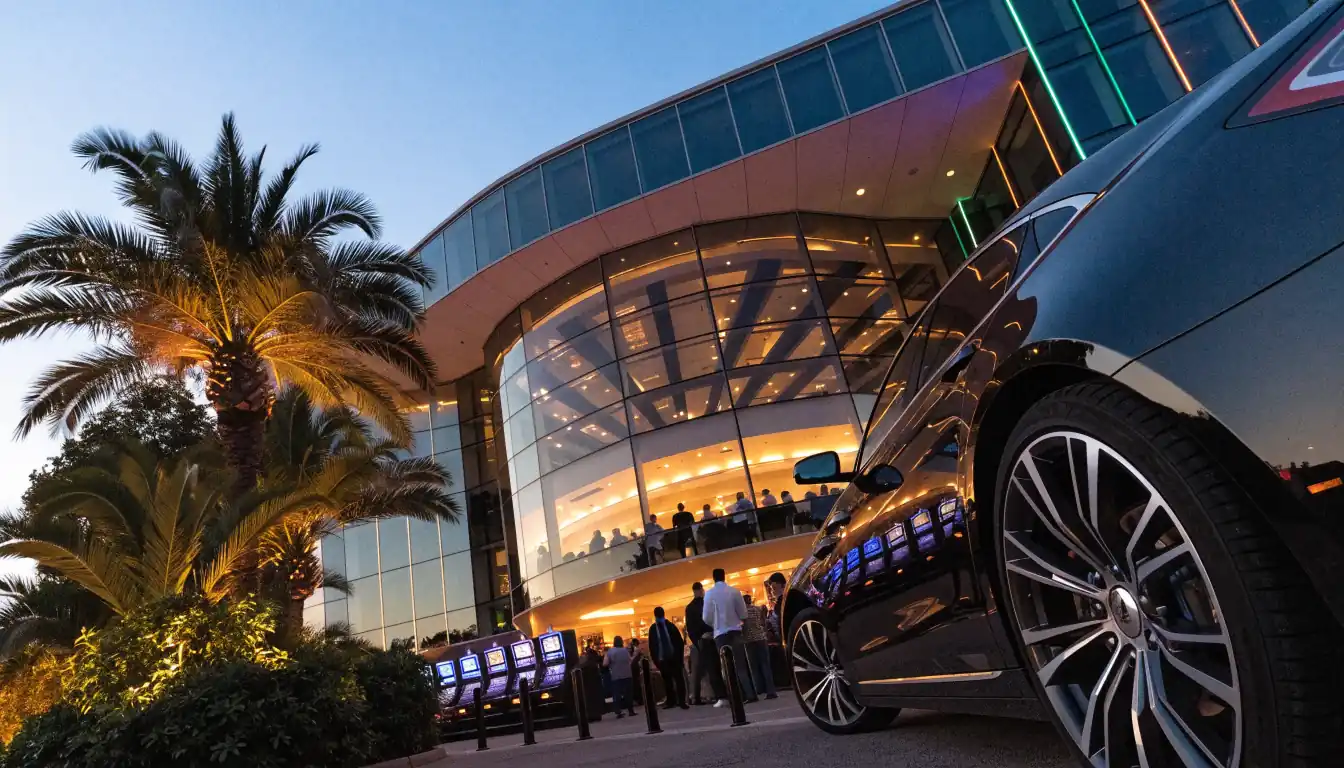
Walk past the hotel lobby and the atmosphere changes fast. Carpet gets louder, lighting drops, and the room organises itself around noise: pokies humming in banks, a pit of table games, and somewhere off to the side, a poker room that runs on its own schedule regardless of what the rest of the building is doing.
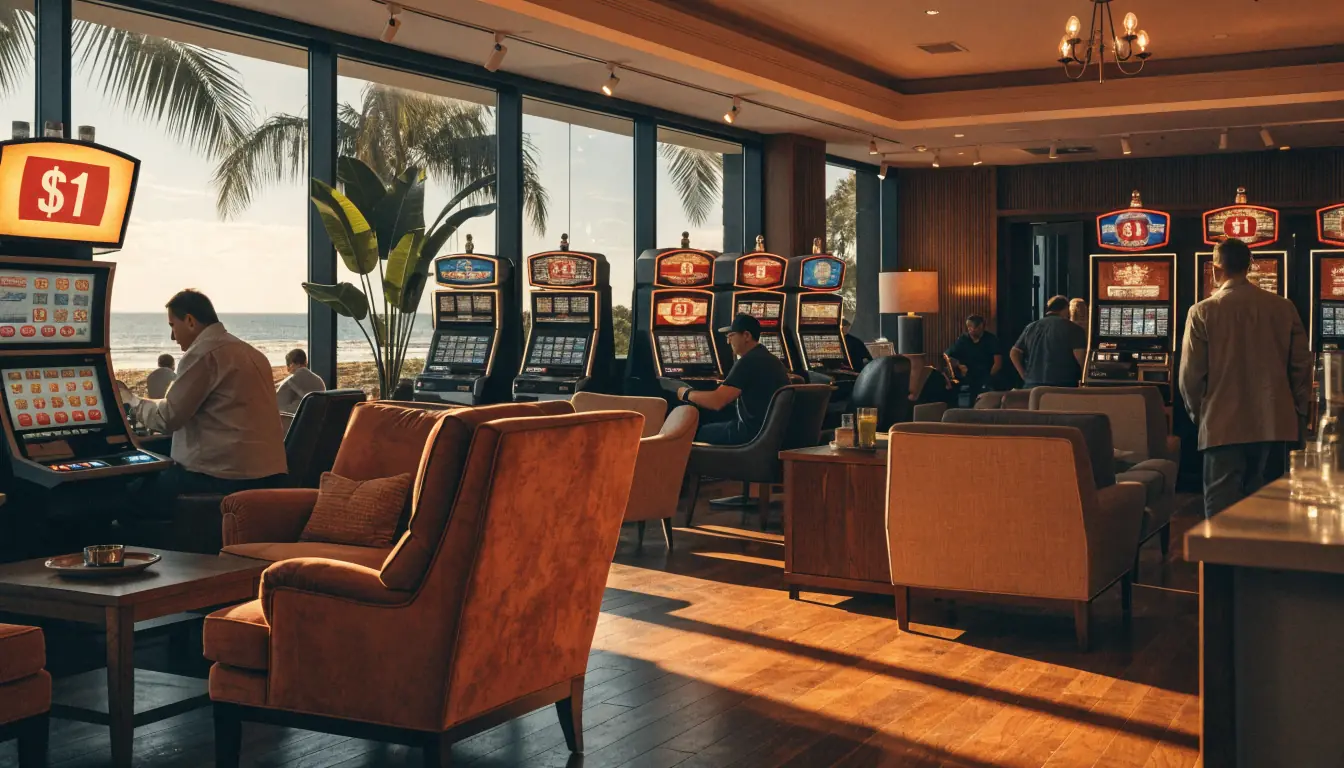
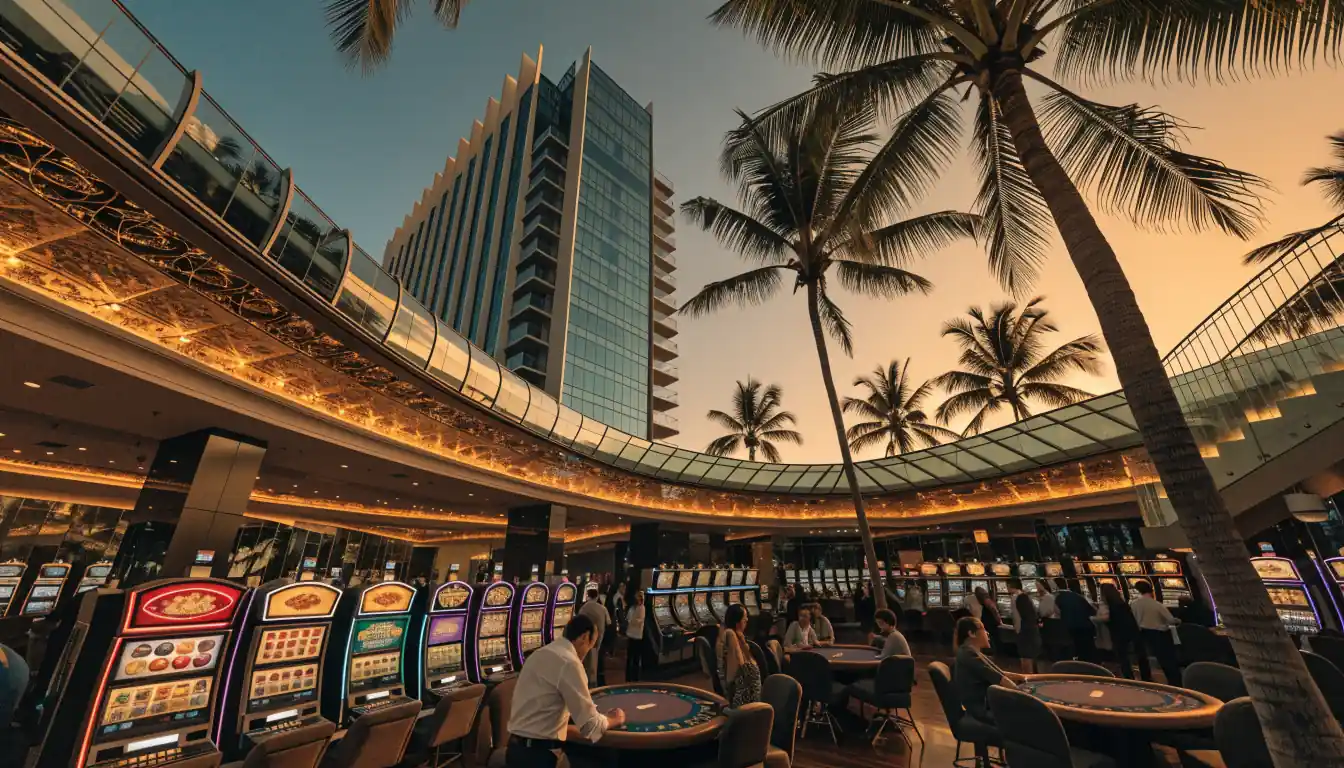
Tasmanian gaming floors aren’t sprawling by international standards, but they’re laid out with intent. Pokies dominate the floor space — rows of machines grouped by denomination and style, with the newer cabinets clustered near entrances because that’s where foot traffic is heaviest. Table games sit further in: blackjack, roulette, occasionally baccarat, staffed at levels that flex with the night rather than running full pits around the clock. If a pit looks half-staffed on a Tuesday afternoon, that’s not neglect — it’s arithmetic.
Where the poker room fits
The poker room is a different animal from the rest of the floor, and it’s usually treated that way physically — a separate space, sometimes glassed off, sometimes just around a corner where the ambient noise from the pokies doesn’t bleed in. Cash games run on a standing basis, filling and emptying through the week, while tournament schedules are the part venues actually promote. Tournament nights bring a different crowd than the general floor: regulars who know the structure, plus enough newcomers to keep the field honest. Buy-in levels and starting stacks vary by event, and venues change their tournament calendars often enough that anything printed here would be wrong within a season — worth checking directly before planning a trip around one.
What doesn’t vary is the separation of purpose. The poker room isn’t there to feed the same walk-in traffic as the pokies; it’s a destination in itself, and the better venues treat it that way — decent lighting, real chairs, staff who know the difference between a bad beat and a floor call.
Sports bar as a third space
Between the pure gaming floor and the hotel side sits the sports bar — screens, betting terminals where applicable, and a layout built for watching rather than playing. It’s the room that does double duty: somewhere to sit between poker sessions, somewhere to watch a race without committing to a table, somewhere the pokies crowd drifts to on a break. It’s not a gaming room in the strict sense, but it’s not hospitality either. It occupies the gap.
How this connects to how we rank things
None of this is decoration when we’re building out our assessment of a venue. Our rankings recalculate weekly, and while the formula leans hardest on bonus generosity, payout reliability, game library breadth, customer support and user feedback, the physical floor still matters for anyone weighing up where to actually spend an evening — poker room quality, table variety, whether the sports bar is an afterthought or genuinely built for punters.
For online listings tied to the same operators, the same discipline applies: bonus transparency, cashout speed, customer care and licensing integrity get scored individually, not folded into a single vague "good experience" tag. Our reviewers put real money on the table before writing anything — a minimum deposit of A$300 at each site, followed by an actual withdrawal test, because a "generous" welcome bonus that stalls at cashout isn’t generous at all, it’s a delay tactic with better marketing.
Access to any of this, on-site or online, starts at 18. That’s not a suggestion — it’s the floor age everywhere gaming is offered, and venues that get sloppy about checking it don’t stay ranked well for long, on our list or anyone else’s.
The gaming areas are where the actual product lives. Everything else is context.
Parking and Accessibility at Tasmanian Casinos
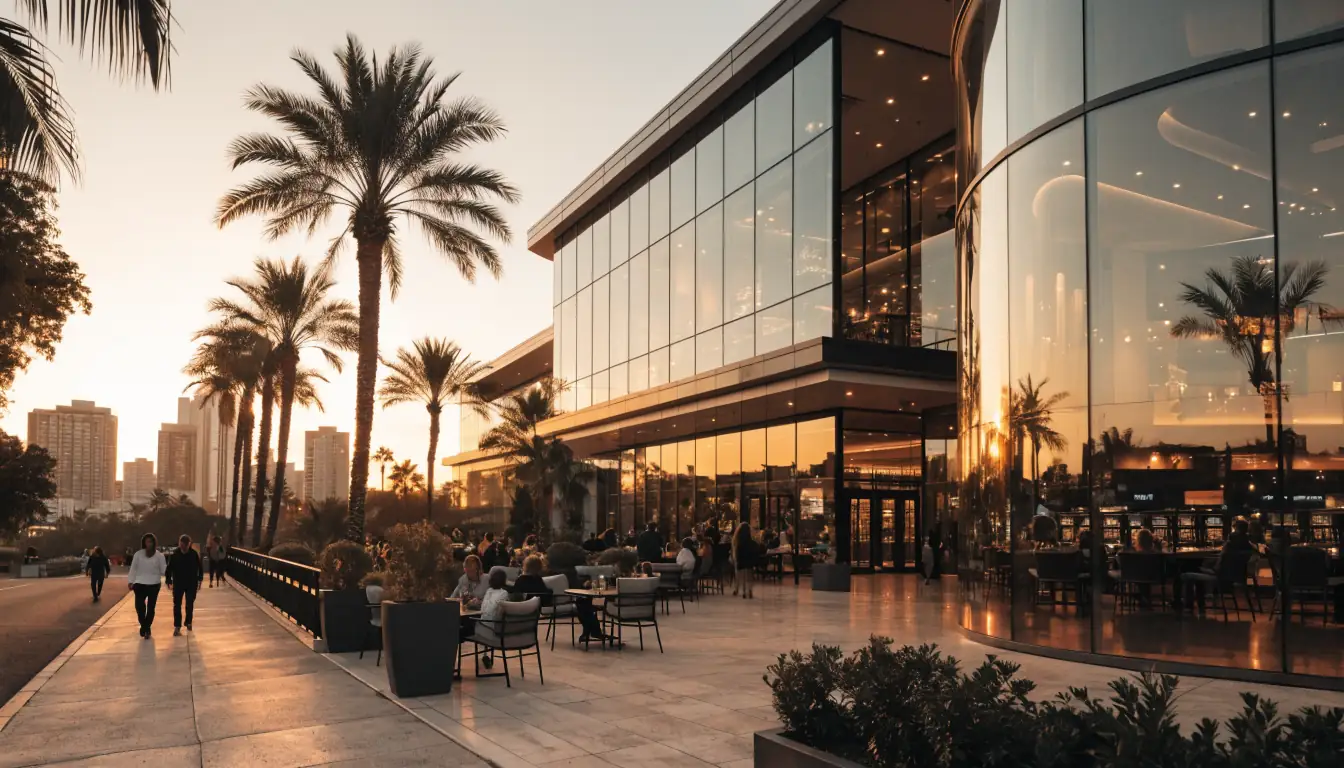
Getting to a Tasmanian casino and finding somewhere to leave the car sounds like a footnote until you’ve circled a block twice with a boot full of luggage. It isn’t complicated in Tasmania — the two land-based properties on the island were built with enough space around them that parking pressure just doesn’t happen the way it does in Sydney or Melbourne. What matters more is knowing what’s on offer before you arrive, rather than working it out on the fly.
What’s typically on site
Both major casino resorts on the island provide dedicated guest parking within walking distance of the gaming floor and hotel lobby. Coverage generally includes:
- Self-parking areas for day visitors and hotel guests, positioned close enough that the walk to reception doesn’t feel like an afterthought.
- Valet service for those staying at the attached hotel — useful after a long drive up from Hobart or across from Launceston, less useful if you’re just popping in for an hour.
- Accessible parking bays near main entrances, laid out with ramp access into the gaming and hotel areas.
- Coach and group vehicle space, since both properties do a steady trade in day-trip groups.
None of this comes with a printed rate card you can rely on years in advance, so I won’t invent one. What I will say from having actually pulled into these car parks: capacity has never been the problem. The problem, if there is one, is signage — main entrances are obvious, back-of-house delivery routes less so, and a wrong turn on a first visit is common enough that it’s worth building in a few extra minutes.
Getting there without a car
Transport links vary more than the parking does. Hobart’s casino sits close enough to the city that taxis and rideshare cover it without fuss. Launceston’s is a short trip from the CBD by the same means. Public bus services run near both, though timetables are the kind of detail that changes without much warning, so checking on the day beats trusting anything printed months earlier.
Accessibility features
Physical accessibility at both properties extends beyond parking bays. Step-free entrances, lift access between hotel floors and gaming areas, and accessible restrooms are standard rather than exceptional — which is worth saying only because it isn’t always true of older Australian venues. Staff assistance for guests with mobility needs is generally available on request at the front desk, though the depth of that support isn’t something advertised in detail on any public page I’ve found, and I’d rather say that plainly than guess at specifics.
The online question, and where the law actually sits
A fair number of people searching for casino parking are really asking a different question: can the same games be played from home instead of driving out. The honest answer is that online casino games — pokies, roulette, blackjack, in-play betting — are prohibited federally under the Interactive Gambling Act. There’s a wrinkle worth naming rather than smoothing over: some sources date this prohibition to the original 2001 Act, others reference a 1997 version with the same restriction. I haven’t seen that discrepancy resolved cleanly anywhere, so it’s fairer to flag it than pretend one date is settled fact.
Online casino games such as pokies, roulette and blackjack are prohibited for Australian residents under the Interactive Gambling Act. Attempting to play on a domestic site can lead to legal consequences.
What is settled: the law targets the operators offering these games, not the individual punter who plays on an offshore-licensed site — that’s not illegal on the player’s end. Sports betting online is a different story entirely, licensed properly at state and territory level. Casino-style games online are not, and no amount of careful driving directions changes that. The car park, in other words, is the legal way in.
Accommodation Options Near Tasmanian Casinos
Not everyone wants to sleep where they gamble. I get it — there’s something to be said for putting distance between the pokies floor and your pillow, even if it’s only a fifteen-minute drive. The on-site hotel rooms get covered elsewhere on this page, but Hobart and Launceston both sit in towns big enough to offer real alternatives, and plenty of visitors book those instead without ever mentioning it to the casino’s front desk.
Why people choose to stay off-site
The reasons are practical more often than they’re philosophical. Families travelling with kids often prefer a self-contained apartment over a hotel room attached to a gaming floor. Business travellers passing through for a night sometimes just want whatever’s closest to the airport or the CBD, casino or not. And a fair number of regular players told me, in one form or another, that they don’t love waking up ten metres from where they lost money the night before. Fair enough.
What’s actually around
Hobart has the deeper bench here. Between the waterfront precinct, Battery Point and the CBD proper, there’s everything from serviced apartments to boutique guesthouses to the standard mid-range hotel chains. Salamanca Place puts you close enough to walk to the casino if you’re staying centrally, though "close" in Hobart terms can still mean a decent stroll uphill. Launceston’s options cluster more tightly around the city centre, with a mix of heritage-style inns and newer apartment-hotel builds — smaller pool of choices than Hobart, but nothing that leaves you stuck.
Short-stay apartment rentals have become a real fixture in both cities too. They suit anyone staying more than a couple of nights, since you get a kitchen and laundry rather than paying for room service every meal — which matters if you’re trying to keep a weekend trip from blowing out.

Booking around events and peak periods
Tasmania’s tourism calendar isn’t flat across the year, and neither is room availability. Festival season, long weekends and the summer months push rates up and availability down across both cities, independent of anything happening at the casinos themselves. If a trip is built around a specific casino promotion or event, it pays to lock in a room well ahead — the gaming floor doesn’t run out of space, but the town’s beds do.
The money side, briefly
One thing worth knowing, unrelated to room rates but relevant if a trip goes well: gambling winnings aren’t taxed in Australia. Whatever you walk away with stays yours in full, whether you’re staying on-site or three suburbs over. It’s a small footnote, but it’s the kind of detail that doesn’t get mentioned in glossy accommodation brochures, so I’ll mention it here.
Worth remembering too that gambling isn’t a minor contributor to state coffers — it made up 7.7% of state and territory tax revenue back in 2015–16, a reminder that the whole ecosystem around these venues, accommodation included, sits inside an industry the state has a genuine financial stake in.
Practical takeaway
If flexibility matters more to you than proximity, off-site accommodation in Hobart or Launceston gives you that without much sacrifice — both casinos are reachable by short drive or taxi from most central lodging. If proximity is the priority, the on-site rooms remain the simpler option. Neither choice is objectively better. It depends on whether you want the night to end the moment you leave the gaming floor, or whether a short drive home suits you fine.
Contact Details, Licensing and Regulatory Information
Getting a straight answer out of a casino switchboard used to be part of my job description, and Tasmania’s two venues, Wrest Point in Hobart and Country Club in Launceston, run on the same logic every land-based operator does: someone answers the phone about restaurant bookings and room rates fast, because that’s revenue. Questions about licensing get routed slower, because that’s compliance, not sales. Worth knowing before you call.
For table availability, function bookings or general enquiries, the property’s own front desk is the right first stop rather than a search engine. Both venues list direct numbers on their official pages, and that’s genuinely the fastest route — faster than emailing [email protected], which we use for questions about this site’s coverage, not for booking a room or confirming a baccarat table’s minimum bet.
Who actually regulates a casino floor
Here’s the part rarely spelled out anywhere near a hotel brochure: Australia has no single regulator sitting over the whole gambling industry. It’s split between state/territory bodies and federal law, and the two layers cover different things entirely.
Land-based venues like Wrest Point and Country Club sit under Tasmanian state licensing — the same kind of arrangement that governs poker rooms, bars and gaming floors in every other state, just with a Tasmanian body issuing and policing the licence. That’s a genuine, checkable licence for a physical premises, and it’s what makes the casino you walk into a lawful business.
Online gambling is a separate universe, legally speaking, and this is where the "regulated" label gets used loosely by people who should know better. The Australian Communications and Media Authority enforces the Interactive Gambling Act 2001 at federal level, and under that Act, online casino games, poker and in-play betting are prohibited outright for anyone offering them to Australian residents. No licence exists for a domestic online casino because the law doesn’t provide one to apply for. When a website says "licensed," it means licensed somewhere else, under someone else’s law.
Sports and race betting online is a different case again — legal, state-and-territory licensed, and the Northern Territory Racing Commission ended up as the de facto regulator for most national bookmakers, largely because operators found the tax rate there more attractive than elsewhere. None of that machinery touches casino games. It’s a betting licence, not a casino one, and conflating the two is how a lot of confused reviews get written.
What this means at the door
If you’re checking that a Tasmanian casino is operating legitimately, the relevant licence is the state gaming one attached to the physical venue — not anything to do with online play, because there’s no domestic online casino licence to check in the first place. Reception staff can point you to the venue’s regulatory information if asked directly; it’s usually posted near the cashier or gaming floor entrance rather than the lobby.
Age Verification Required
Entry to any gaming floor is strictly limited to patrons aged 18 or older. Failure to present valid ID can result in denial of access and possible penalties.
One more thing worth saying plainly: access to any gaming floor requires proof you’re 18 or older, checked at the door, every time, no exceptions made for regulars. That’s not a house policy someone invented — it’s the baseline the licence itself depends on.
Dining Buffets, Breakfast Offers and Employment Opportunities
Breakfast buffets are the part of the resort experience that gets undersold in most write-ups, usually because whoever wrote them never actually sat through a Tuesday morning service. A casino resort runs its breakfast buffet the same way it runs the floor: on rotation, on cost control, and on whatever keeps the most people fed in the shortest window before checkout. That’s not a criticism — it’s just the mechanic behind the "generous spread" language you’ll see on the resort’s own site.
What actually varies between properties is scope. Some buffets are folded into the room rate for guests staying at the attached hotel; others are a separate ticketed service open to non-guests as well, including day visitors who’ve been on the floor overnight and want a proper meal before driving home. Neither model is better on paper — it depends on whether you’re booking a room or just passing through for the tables.
I’d treat "buffet breakfast" as a functional word, not a promise of variety. It means self-service, it means a fixed window of hours, and it means the kitchen has planned for volume rather than for any one dish being memorable. If a resort wants to signal something above that, it usually does so through a separate à la carte breakfast option rather than dressing up the buffet copy.
Loyalty and rewards tied to dining
Casino rewards programs typically fold food and beverage credit into the same points system used on the gaming floor. Comped breakfasts, buffet discounts, or dining vouchers show up as redemption options once you’re enrolled — the exact structure differs by property and isn’t something I’ll guess at here, since neither operator publishes a uniform national scheme. What I can say is that the reward is functionally a discount mechanism, not a gift. It’s there to keep you on-site rather than walking to a café down the road.

Employment at Tasmanian casino resorts
The employment side is worth separating out because it’s a genuinely different audience — people searching for casino jobs in Tasmania aren’t planning a visit, they’re planning a career move. Casino resorts of this scale run as full hospitality operations: gaming floor staff, hotel front desk and housekeeping, food and beverage service across the buffet and restaurant outlets, kitchen brigades, and back-of-house roles in security, cash handling, and compliance.
Compliance roles deserve a mention because they’re less visible than a waitstaff position but they’re where the licensing obligations actually live day to day — identity checks, responsible gambling monitoring, cash transaction reporting. If you’ve worked one of those roles, you notice how much of a casino’s public "responsible gambling" messaging is genuinely operational rather than decorative; someone has to run it, log it, and answer for it.
Vacancies are listed directly through each resort’s own careers page rather than through a single Tasmania-wide casino jobs board, so anyone searching broadly for openings will need to check each employer separately. That’s not an oversight on the job-seeker’s part — there simply isn’t a consolidated listing service for casino employment on the island, and I won’t pretend otherwise.
None of this touches on what’s actually served in the sit-down restaurants inside these resorts, or the pool and food-court amenities elsewhere on site — those get their own treatment further on.
Casino Opening Hours and Ongoing Developments
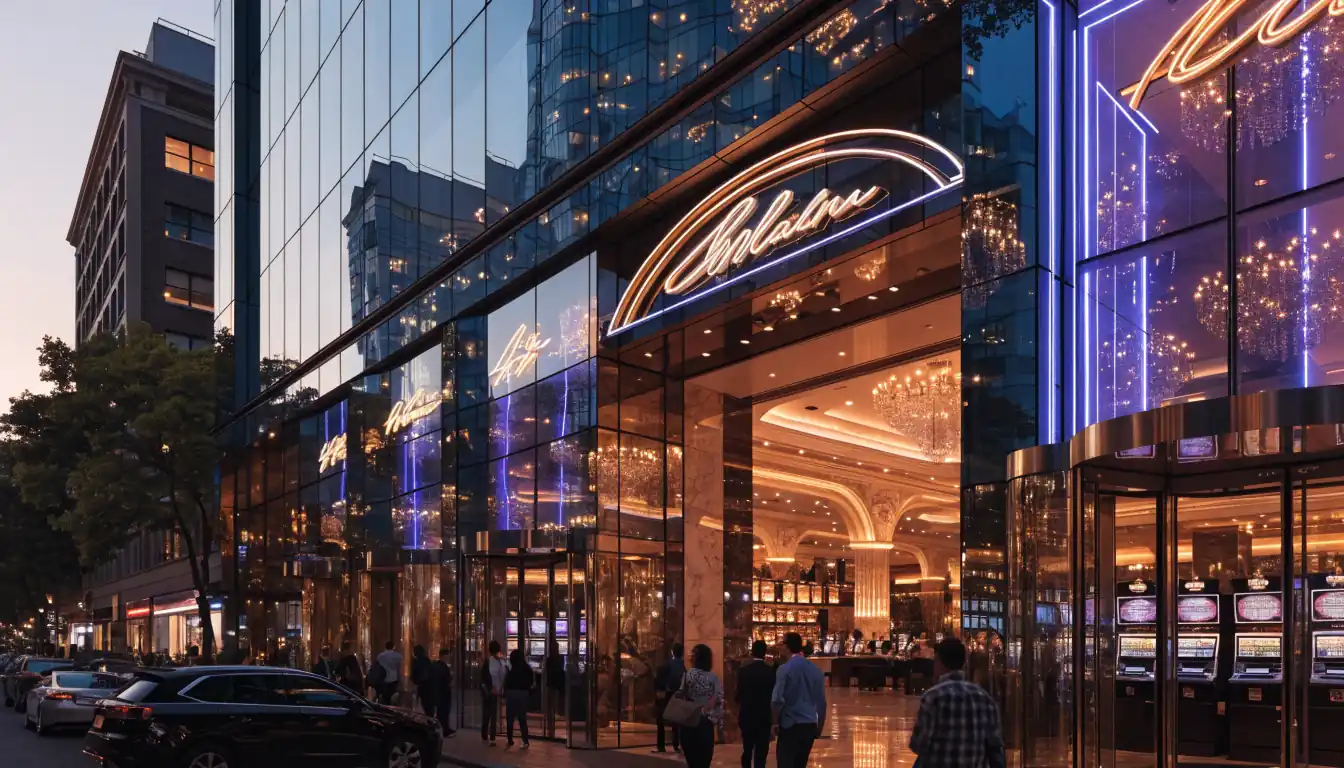
Ask a pit manager when the floor "closes" and you’ll usually get a shrug. Land-based venues in Tasmania run on extended schedules built around tourist flow and event calendars, not a fixed nine-to-five logic. Gaming rooms, bars and entertainment spaces shift hours depending on the season, and any specific timetable published on a venue’s own site is the only one worth trusting — third-party listings go stale fast, and I’ve seen "current hours" pages that hadn’t been touched in over a year.
What I can say with confidence is what doesn’t change: none of this touches online casino products. Operating a real-money online casino for Australian residents remains illegal, and there’s no domestic licence a venue could apply for even if it wanted to extend its floor onto the internet. So when a property talks about "digital expansion" or an "online experience," read that as loyalty apps, event booking, or informational content — not a virtual gaming floor. The gap between a casino’s physical opening hours and what it can legally offer online isn’t a technicality, it’s the whole reason land-based venues in Tasmania still matter to anyone chasing a proper pokies session or a live table.
Reopenings and closures
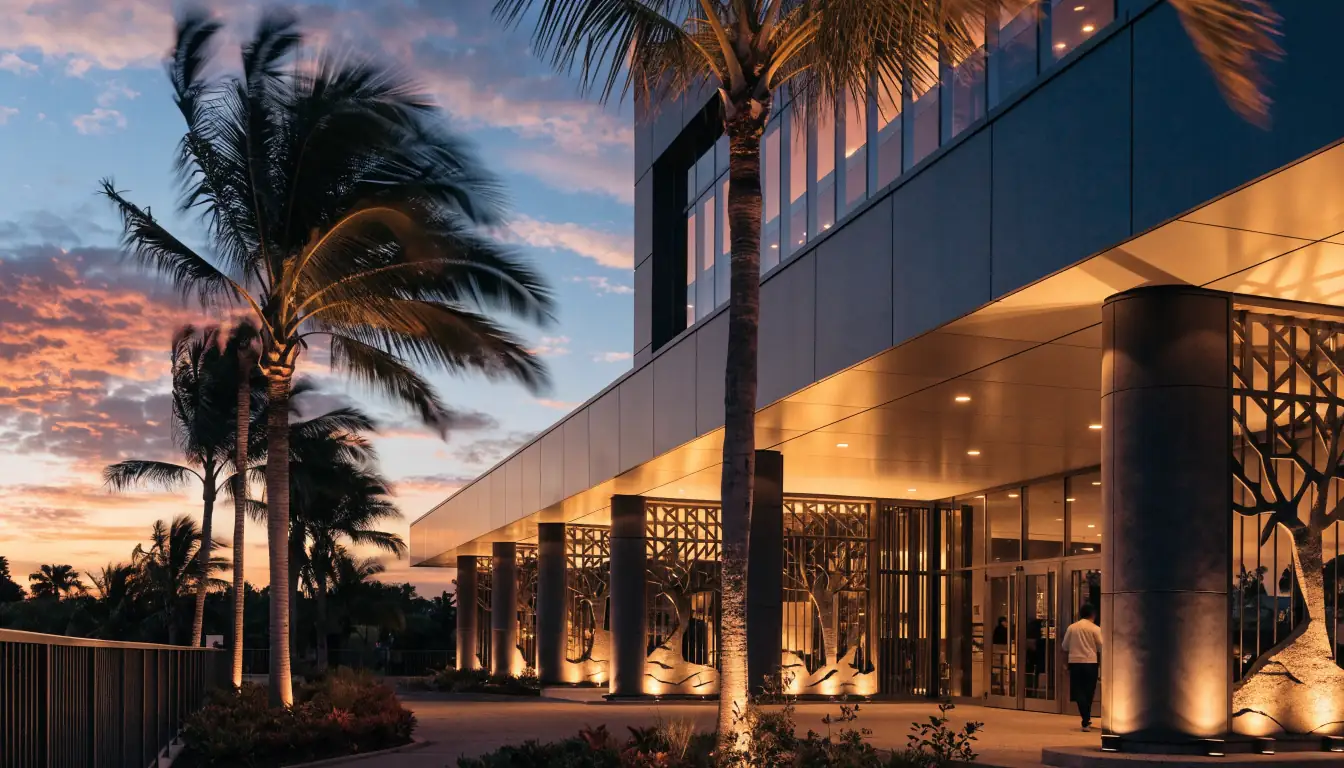
Renovation cycles are routine in an industry where the gaming floor is also the main asset being depreciated. A wing closes for refurbishment, a restaurant gets rebranded, a poker room gets relocated to make way for something with a better margin per square metre. None of this is secret — it’s just rarely advertised until the reopening, because "closed for works" doesn’t sell tickets. If a visit is planned around a specific room or table game, checking directly with the venue beforehand saves a wasted trip more reliably than any aggregator page.
Entertainment and events
Live entertainment schedules — music acts, comedy nights, seasonal functions — get published venue-by-venue and change often enough that repeating a date here would be wrong within weeks. What stays constant is the format: these events sit alongside the gaming floor as a draw in their own right, not as a filler between hands of blackjack. Anyone chasing an events calendar is better served checking the operator’s own listings than relying on a summary that ages the moment it’s written.
Employment and ongoing development
Tasmanian casino operators periodically list openings across gaming, hospitality and management roles, tied to the same expansion and renovation cycles mentioned above. New floor space or a refreshed dining precinct usually means a hiring round before opening day, not after. This sits apart from the online gambling restrictions entirely — hospitality jobs, croupier positions, food and beverage roles are all standard employment within a legal, licensed land-based operation, regardless of what the Interactive Gambling Act says about digital products.
One thing worth remembering when comparing "planned developments" across venues: an announcement is not a completion date. Expansion plans get delayed, scaled back, or quietly shelved more often than press releases admit.
Confirmed. Then postponed.
Restaurant Selections Within Casino Complexes
A casino floor gets the attention, but the restaurant lineup around it is what decides whether a night out feels like a proper occasion or just a stopover between machines. Tasmanian casino complexes tend to build a small cluster of dining concepts rather than one flagship venue, and the split is deliberate: something formal enough for a win worth celebrating, something faster for the in-between hours.
The fine-dining anchor
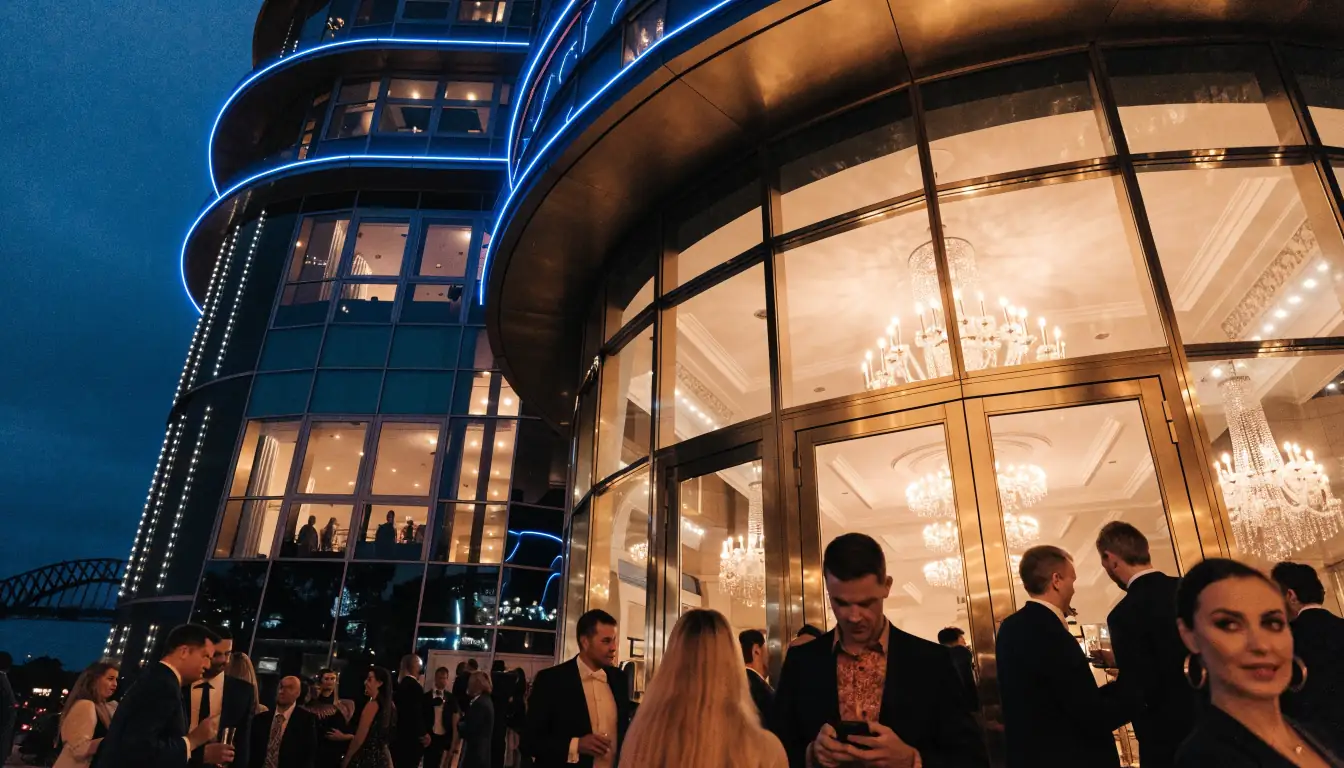
Every major complex has one restaurant positioned as the destination in its own right — the kind of place people book without necessarily planning a session on the floor afterwards. These menus lean on local Tasmanian produce: cool-climate seafood, aged beef, wine lists built around the island’s own vineyards. It’s the room where the "premium experience" language in the marketing actually earns its keep, because the sourcing and the service back it up rather than just describing a bigger portion.
Casual and à la carte options
Below that sits a tier of restaurants doing steady, no-fuss service — grills, bistro-style menus, Asian-influenced kitchens. These are the rooms that fill up on a Tuesday night with locals who have no interest in the gaming areas at all. I’ve always thought this tier says more about a property’s actual character than the flagship does, because a fine-dining room can be built to impress once, while a solid bistro has to earn repeat visits from people who live five minutes away.
Bars with kitchens attached
Most complexes also run at least one bar-restaurant hybrid — a space that functions as a lounge in the early evening and shifts to a proper kitchen later. These venues usually sit closest to the gaming floor by design, built for the pattern of stepping away from a table for twenty minutes rather than committing to a full sitting elsewhere in the building.
What actually varies between them
The mix of cuisines and price points differs from one property to the next, and so does how much emphasis goes on the flagship restaurant versus the casual tier. What doesn’t vary is the underlying structure: a formal room, a casual room, and a bar kitchen, in some combination. Beyond that, official material from individual venues doesn’t spell out enough detail — seating capacity, exact hours, specific reservation policies — for a side-by-side comparison to be worth publishing here.
A note on where this fits
None of this dining infrastructure has anything to do with online play. There are no domestically licensed real-money online casino operators available to Australian players, so a restaurant booking at a physical Tasmanian property is not a preview of some digital equivalent — it’s a separate, land-based experience with its own kitchens, staff and supply chains. Worth saying plainly, because the two get conflated more often than they should.
Booking ahead matters more at the flagship restaurants than anywhere else in these complexes. The casual and bar-kitchen venues generally run on walk-ins, which suits the way most people actually move through an evening on-site — undecided until they’re hungry.
Wellness Facilities: Spa and Leisure Services
Not every trip to a Tasmanian casino resort is about the tables. A day spa attached to the property does the quiet work of turning a gaming trip into something closer to a proper holiday — and it’s the part rarely mentioned in the marketing copy, because it doesn’t drive revenue the way a gaming floor does. Spas exist to keep guests on-site longer, spending across more departments rather than just one.
The treatment menus tend to run standard: massage, facials, a sauna or steam room, sometimes a pool reserved for hotel guests rather than casual visitors. None of that is unique to Tasmania — you’d find the same list at any resort casino anywhere. What matters more is timing and access. Spa bookings inside a casino resort usually need to be made ahead, particularly around weekends when both gaming floor and hotel occupancy climb. Walk-ins get whatever’s left over.
Bars sit in the same "non-gaming but not really" category. A casino bar is rarely just a bar — it’s positioned to keep players close to the floor, visible from the pokies or within walking distance of the tables, with service designed to keep a session going rather than end it. That’s not a criticism, just how the layout works. Knowing this changes how you read the space: a quiet corner bar away from the machines is there for people who want a drink without also wanting to place another bet.
Dress codes attached to bars and lounges tend to be looser than what’s enforced in a formal restaurant, covered elsewhere in this guide. Casual but tidy usually covers it — thongs and singlets are the common line drawn, though the exact policy depends on the specific venue and time of day rather than a single rule across the resort.
What "wellness" actually covers here
- Day spa treatments — booked separately from hotel accommodation, open to non-guests depending on availability
- Sauna, steam room and leisure pool access — typically bundled with certain room tiers rather than sold standalone
- Casino bars and lounges — positioned near gaming areas, with a handful set apart for guests avoiding the floor entirely
I’ve seen operators lean on the word "wellness" to describe what’s really just a spa menu bolted onto a hotel wing. There’s nothing wrong with that — it’s a legitimate amenity — but it’s worth naming plainly rather than dressing it up.
None of this touches the gaming side. Given that a meaningful share of Australian adults gamble regularly, and a smaller but real portion develop serious problems with it, having a genuine non-gaming space on-site isn’t just a lifestyle add-on. It’s one of the few structural nudges toward a break.
Careers within these wellness departments — therapists, spa reception, pool attendants — sit under general hospitality recruitment rather than gaming roles, worth knowing if that’s the side of the industry you’re chasing rather than the floor.
Food Courts and Pool Areas – Amenities Overview
Not every visit calls for a table booking and a set menu. Between sessions on the floor, most people want something fast, and the food court exists for exactly that gap — a coffee, a quick meal, somewhere to sit that isn’t a restaurant with a wait list. It’s the least glamorous part of any casino write-up, which is probably why it gets skipped over. Doesn’t mean it’s not used.
Pool areas serve a similar function on the leisure side. They’re not the headline feature of a Tasmanian casino stay, but they round out the picture for anyone staying overnight rather than dropping in for an evening. A pool doesn’t need explaining. It needs to be there, clean, and open at a reasonable hour — and for guests booked into the on-site hotel, that’s usually the extent of what matters.
What ties the food court and the pool together is that neither one asks much of the visitor. No dress code, no reservation, no upsell disguised as a "premium" experience. Just quick service and a place to unwind that isn’t the gaming floor.
One thing that applies across the entire property, food court and pool included: access to the casino’s offers and any age-restricted areas is limited to those 18 and over. Staff check this at the door, not at the till, so it’s worth having ID on hand before heading in rather than after ordering.
What are the best online casinos in Australia for 2026?
There are no domestically licensed real-money online casinos available to Australian players — online casino games are prohibited under the Interactive Gambling Act 2001. It is not illegal for individuals to play at offshore-licensed casinos, since the law targets operators rather than players.
What is the impact of gambling advertising on young Australians?
Around 30% of 12–17-year-olds and nearly 46% of 18–19-year-olds already engage in gambling, which is why regulators emphasise harm minimisation. Young people’s exposure to gambling is a key reason the Interactive Gambling Act was introduced to protect the public.
Is online sports betting legal in Australia?
Yes, online sports betting is legal under state and territory licences. Live (in-play) online betting is illegal, but live betting by phone is permitted.
Can Australians get a licence to operate an online casino?
No — it is illegal to offer online casino gambling in Australia, and it is not possible to obtain a domestic licence to operate one. There is no single overarching gambling authority; regulation is split between federal law (the Interactive Gambling Act 2001, enforced by ACMA) and state/territory regulators.
Written by the editors at Casino Security Info.