
Best Casino in Melbourne: Hotels, Dining and Gaming Floors
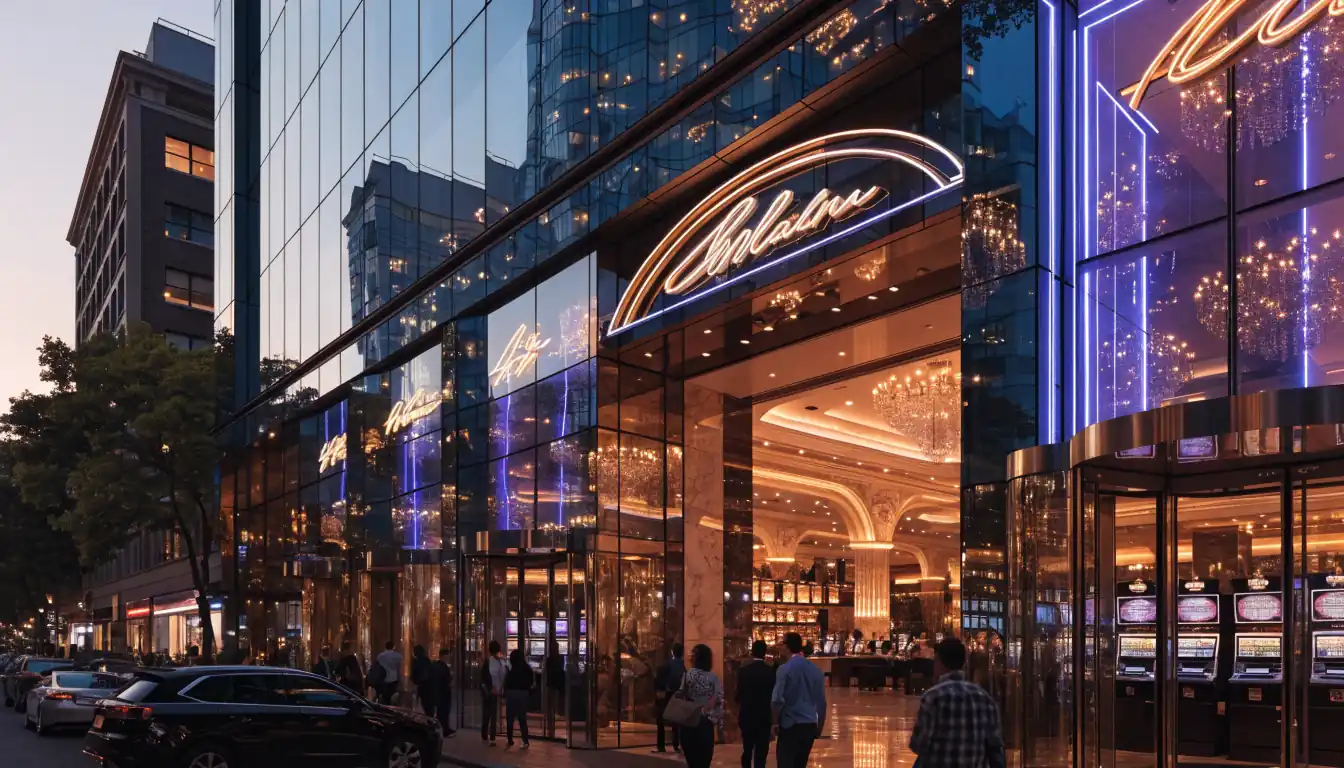
Table of Contents
- Casino-Connected Hotels in Melbourne
- Poker Rooms and Gaming Zones at Melbourne Casinos
- Parking and Accessibility
- Nearby Accommodation Options Beyond Hotels
- Contact Points: Bars, Baccarat, and Event Spaces
- Dining Buffets, Breakfast Offers and Employment Opportunities
- Casino Opening Hours, Development Plans and Licensing Overview
- Restaurant Choices Inside and Around the Casino
- Wellness Facilities: Spa and Relaxation Services
- Food Courts and Pool Areas
Casino-Connected Hotels in Melbourne
Staying inside the same complex as the gaming floor changes the arithmetic of a trip more than most guests expect. No taxi, no weather, no lift queue in someone else’s lobby. The lift from your room drops you straight into carpet you recognise, and that proximity is the entire product being sold — not the thread count, not the view, though both tend to be handled competently.
Melbourne’s casino precinct runs several tiers of accommodation under one roof or across a connected footway, and the tiers exist for a reason: they sort guests by how much of the building they’re expected to spend time in. A guest booking the entry-level tower room is paying mostly for the walk. A guest booking a suite is paying for the walk plus a set of services designed to keep them from ever needing to leave.
What proximity actually buys
The obvious saving is time — minutes, not stories, and hoteliers know it’s the smallest possible advantage they can charge the most for. What that proximity actually converts into:
- Direct internal access to gaming floors without stepping outside, which matters more in Melbourne’s weather than in most cities that host casino resorts.
- Priority or dedicated check-in desks for guests booked through the casino’s own reservation system, separate from the general hotel queue.
- Room service menus that mirror in-house dining rather than a generic hotel kitchen — useful at odd hours, less useful if you actually want variety.
- Housekeeping and concierge staff briefed on the casino’s own event calendar, so they can tell you what’s happening downstairs without you asking twice.
- In some tiers, direct billing between room charges and gaming accounts — convenient, and also a design choice that keeps spending frictionless. Worth noticing, not necessarily worth using.
Since Melbourne players can’t access a licensed local online casino, this list looks at offshore operators worth knowing before you sign up, focusing on what each one actually offers in terms of bonuses and account basics.
License: Curacao · Bonus: up to A$2,000 Holds a Curacao licence and offers a welcome bonus of up to A$2,000, giving new players a solid starting incentive.
Bonus: 100% up to A$750 + 200 free spins, 35x wagering · Payout speed: crypto 30-120 minutes, fiat 24-72 hours · Min. deposit: A$30 Offers a 100% match bonus up to A$750 plus 200 free spins with 35x wagering, and stands out for fast crypto payouts of 30-120 minutes alongside a low A$30 minimum deposit.
License: Curacao eGaming (Roby Games Ltd) · Bonus: 100% up to A$750 + 200 free spins Licensed under Curacao eGaming via Roby Games Ltd, with a welcome package of 100% up to A$750 plus 200 free spins.
License: Curacao Gaming Control Board · Bonus: up to A$5,000 + 400 free spins Operates under a Curacao Gaming Control Board licence and offers one of the larger welcome bonuses on this list, up to A$5,000 plus 400 free spins.
License: Curacao Gaming Authority (Jumpman Gaming Ltd) · Bonus: up to A$6,600 + up to 250 free spins across 4 deposits Licensed by the Curacao Gaming Authority through Jumpman Gaming Ltd, with a generous multi-deposit bonus reaching up to A$6,600 plus up to 250 free spins spread across four deposits.
License: Curacao eGaming OGL/2023/174/0082 (Dama N.V.) · Bonus: up to A$10,000 + 500 free spins across 4 deposits · Min. deposit: A$15 Holds a Curacao eGaming licence under Dama N.V. and offers a substantial welcome package of up to A$10,000 plus 500 free spins over four deposits, with an accessible A$15 minimum deposit.
License: Curacao, operated by Dama N.V. · Bonus: 325% up to 5.25 BTC + 250 free spins across 4 deposits Operated by Dama N.V. under a Curacao licence, this crypto-friendly casino offers a 325% bonus up to 5.25 BTC plus 250 free spins across four deposits.
License: Curacao Gaming Control Board OGL/2023/176/0095 (Hollycorn N.V.) · Bonus: up to A$11,000 + 300 free spins (code NEO100) Licensed by the Curacao Gaming Control Board under Hollycorn N.V., offering a large welcome bonus of up to A$11,000 plus 300 free spins redeemable with a specific code.
License: Curacao Gaming Control Board OGL/2023/176/0095 (Hollycorn N.V.) · Bonus: up to A$5,000 + 300 free spins across 4 deposits Also licensed under Hollycorn N.V. via the Curacao Gaming Control Board, offering a welcome bonus of up to A$5,000 plus 300 free spins spread over four deposits.
License: Curacao (operating since 2017) · Bonus: 250% up to A$2,000 + 50 free spins on the first of six deposits · Min. deposit: A$20 A Curacao-licensed casino operating since 2017, offering a 250% bonus up to A$2,000 plus 50 free spins on the first of six deposits, with a A$20 minimum deposit.
None of this is unique in hospitality terms. Airport hotels do the same trick with flights. What’s specific to a casino property is the incentive behind it: the hotel’s job is to keep you close, not to keep you entertained elsewhere.
Room tiers and what separates them
Standard tower rooms are functionally hotel rooms — comfortable, well-serviced, indistinguishable from a good business hotel except for the lift bank. The jump to a suite or a "premier" category usually buys floor height, a separate lounge area, and priority reservations for the venues covered elsewhere in this guide — restaurants, spas, event spaces. It rarely buys anything unique to gambling itself; that’s a separate ecosystem of hosts and invitations that operates independently of what room category you’ve booked.
Deals and packaged rates tend to bundle a room with dining credit or a show ticket rather than with gaming credit directly — a distinction worth reading closely, since the wording on a package can imply more overlap between "staying" and "playing" than actually exists. If a rate looks unusually generous, it’s usually because occupancy is soft that week, not because the guest has been singled out for anything.
Who actually books these rooms
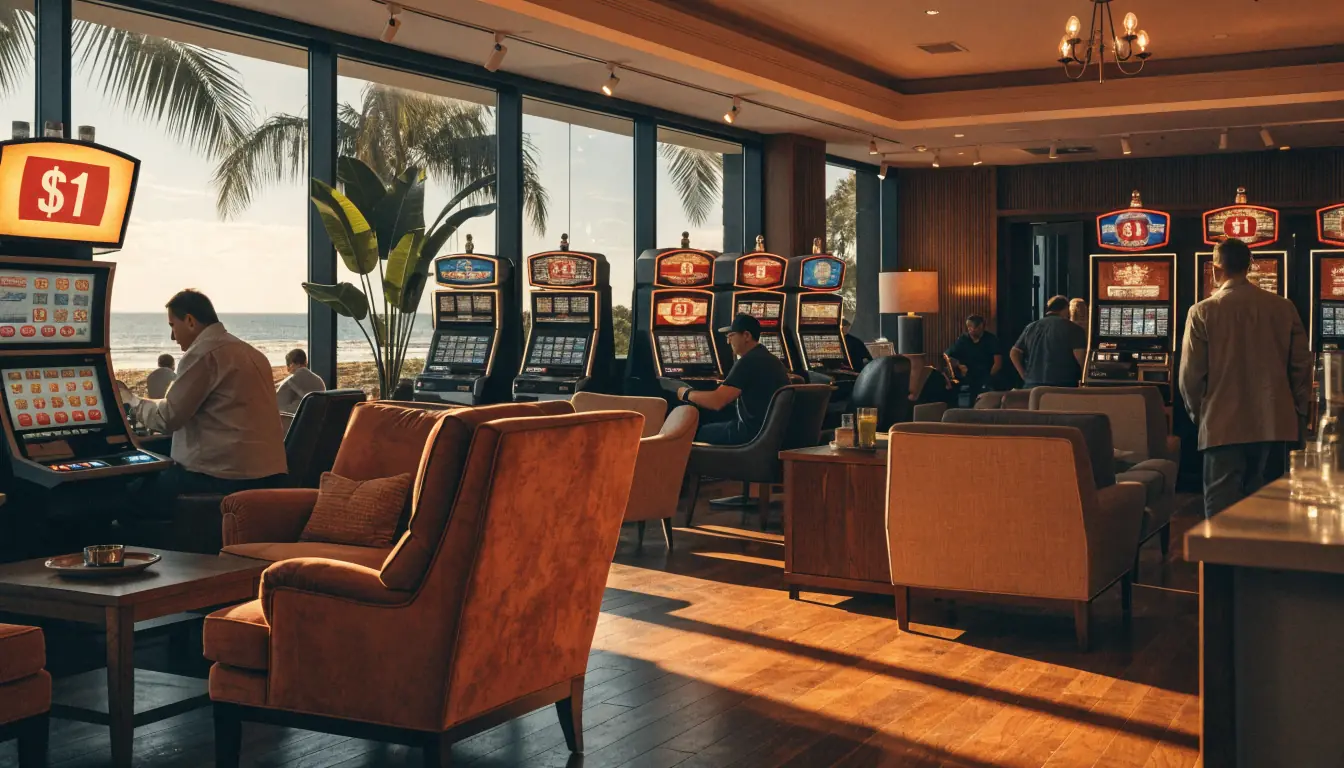
Gambling in Australia is not a fringe activity — 72.8% of adults reported gambling in the past year, and average bets placed per person came to roughly AUD 9,885 annually, against average losses near AUD 1,200. Most of that spending happens nowhere near a casino hotel room; it’s pokies in the local club, an app on the train, a Saturday multi. The connected hotel guest is a narrower slice: visitors from interstate or overseas, corporate travellers folding a stay into an event downstairs, and a smaller number of frequent players for whom proximity to the floor is the actual point of the booking rather than a bonus.
That’s also why superannuation funds sitting on more than A$14.8 billion in listed igaming holdings is a detail worth knowing even for someone just booking a room — the industry funding these buildings is large, publicly listed, and increasingly held in ordinary Australians’ retirement accounts, whether or not those Australians have ever set foot in the hotel lobby upstairs.
Booking practicalities
Rates fluctuate around event calendars more than around season — a major conference or a headline show in the venue will move room prices faster than a long weekend will. Booking directly through the casino’s own hotel channel, rather than a third-party aggregator, is usually the only way to access the package rates that include dining or lounge credit, since aggregators typically see only the base room product.
Parking tickets
Keep your parking ticket safe; if it’s lost you may be charged a higher fee or face difficulty validating your stay.
Poker Rooms and Gaming Zones at Melbourne Casinos
Walk past the main gaming floor and the poker room announces itself before you see it — a lower hum, tighter tables, dealers who don’t bother with the theatrical patter you get at the pokies bank. That’s the tell of a room built for people who play for a living, or want to feel like they do for an evening.
The dedicated poker area at a Melbourne casino floor typically runs a mix of cash games and scheduled tournament fields, separate from the general electronic gaming zone. Structurally these rooms are kept apart from slot banks and roulette pits for a reason that has nothing to do with atmosphere: poker is player-versus-player, not player-versus-house, so the room needs its own rake structure, its own floor staff, and dealers trained specifically for that game rather than cross-trained across the whole floor.
What a tournament night actually looks like
Tournament schedules at Melbourne venues rotate through buy-in tiers, satellite events feeding bigger fields, and the occasional headline series that pulls in players from interstate. None of that is unusual by international standards — what matters more to a first-timer is registration cut-off, whether re-entry is allowed, and where the tournament room sits relative to the cash tables, because a busy series night can push cash games to a corner or a different floor entirely. Staff at the poker desk will confirm structure sheets on request; nothing about blind levels or starting stacks is worth guessing at.
The "casino gym" — gaming zones built for volume
Away from felt tables, the higher-turnover section of the floor functions almost like a gym for gaming: banks of electronic terminals, rapid-fire table games, and a layout designed to keep throughput high rather than to slow anyone down for conversation. This is where the bulk of visitor traffic actually sits. It’s worth being clear-eyed about what these zones are optimised for — volume and rotation, not the social pacing of a poker room. If poker is the endurance section, this is the interval training: shorter sessions, faster outcomes, less downtime between hands or spins.
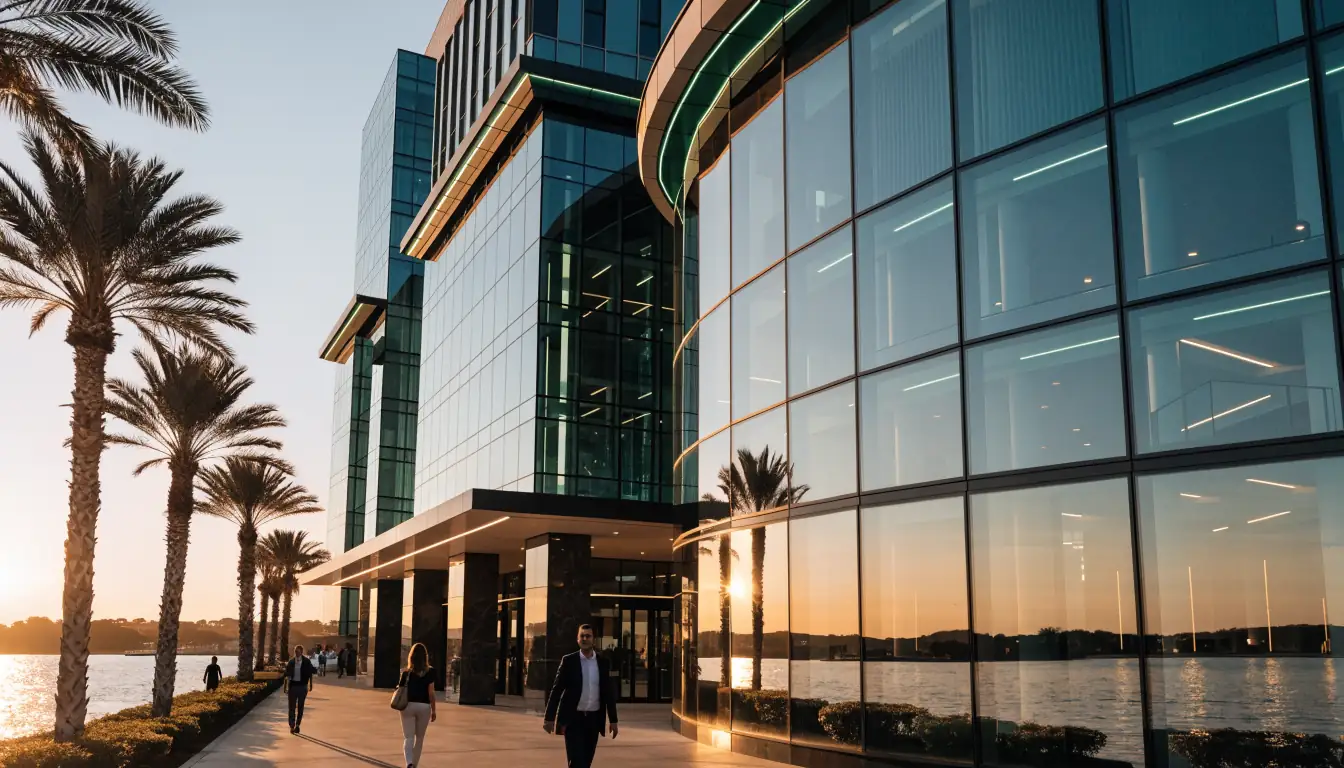
Table minimums and machine density in this section tend to scale with time of day and day of week, though venues don’t always publish that schedule anywhere visible — it’s something floor staff know and visitors learn by showing up more than once.
How gaming credibility actually gets measured
None of this — poker structure, table variety, terminal spread — is assessed by feel. Where independent rankings exist for gaming venues and their online counterparts, the assessment runs on a weighted formula, recalculated on a weekly basis rather than left static for months at a time. Bonus generosity carries the heaviest weight at 30%, payout reliability follows at 25%, breadth of the game library sits at 20%, customer support responsiveness at 15%, and user-submitted feedback closes the formula at 10%. Each listing is additionally scored on bonus transparency, cashout speed, customer care, and licensing integrity.
That scoring model belongs to online and interactive gaming rankings, not to what happens inside a Melbourne poker room — a physical tournament doesn’t have a "cashout speed" metric in the same sense. But the underlying discipline is the same one worth applying to any gaming claim, on the floor or on a screen: generosity and breadth mean little without reliability behind them.
Sports bar seating near the tables
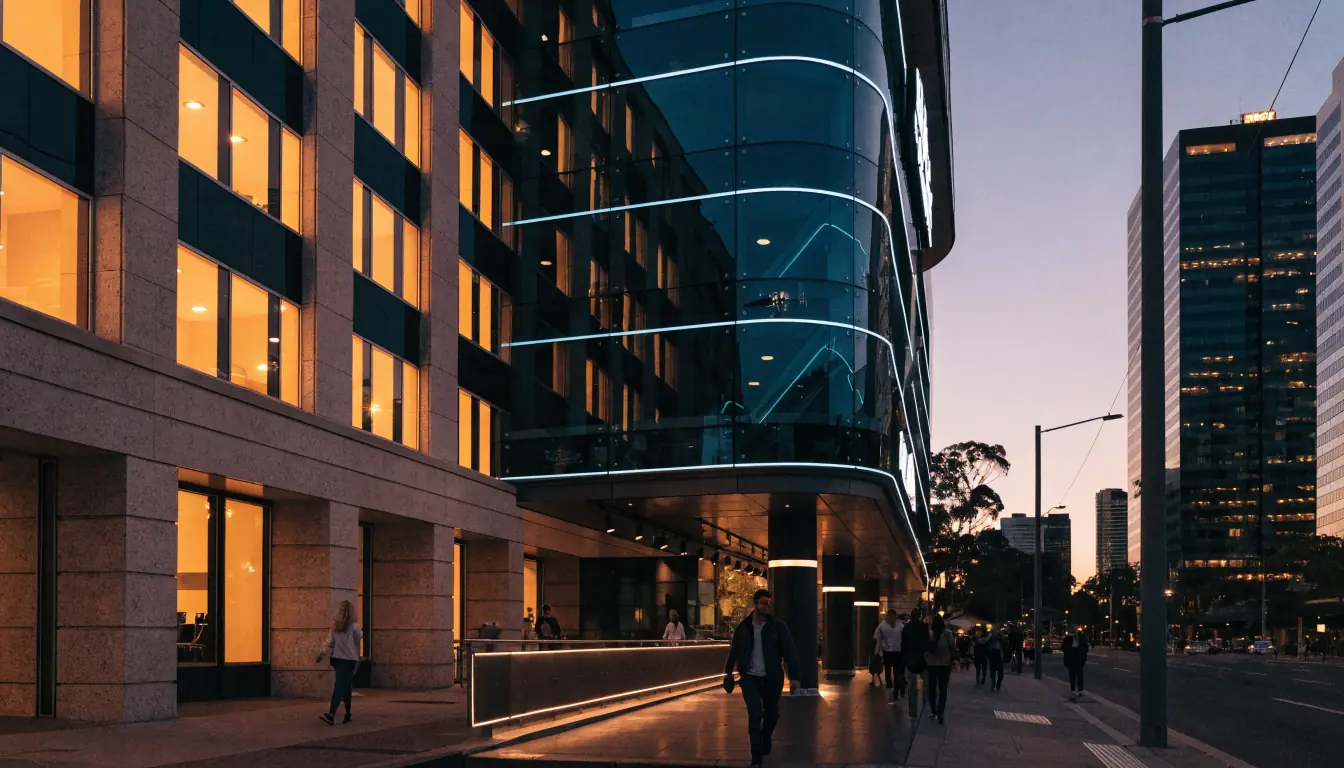
A sports bar sits within reach of the main gaming zones at most large Melbourne casino properties, positioned so a player can step away from a poker session without losing sight of the room. It’s built for racing and match-day screens more than for quiet conversation — a functional pause point between hands, not a separate destination in its own right. Anyone looking for the venue’s full dining and bar contact details will find those covered where they belong, in the section on bars and event spaces rather than here.
Parking and Accessibility
Getting the car parked is rarely the part anyone plans for. It’s the part that decides whether the evening starts well or with a lap around the block looking for a spare bay.
Melbourne’s main casino precinct sits close enough to the CBD that most visitors have three real choices: drive in and park on site, get dropped off, or take public transport. Each has trade-offs that don’t get mentioned in the glossy overview of the building’s amenities — because parking isn’t a leisure feature, it’s logistics, and logistics don’t sell rooms.
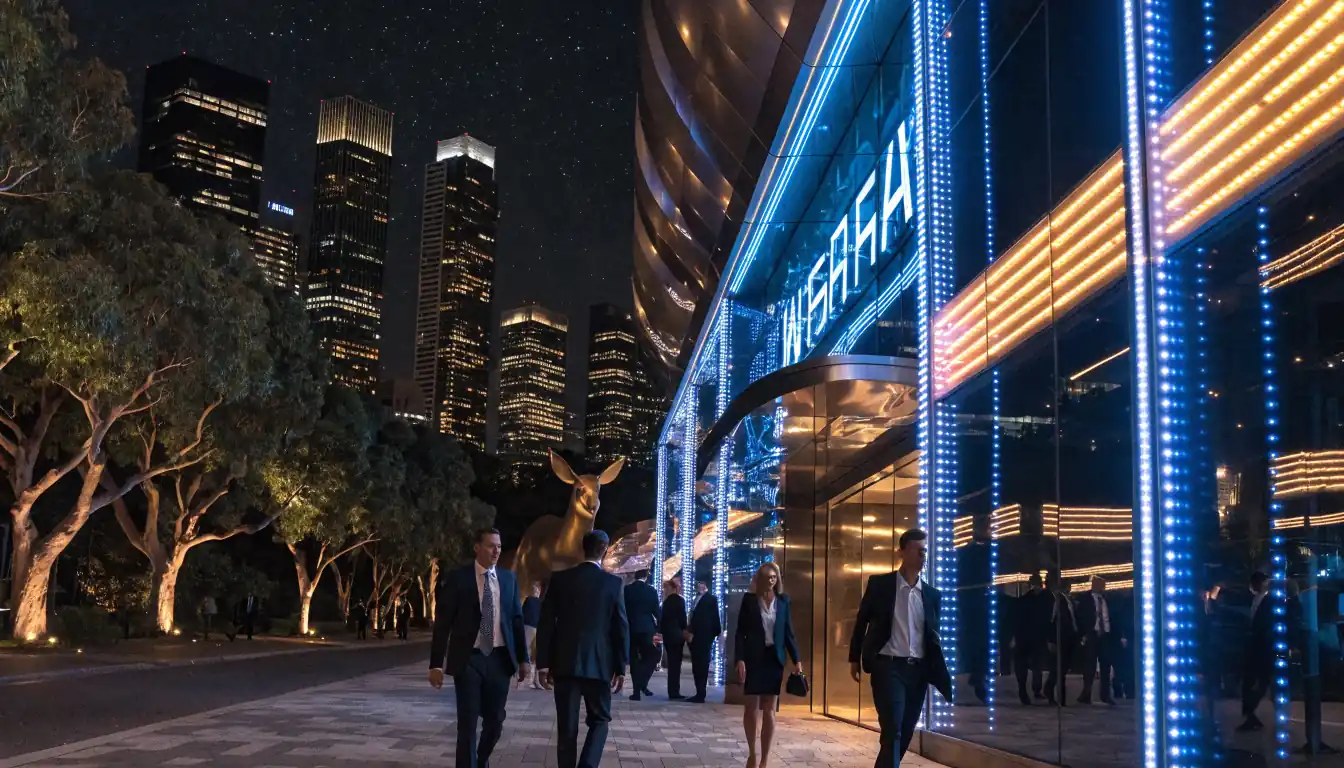
On-site parking
The multi-storey parking structures attached to the complex are built for volume, not charm. Bays are tight during peak evening hours and weekends, which lines up with when foot traffic through the gaming floor is heaviest. Signage inside the structure generally directs drivers toward the casino entrance rather than the hotel lobby, so if a hotel stay is the plan, it’s worth checking which stairwell or lift bank actually connects to reception before circling for a spot near the "right" door.
Rates and any free-parking allowances tied to spend or membership tiers are the kind of detail that changes without much notice, so I won’t quote a figure here — check the current signage or the casino’s own parking page before assuming a validation or discount applies. What I can say from having done this more than once: the ticket machines at exit rarely give you a grace period, so keep the stub somewhere you’ll actually find it.
Valet service
Valet exists mainly for the drop-and-go crowd — people heading straight to dinner or an event who don’t want to deal with ramps and boom gates. It’s faster than self-parking on a busy night, and the queue at pickup is usually the bigger time cost, not the drop-off. Valet is a convenience purchase, not a necessity; if the plan is a long session at the tables, self-parking often works out more practical since retrieval times stretch when several people call for their cars at once.
Public transport
Trams run along the routes bordering the precinct, and the closest train station is a short walk away — close enough that a lot of regular visitors skip driving altogether, especially on weekend nights when parking fills early. For anyone staying elsewhere in the city, public transport also sidesteps the need to think about parking costs entirely, which for a casual visit is often the simpler call.
Rideshare and taxi drop-off points are set slightly apart from the main pedestrian entrance, mostly to keep the loading zone from clogging up during peak hours. It’s a short walk, not an inconvenience, but worth knowing if travelling with luggage or heading in for an early breakfast before the crowds arrive.
Accessibility
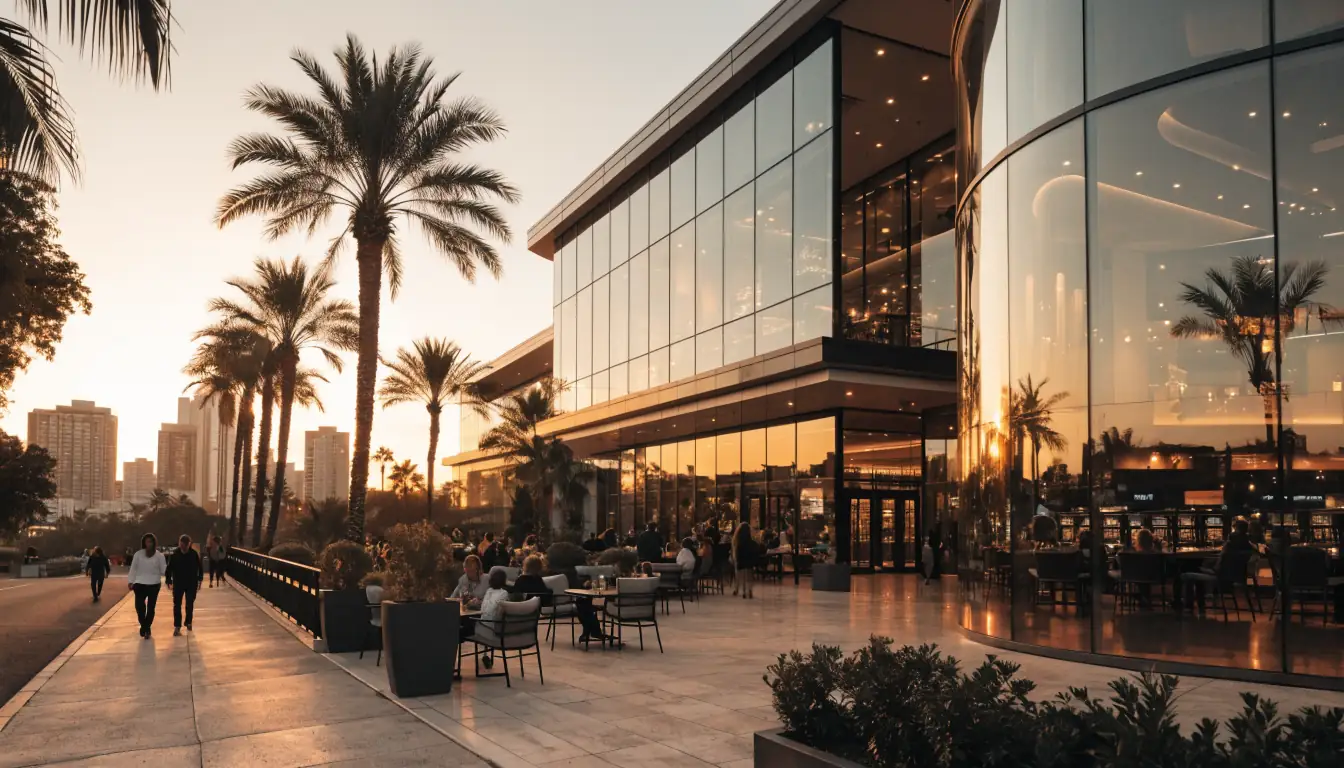
Accessible parking bays are located near the main lifts in the multi-storey structure, and ramps connect the parking levels to the casino floor without requiring stairs. Staff at the entrance points are generally used to directing visitors with mobility needs toward the shortest route in — worth asking on arrival rather than guessing, since the layout isn’t always intuitive on a first visit.
One thing that doesn’t change regardless of how someone arrives: access to the gaming floor and any casino offers requires being 18 or older, and ID checks happen at entry points, not just at the cashier. Given that Australians collectively placed $244.3 billion in bets and lost $31.5 billion in 2022–23, the venues clearly aren’t short on foot traffic — which is exactly why sorting out parking or transport before arrival, rather than on the night, saves the aggravation of doing it during the busiest hour of the week.
Nearby Accommodation Options Beyond Hotels
Not everyone wants a room with a casino floor sitting underneath it. I’ve stayed both ways — inside the tower, and a ten-minute walk out — and the second option changes the whole texture of a trip in ways the marketing never mentions.
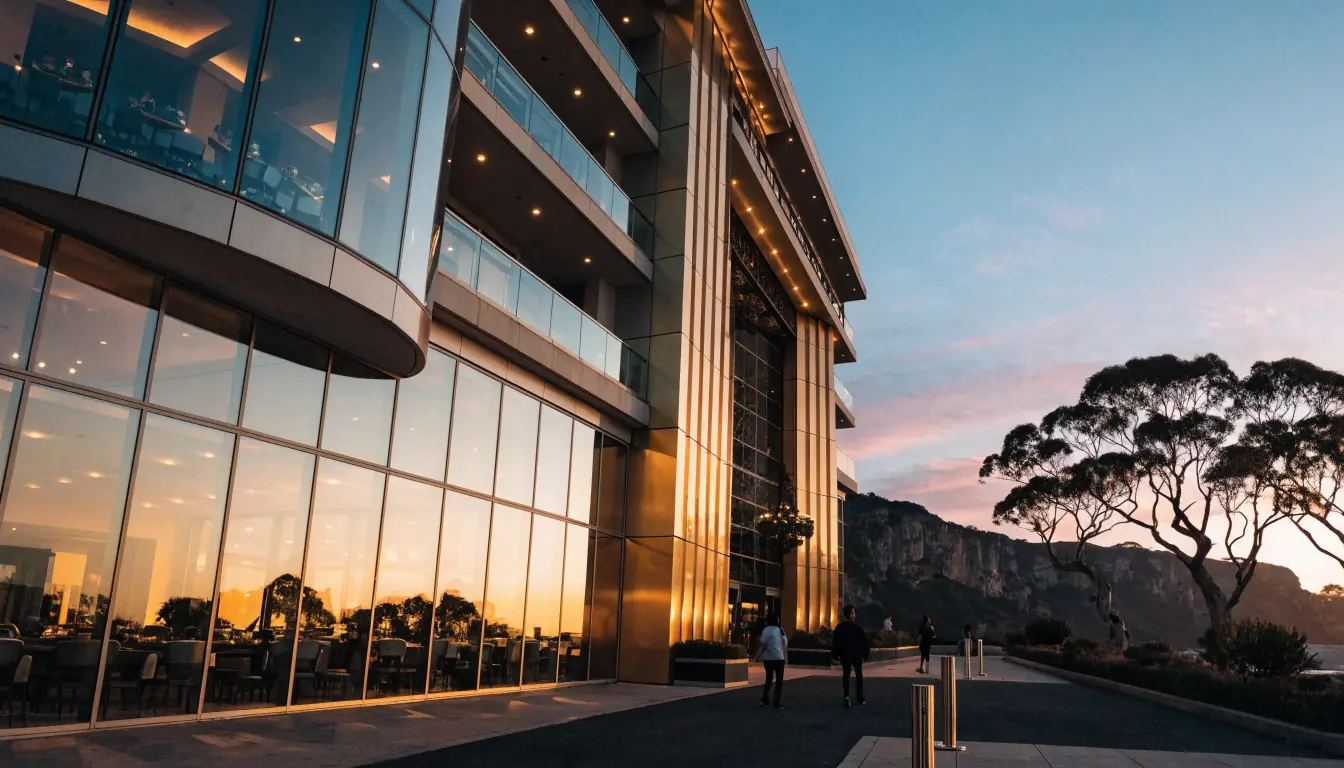
Serviced apartments along the Southbank promenade and through the surrounding grid are the obvious alternative. They come with kitchens, laundry, and a door that closes on the whole gambling environment when you want it to. That last point matters more than it sounds. A full-service hotel keeps you inside a loop: lifts open onto gaming floors, corridors route past bars, breakfast rooms sit next to cashier windows. An apartment a few streets away removes that loop entirely. You choose when to walk back in, rather than passing through on your way to bed.
What’s actually available
- Serviced apartment towers — one to two bedroom layouts, self-catering, typically booked by the night or week, aimed at longer stays or small groups splitting a room rate.
- B&Bs and guesthouses — smaller operations in the surrounding heritage streets, fewer amenities, but a genuinely different pace from a casino resort.
- Short-stay residential lets — apartments in mixed-use buildings, rented out on platforms rather than run as hotels, with no shared lobby traffic to the gaming floor at all.
None of these give you the "exclusive guest" perks a connected hotel sells — no direct lift access, no bundled show tickets, no loyalty-tier check-in. What they give you instead is distance, in the literal sense. A kitchen means you’re not eating every meal inside the complex. A separate entrance means you’re not walking past poker machines to reach your room.
Why the distance is worth something
About 38% of Australian adults who gamble do so at least once a week, which tells you gambling is often a routine activity rather than an occasional splurge — and routine is exactly what a connected hotel is built to extend. Staying somewhere self-contained interrupts that pattern instead of feeding it. It’s a small structural choice, but it’s a real one.
It’s also worth being plain about who this matters most for. Estimates put the number of Australian adults with significant gambling problems somewhere between 80,000 and 160,000. That’s a minority, but not a small one, and accommodation choice is one of the few levers a visitor controls entirely on their own — nobody needs to disclose anything or ask permission to book an apartment instead of a casino tower room.
Self‑catering units with kitchen and laundry, ideal for longer stays or groups wanting privacy.
Smaller, heritage‑styled properties with limited amenities, offering a quieter pace away from the casino floor.
Apartment rentals via platforms, no shared lobby traffic, suitable for short trips without hotel services.
Practical trade-offs
Apartments and B&Bs rarely include the concierge desk, the in-house dining credit, or the fast-track access that connected hotels bundle into their nightly rate. Reception hours can be shorter, some B&Bs are cash-on-arrival or card-only with no digital wallet options, and check-in isn’t staffed around the clock everywhere. What you gain is control: your own schedule, your own food, and a walk through open air rather than a casino atrium between the room and the world outside.
For a weekend built entirely around the gaming floor, a connected hotel still makes logistical sense — that trade-off is covered elsewhere. For anything longer, or for anyone travelling with people who aren’t there to gamble at all, the apartments and guesthouses within walking distance do the job with less friction, not more.
Contact Points: Bars, Baccarat, and Event Spaces
Every casino floor eventually breaks down into a handful of practical questions: which door, which desk, which number to call. Nobody wants to phone around three departments to book a table for a birthday. This section is the address book — not the review.
Bars
Casino bars split roughly into two categories: the ones built for a quick drink between hands, tucked along the main gaming floor, and the standalone lounges that run their own hours and their own booking lines, separate from the pit. If a venue calls itself a "cocktail bar" rather than a "gaming bar," expect table service and a reservation system rather than walk-up stools. Worth checking before heading down: whether the bar takes bookings for groups, because floor bars generally don’t, and whether it runs its own late license, because that determines whether it stays open past the main gaming floor’s hours.
Baccarat rooms
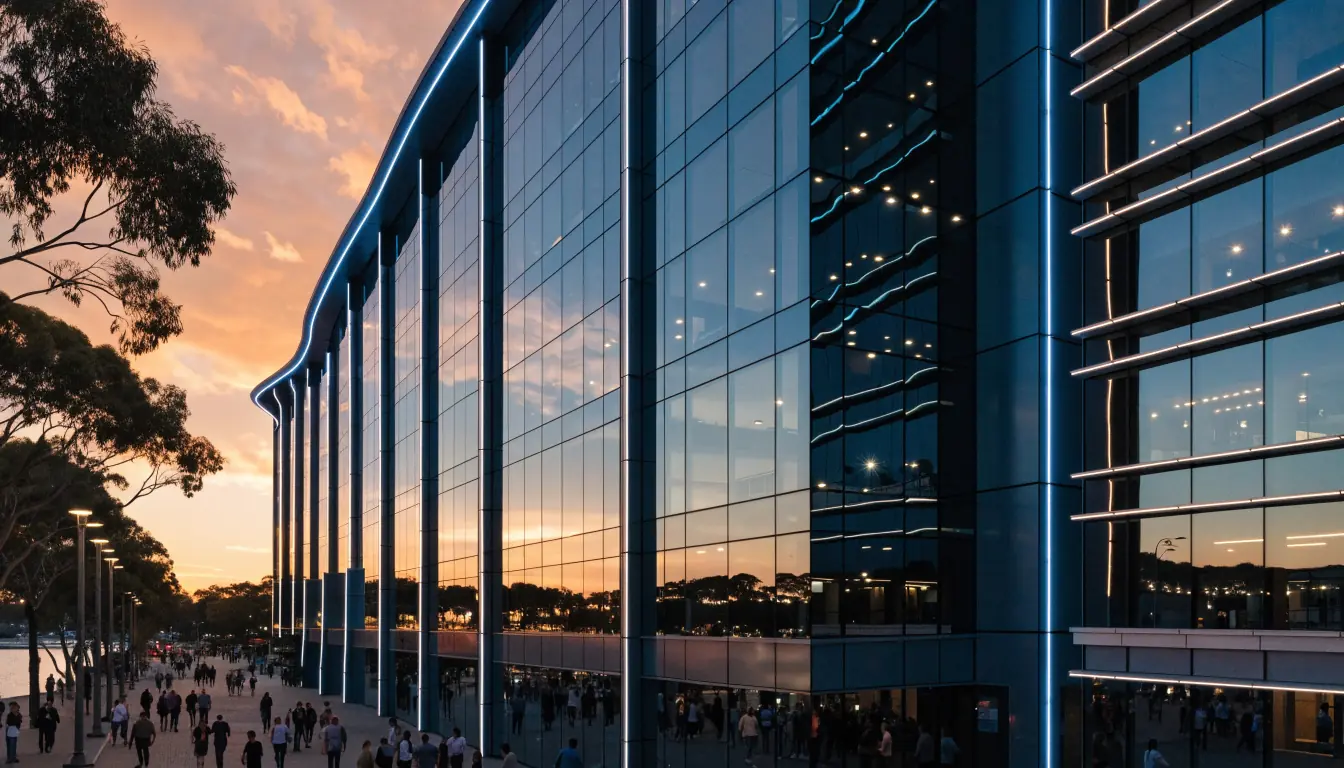
Baccarat at this level isn’t dealt on the open floor the way it is in mid-tier venues. It’s usually ring-fenced — a private or semi-private room with its own host, its own dress expectation, and often its own minimum that isn’t published anywhere public. Access typically runs through a floor host or a dedicated reservations line rather than a general enquiries number, which is worth knowing before you turn up expecting to walk straight in. If a property doesn’t list a direct baccarat contact, that’s not an oversight — it usually means access is arranged in person or through existing patron accounts, and the casino simply doesn’t publish that pathway.
Event spaces and concerts
Melbourne’s casino precincts double as concert and function venues, and the contact structure for these is entirely separate from anything gaming-related. Event bookings — whether for a touring act, a corporate function, or a private party — go through a dedicated events or ticketing line, not the main casino switchboard. Concert scheduling is announced separately from gaming promotions, so anyone chasing a specific show is better off going straight to the venue’s events page rather than the general contact number, which is staffed for gaming and hospitality enquiries first.
Contact numbers
- Bars: call the main reception and ask to be transferred to the bar desk.
- Baccarat: request the dedicated baccarat host line; it’s not listed publicly.
- Events/concerts: use the dedicated events ticketing line for bookings.
- Car park: contact the car‑park operations desk for lost tickets or validation issues.
- General enquiries: the main casino number will route you to the appropriate department.
Car park services
Car park enquiries — lost tickets, validation, disputed charges — go through a facilities or car park operations line, not general reception. This is worth separating out because car park billing at a casino complex often runs through a third-party operator rather than the casino itself, which explains why a dispute about a parking charge can take longer to resolve through the main switchboard than it would through the car park’s own desk.
General contact
For anything that doesn’t fit a specific department — general enquiries, membership questions, lost property — the main casino number is the right starting point, and staff there redirect to bars, baccarat hosts, events, or car park operations as needed. It’s worth noting that none of this changes what happens with your money at the tables: gambling winnings in Australia aren’t taxed, and the state’s cut comes from gambling revenue as a share of overall tax collection, not from anything deducted at the cashier when you walk out.
A short list, kept short on purpose:
- Bars — check reservation policy and closing time separately from the main floor.
- Baccarat — arranged through a host or private line, not always publicly listed.
- Events/concerts — separate booking channel from gaming enquiries.
- Car park — often a third-party operator, not the casino’s own desk.
Dining Buffets, Breakfast Offers and Employment Opportunities
Breakfast at a casino resort is a different animal from breakfast anywhere else in the city. The room stays open early enough to catch shift workers coming off a night on the floor and tourists still on a different time zone, and the spread is built for volume: hot stations, a carvery, pastries, the works. Nobody markets it as a "quiet start to the day" — it’s a production line, and that’s the point.
What gets called a "buffet" varies more than the marketing suggests. Some venues run a genuine all-day format, where the same room feeds breakfast crowds in the morning and shifts to a dinner-length spread by evening. Others limit the buffet concept to breakfast only and hand dinner service over to standalone restaurants. Before booking, it’s worth checking whether the venue you’re picturing is the same one your table is actually in — precinct dining is dense enough that two rooms with similar names can mean two different experiences.
Pricing structures also differ by day of the week and by whether a loyalty tier is attached. Members’ programs tend to bundle dining credit with gaming activity, so the "free breakfast" some regulars mention is rarely free in the sense of no strings attached — it’s a rewards mechanic dressed up as hospitality. Worth knowing before you factor it into a trip budget.
Employment inside the resort
A casino resort of this scale runs on a labour force that goes well beyond dealers and pit staff. Kitchens, front-of-house dining, housekeeping, security, cage and finance roles, event staffing — the employment footprint looks more like a mid-sized hotel group than a single gaming floor. Job listings for these positions typically sit on the operator’s own careers page rather than general job boards, and they get refreshed often enough that checking back periodically is more productive than relying on a single search.
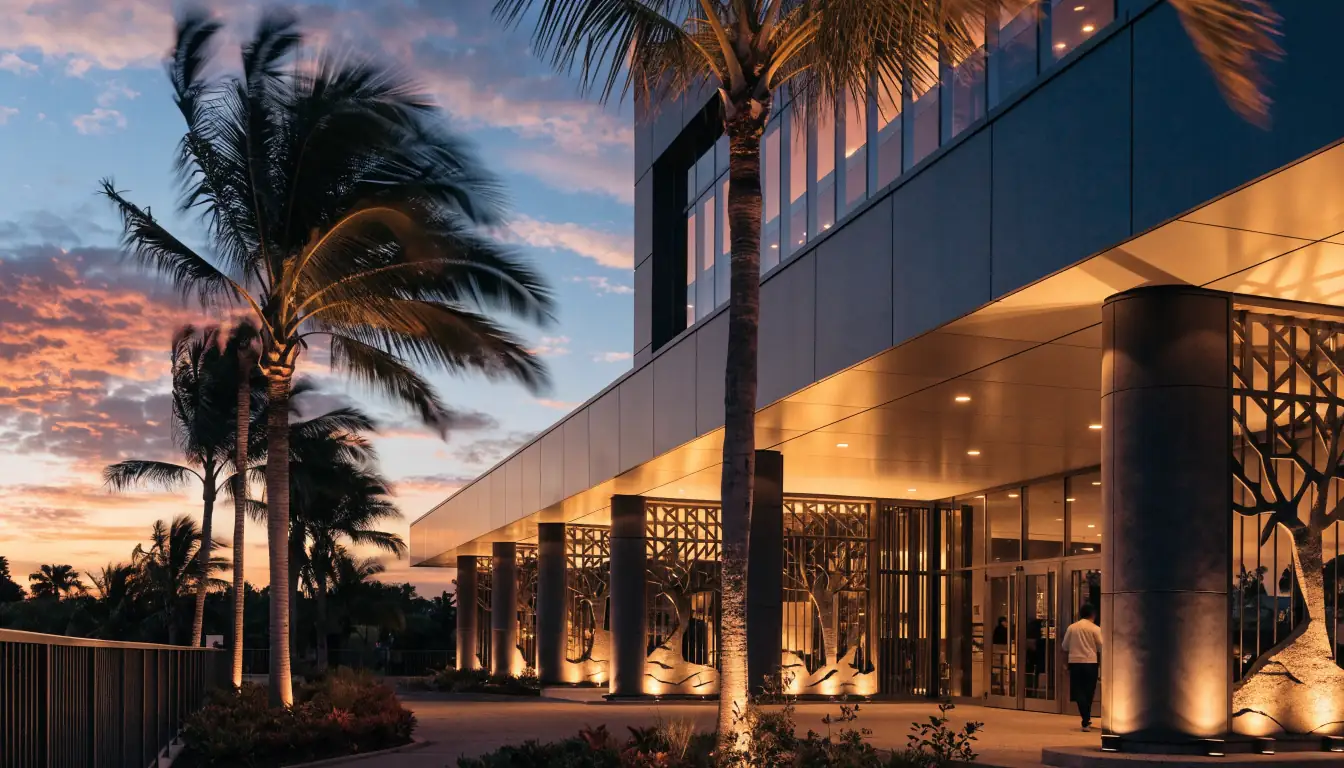
Culinary roles in particular tend to be the highest-turnover category, simply because the dining operation runs at a scale that needs constant rostering — breakfast service, all-day outlets, banquet and event catering all draw from the same kitchen brigade structure. If hospitality experience is the goal rather than gaming-floor work specifically, the food and beverage division is usually the larger door in.
One thing worth being direct about: none of this hiring activity has anything to do with online gambling operations. Employment at a physical resort — kitchen staff, dining hosts, event crew — sits entirely within ordinary hospitality and gaming-floor law. It’s a different regulatory world from the one covering internet-based casino products, which remain governed federally in a way that doesn’t touch bricks-and-mortar dining or staffing at all.
What we checked, and what we didn’t
Our review process for this site is built around gaming products and account experience — depositing at least A$300 per operator and testing withdrawals to see how cashout claims hold up in practice. That process doesn’t extend to on-site dining quality or the recruitment side of a physical resort; those aren’t things a deposit-and-withdraw test can verify. Take the buffet and jobs information here as practical orientation, not a scored review.
Job availability changes weekly. Menu changes more often than that.
Casino Opening Hours, Development Plans and Licensing Overview
A physical casino floor in Melbourne runs on a licence issued at state level, and that’s a different animal from anything governing online play. Worth saying plainly, because the two get mixed up constantly in casual conversation: walking through a gaming floor in Southbank has nothing to do with what’s legal to click on from a laptop.
There is no single overarching statute or single overarching gambling authority regulating gambling in Australia. Regulation splits across state and territory lines, with federal law sitting on top for the online space specifically. That structure is why a Melbourne casino answers to state‑level licensing conditions for its floor, tables and opening hours, while anything delivered over the internet falls under separate Commonwealth rules entirely.
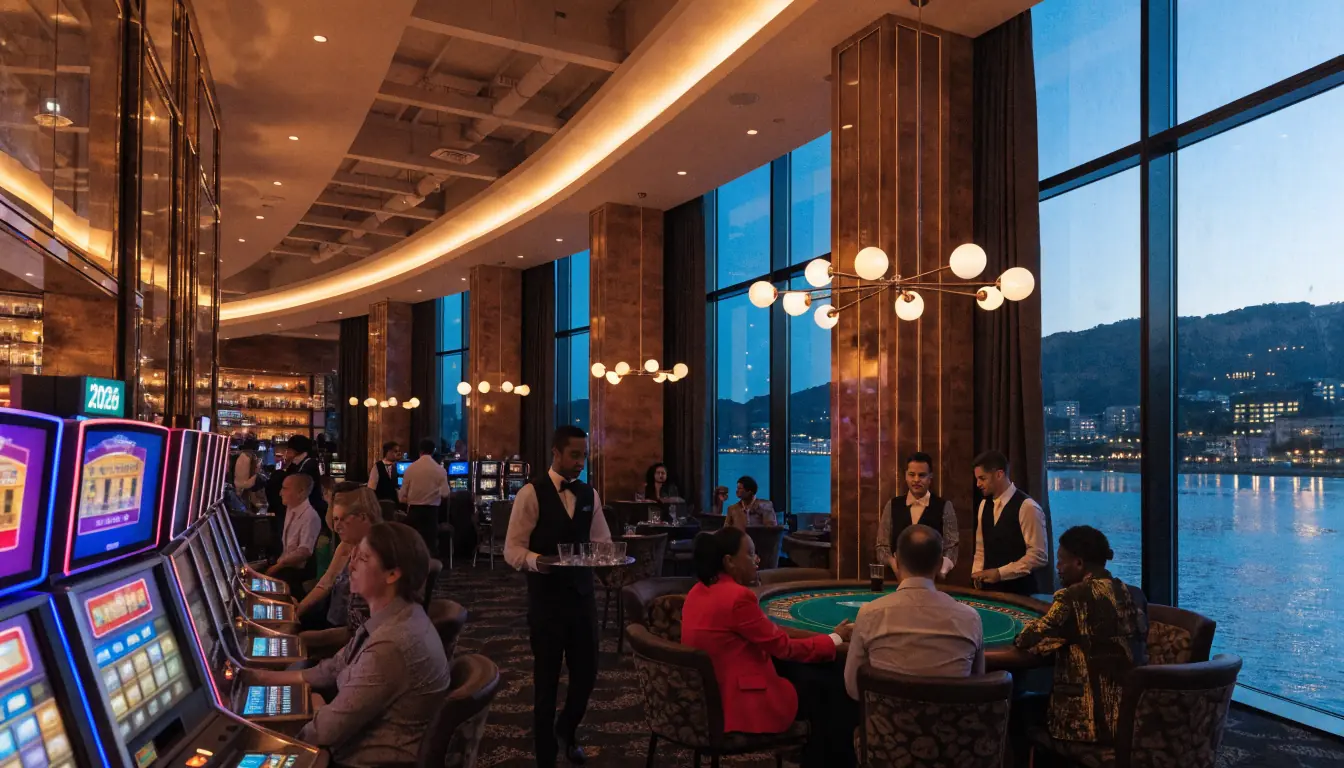
Where the federal layer applies
The Australian Communications and Media Authority (ACMA) is the federal regulator that enforces the Interactive Gambling Act 2001. Its job is online gambling specifically — it has no role in setting a casino’s floor hours or approving a refurbishment. I’ve seen readers assume ACMA oversees the physical venue too. It doesn’t. That confusion matters because it shapes what people expect a "licence" to actually cover.
On the online side, sources don’t agree on which year did the prohibiting: some cite the Interactive Gambling Act 1997, others the 2001 version, when describing the ban on offering online casino games to Australian residents. Worth flagging that discrepancy rather than picking one silently, since neither the industry nor most commentary settles it cleanly. What both versions agree on is the outcome — online casino games aren’t something an Australian resident can legally be offered by a domestic operator.
There’s a further wrinkle worth knowing about: the Northern Territory Racing Commission (NTRC) functions as Australia’s de‑facto online gambling regulator, mainly because it licenses most national online bookmakers who benefit from lower tax there. That’s a sports‑betting story, not a casino‑floor one, but it illustrates the same pattern — Australian gambling regulation is a patchwork, assembled state by state and product by product, not handed down from one central authority.
What this means for opening hours and expansion
None of the above changes how a physical Melbourne casino sets its trading hours or plans a refurbishment — those decisions sit with the venue and its state regulator, and they shift periodically as facilities are upgraded or gaming areas reconfigured. What I’d say to anyone checking hours before a visit: confirm directly with the venue rather than relying on a general assumption that a "casino" operates the same way everywhere. Precinct entertainment offerings and expansion timelines get announced by the operator itself, not by any single national body, because no single national body has that authority to begin with.
Legal risk
Assuming that the state licence for the physical casino also covers online gambling can lead to illegal activity; always check the separate federal regulations for online games.
The practical takeaway for a visitor: floor access, table hours and physical development plans are a state‑licensing matter. Everything involving a screen — an app, a website, an offshore platform advertised as "same experience, more convenient" — sits under the federal framework above, and that framework does not authorise any operator to offer online casino games to residents here.
Different law. Different floor.
Restaurant Choices Inside and Around the Casino
Walk the casino floor at Melbourne and the restaurant count outnumbers what most standalone precincts manage. What’s easy to miss, if you’re only looking at the gaming areas, is how much of that dining spreads well past the building’s edges — the precinct along the river has grown its own identity, separate from whatever’s happening under the casino roof.
Inside, the split is roughly between destination restaurants and the faster, table-service places built for people who want to eat and get back to the floor. The destination rooms tend to sit toward the quieter ends of the complex, away from the machine noise, with menus that don’t try to compete with a buffet on volume — they compete on doing fewer things well. I’ve eaten in both types on the same night more than once, and the difference in pacing is the real distinction, not the price bracket, which varies more by cuisine than by location.
On the floor
- Fine-dining rooms with a fixed, changing menu rather than an à la carte sprawl
- Steakhouse-style venues, usually the busiest bookings on a weekend night
- Asian-cuisine specialists — Cantonese, Japanese, and pan-Asian formats sit alongside each other rather than competing for the same table
- Casual bistro venues aimed at a quick meal between sessions
None of these are the buffet or the all-day dining hall — those are covered separately, and they run on a different service model entirely: pay-once, serve-yourself, versus a booked table and a printed menu.
Around the precinct
Step outside the casino doors and the riverside strip does its own thing. Restaurants here aren’t run by the casino operator, which means the standards, pricing, and even opening hours don’t follow the same internal logic as the venues inside. Some of the precinct’s better-known kitchens have been there longer than parts of the casino’s own dining lineup, and they don’t rely on foot traffic from the gaming floor to fill tables — they’ve built a separate reputation, mostly with people who never plan to gamble at all.
That’s worth saying plainly, since the casino building and the precinct get talked about as one entity when they’re not. A booking at a riverside restaurant doesn’t require setting foot inside the casino, and plenty of locals use the strip that way — dinner, a walk along the water, nothing else.
What doesn’t change, wherever you eat
The gambling that happens elsewhere in the building — including anything offered online — falls under rules that don’t bend for hospitality. Interactive gambling law in Australia targets the operators who provide online casino games, poker, and in-play betting, not the individual sitting at a restaurant table afterwards checking their phone. Nobody’s getting fined for placing a bet offshore from a dinner booking. But the restaurants themselves, on the floor or along the river, aren’t part of that regulatory conversation at all — they’re just restaurants, judged on the food, not on what’s happening two floors down.
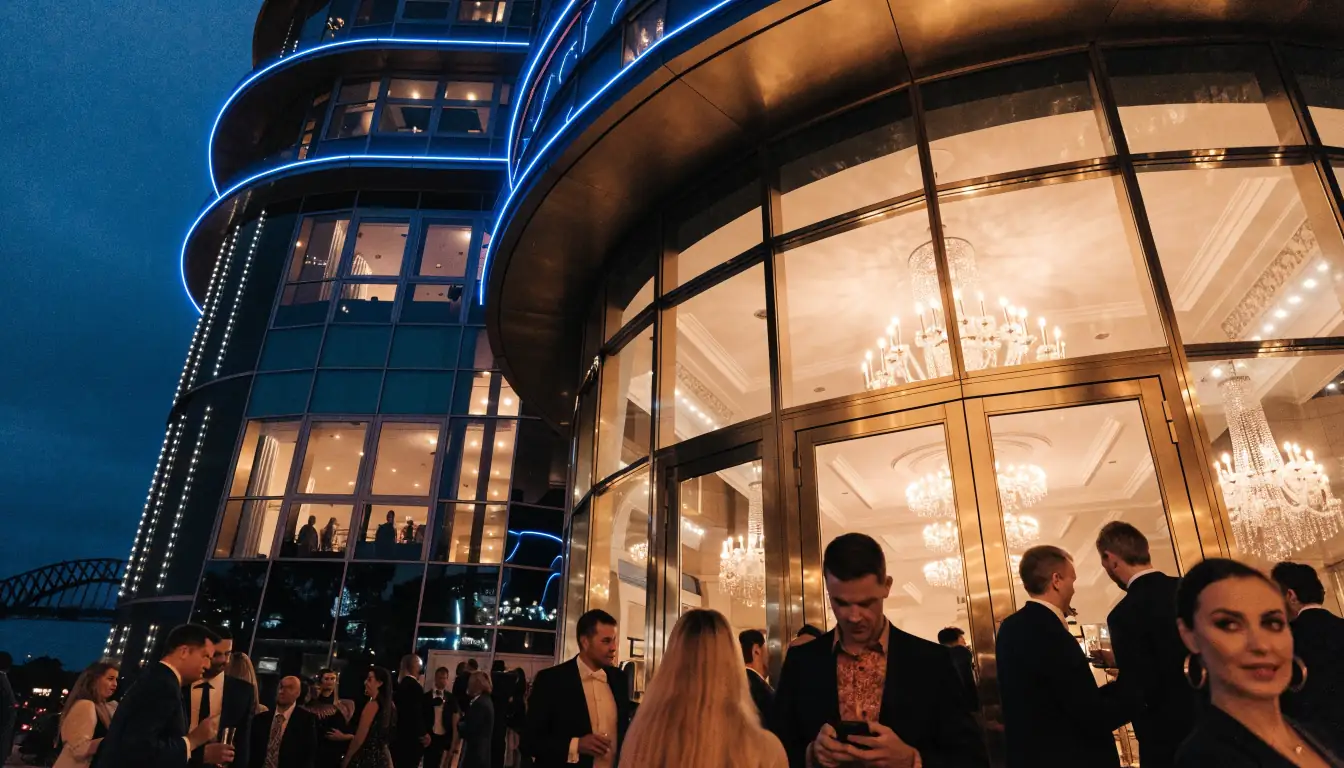
Wellness Facilities: Spa and Relaxation Services
Every large Melbourne casino complex sits next to a day spa built for people who came for the tables and stayed for something slower. The pitch is always the same word: "escape." What that actually means on the ground is a treatment menu heavy on massage, facials and hydrotherapy, priced for a hotel guest rather than a local popping in on a Tuesday.
The spa floor is deliberately separated from the gaming floor — different lighting, different noise level, often a different entrance. That separation isn’t accidental. Operators know the two experiences don’t mix well: nobody wants the sound of poker chips through a treatment-room wall. So the spa gets its own wing, usually threaded through the hotel tower rather than the casino podium.
What’s typically on offer
- Massage suites — single and couples rooms, booked in blocks rather than walk-in
- Facial and skin treatments, often tied to a specific product brand the spa has licensed
- Sauna, steam room and relaxation lounges, sometimes bundled into a “wellness pass” rather than sold individually
- Nail and grooming services, positioned as an add-on rather than a core offering
None of this is unique to casinos — the same menu exists in any five-star hotel spa. What’s different here is the client base: people on a gambling trip who want a reset between sessions, or a partner who has no interest in the pokies floor and needs somewhere to spend the afternoon. The spa exists partly as a retention tool, not just a revenue line.
Booking and access
Access generally requires advance booking, and hotel guests get priority over walk-ins during peak periods — weekends especially. Some properties fold spa credit into higher hotel tiers or loyalty status, which is worth checking directly with the property rather than assuming it’s included. I’ve seen guests turn up expecting a comped treatment because a staff member mentioned it vaguely at check-in; the terms are rarely as loose as they sound at the front desk.
Dress code inside the spa itself is relaxed — robes are provided — but reaching it usually means crossing a public casino area first, so the general venue dress code still applies until you’re through the spa doors.
One thing spa staff get asked constantly and can’t answer: anything about live odds or in-play wagering happening elsewhere in the building. Live betting by phone is legal in Australia, but that’s a conversation for the sportsbook or the concierge desk, not the therapist doing your massage. The spa is a genuinely separate operation, staffed and managed apart from anything gaming-related, and it’s treated that way internally too.
Worth booking ahead. Walk-ins get what’s left.
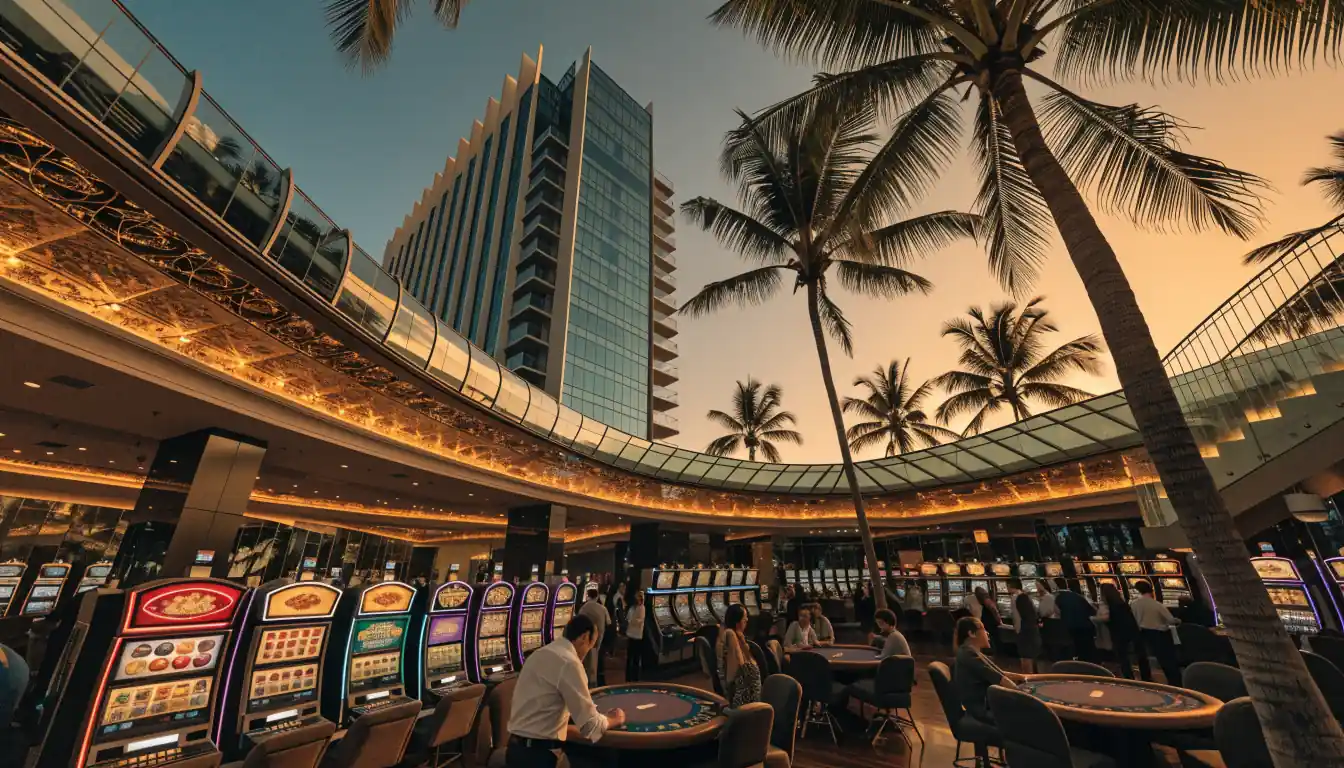
Food Courts and Pool Areas
Not every visit calls for a tasting menu. The food court level is where the gaming floor empties out around meal times, and it does the job a buffet can’t: quick, cheap, no reservation. Expect the usual mix of noodle bars, burger counters, pizza-by-the-slice and coffee stands, laid out for turnover rather than atmosphere. Nobody lingers here on purpose, and that’s the point — it’s built for people moving between the tables and the exit, not for an evening out.
Pool access is a different story, and worth being clear about upfront: it belongs to the hotel tower, not to the casino floor. Guests staying in the connected hotel get access as part of the room; day passes for non-guests aren’t something the property advertises, and I wouldn’t assume one exists without checking directly. The pool sits above the noise of the gaming areas, which is really its main selling point — quiet, chlorinated, unconnected to anything downstairs.
A practical note that gets missed: sports betting terminals sometimes sit near these casual dining zones, since wagering on sport is licensed at the state level and treated differently to the games on the main floor. Anyone using them still needs to be 18 or over, same as everywhere else on site — staff do check.
If the plan is food court plus pool in one visit, treat them as two separate errands. One is about speed, the other about staying somewhere. Trying to combine them into a single "casino day out" usually just means queuing twice.